How do I slow the process without obstructing?
5 min read
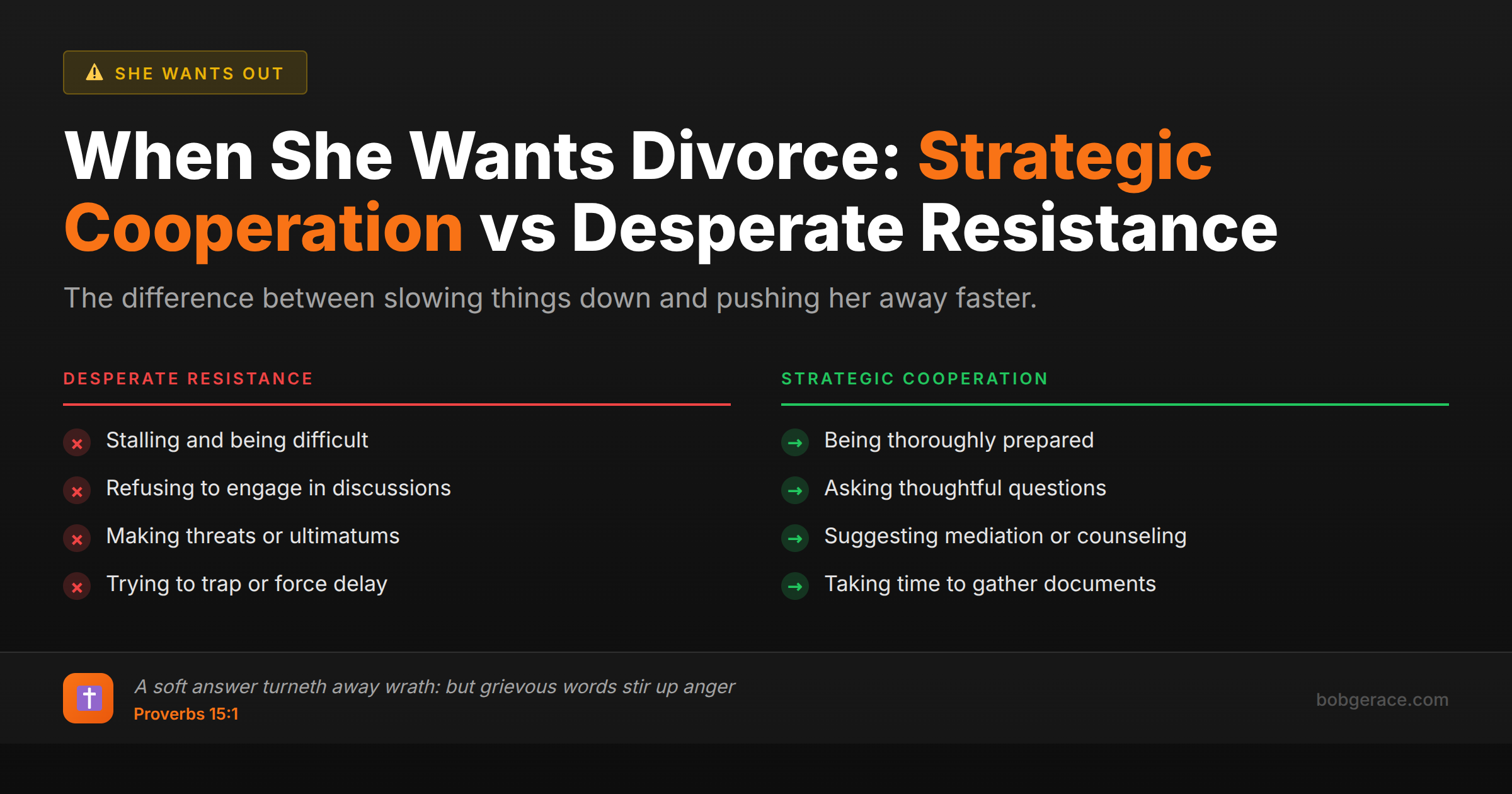
The key is strategic cooperation, not resistance. When your wife is moving toward divorce, you slow things down by being thoroughly prepared, asking thoughtful questions, and introducing reasonable considerations—not by stalling or being difficult. This means taking time to gather financial documents, discussing child arrangements carefully, and suggesting mediation or counseling. You demonstrate that you're taking this seriously while creating natural pauses in the process. The goal isn't to trap her or force delay, but to show that major life decisions deserve careful consideration. This approach often reveals whether she's acting impulsively or from a place of deep resolve.
The Full Picture
When your wife is actively pursuing divorce, your instinct might be to throw up roadblocks or drag your feet. This almost always backfires. Instead, you need to understand that slowing the process strategically means being the most reasonable person in the room while ensuring every decision is made with proper consideration.
The difference between obstruction and strategic slowing:
• Obstruction: Refusing to sign papers, hiding assets, canceling appointments, being unresponsive • Strategic slowing: Asking for time to review documents, requesting mediation, ensuring children's needs are fully considered
Most men make the mistake of thinking they need to fight every step. But when you approach this with thoughtful cooperation, something interesting happens—it often reveals the true depth of her resolve. If she's acting impulsively, your measured response gives her space to reconsider. If she's deeply committed to leaving, your cooperation maintains your integrity and often leads to better outcomes.
The psychology here is crucial. When you're difficult, you confirm her narrative that you're the problem. When you're cooperative but thorough, you demonstrate the kind of thoughtfulness she may have been missing. You're not trying to manipulate outcomes—you're ensuring that life-changing decisions receive the attention they deserve.
Remember, speed often works against reconciliation. Rushed decisions become harder to reverse because of pride and momentum. Strategic slowing creates space for God to work and for hearts to potentially soften.
What's Really Happening
From a therapeutic perspective, when spouses rush toward divorce, they're often operating from an emotionally flooded state or have reached what Gottman calls 'emotional gridlock.' The decision to divorce rarely happens overnight—it's usually the culmination of years of unmet needs and failed repair attempts.
Strategic slowing works because it interrupts the emotional momentum without triggering reactance theory—the psychological phenomenon where people push harder against perceived restrictions. When you cooperate while asking thoughtful questions, you're not restricting her choices; you're demonstrating emotional regulation and mature decision-making.
Research shows that approximately 30% of divorce filings are withdrawn, often because the filing itself was an attempt to communicate the severity of marital dissatisfaction rather than a definitive end goal. Strategic slowing can reveal which category your situation falls into.
The key is understanding that your wife's nervous system is likely in a chronic state of activation regarding the marriage. Your calm, thoughtful responses can begin to co-regulate her emotional state. This isn't manipulation—it's providing the kind of stable presence that allows for clearer thinking.
However, it's crucial to understand that this approach only works if paired with genuine change. If you're slowing the process while remaining the same person who contributed to the marital breakdown, you're simply delaying the inevitable. The slowing must create space for actual transformation, not just time for her to 'come to her senses.'
What Scripture Says
Scripture provides clear guidance on how to respond when facing the dissolution of covenant relationships. Ecclesiastes 3:1 reminds us, 'To every thing there is a season, and a time to every purpose under the heaven.' This isn't about manipulating timing, but recognizing that major decisions benefit from proper timing and consideration.
Proverbs 15:1 teaches us, 'A soft answer turneth away wrath: but grievous words stir up anger.' Your response in this crisis sets the tone. Strategic cooperation rather than obstruction embodies this soft answer principle.
Galatians 6:1 instructs, 'Brethren, if a man be overtaken in a fault, ye which are spiritual, restore such an one in the spirit of meekness; considering thyself, lest thou also be tempted.' Even if you believe your wife is making a mistake, your approach should be gentle restoration, not forceful resistance.
1 Peter 3:1 offers specific guidance: 'Likewise, ye wives, be in subjection to your own husbands; that, if any obey not the word, they also may without the word be won by the conversation of the wives.' While this verse addresses wives, the principle applies—godly behavior can influence hearts more than arguments.
Romans 12:18 commands, 'If it be possible, as much as lieth in you, live peaceably with all men.' This includes your wife, even in crisis. Strategic cooperation demonstrates this peaceful approach while maintaining your convictions about marriage covenant.
What To Do Right Now
-
1
Request a reasonable timeline for major decisions, emphasizing the importance of careful consideration for your family's future
-
2
Suggest professional mediation or counseling before finalizing any legal proceedings, framing it as responsible stewardship
-
3
Ask thoughtful questions about logistics, finances, and children that require genuine discussion and planning
-
4
Gather all necessary financial documents and information methodically, showing you're taking this seriously
-
5
Propose a temporary separation period before permanent decisions, giving space while maintaining connection
-
6
Document your cooperative approach and reasonable requests, maintaining integrity throughout the process
Related Questions
- She's already talked to a lawyer — what now?
- She filed for divorce — can I stop it?
- How do I respond to divorce papers?
- Should I contest or cooperate?
- What leverage do I have and should I use it?
- What's the difference between fighting for marriage and fighting in court?
- What boundaries should I set?
- How do I not pursue while also not abandoning?
- What does healthy hope look like vs. fantasy?
- How do I honor her autonomy while fighting for us?
Also find Bob on
Subscribe for weekly videos on Christian marriage.
Bring Your Actual Situation to Bob
Every marriage has different fault lines. A coach who knows your story can help you calibrate what 'strategic cooperation' looks like in your specific case—without guessing.
Talk to Bob →