What do kids need most from dad during divorce?
5 min read
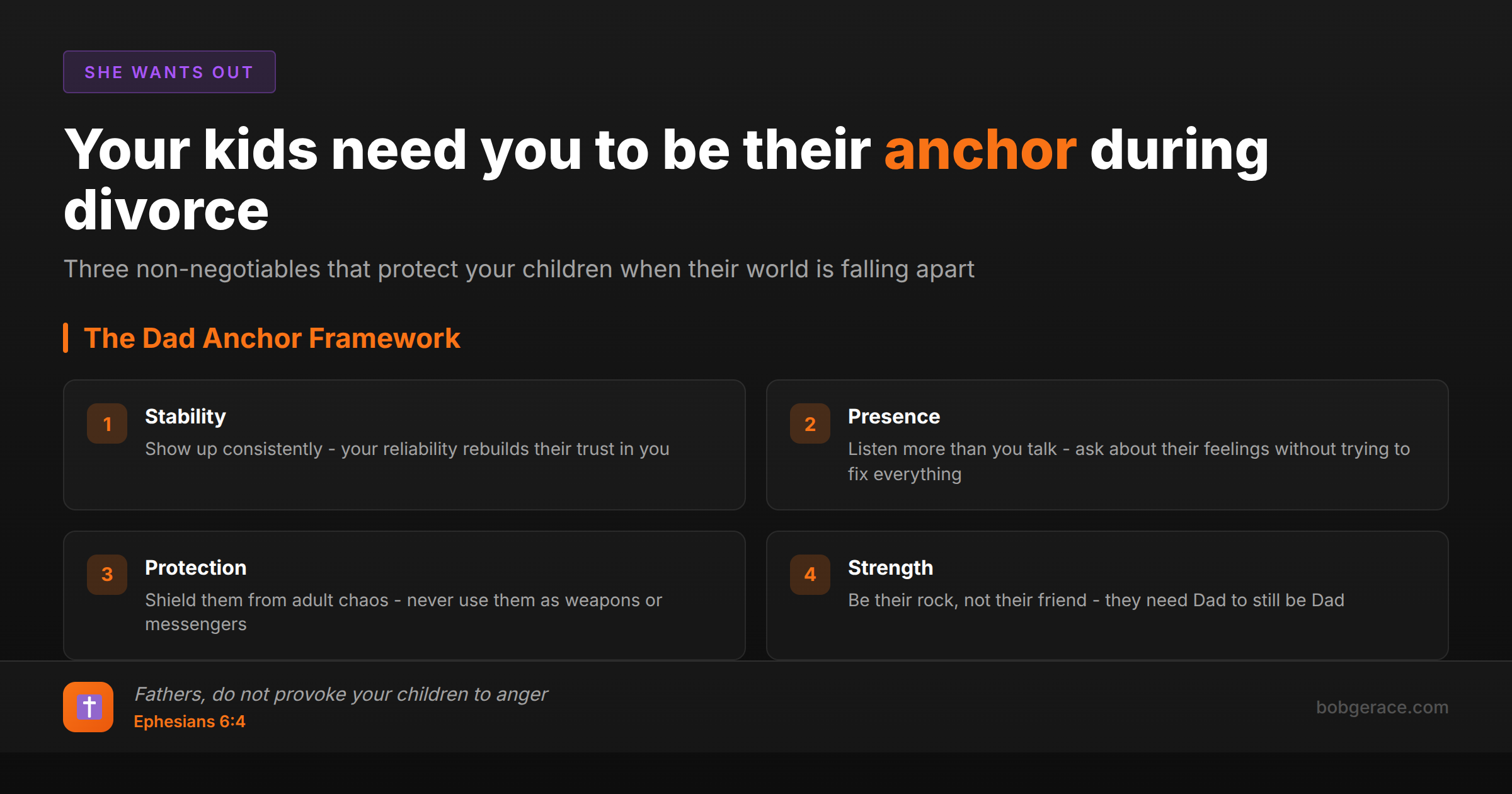
Your kids need three things from you right now: stability, presence, and protection from adult chaos. While your world is falling apart, they need to know that Dad is still Dad – that you're still the safe harbor they can count on. Here's what I see in my practice: fathers who try to be the 'fun parent' or who dump their emotional baggage on their kids end up doing more damage. Your children don't need you to be their friend or therapist. They need you to be their anchor. That means showing up consistently, keeping your word, and never – ever – using them as weapons against their mother or messengers in your conflict.
The Full Picture
Your children are watching everything right now. They're studying your face for clues about whether their world is safe. They're listening to your tone, watching how you treat their mom, and wondering if they can still trust the man who used to be their hero.
The biggest mistake I see fathers make is treating divorce like it's happening TO them instead of recognizing they're happening to their kids. Your pain is real, but your children's security depends on your ability to rise above it when you're with them.
What your kids are really asking themselves: • Will Dad still love me if he doesn't love Mom? • Is this my fault somehow? • Will I lose Dad like I'm losing our family? • Can I trust anyone if my parents can't stay together?
Your children need you to answer these unspoken questions through your actions, not your words. They need to see that:
• You keep your commitments – If you say you'll be there Saturday at 10am, you're there at 9:55 • You protect them from conflict – They never hear you trash-talk their mother • You're emotionally stable – You don't use them as your therapist or confidant • You create new traditions – Your time together has structure and meaning • You're present – When you're with them, you're WITH them, not lost in your phone or your pain
Remember: your kids didn't choose this divorce, but they're living with the consequences. The quality of their relationship with you will shape their ability to trust and love for the rest of their lives.
What's Really Happening
From a developmental perspective, divorce creates what we call 'ambiguous loss' for children. Their family structure is dying, but both parents are still alive, creating confusion about what they're grieving and how to process it.
Research consistently shows that children of divorce fare better when they have consistent, emotionally available relationships with both parents. However, the father-child relationship often suffers more during divorce because fathers typically become non-custodial parents and may withdraw due to their own emotional overwhelm.
What's happening in your child's brain during divorce:
The stress of family dissolution activates their threat-detection system. Children become hypervigilant, constantly scanning for signs of safety or danger. When fathers remain emotionally regulated and predictable, it helps calm this hyperactivation and allows healthy development to continue.
Age-specific needs: • Ages 2-5: Need extra reassurance that both parents still love them and that the divorce isn't their fault • Ages 6-11: Benefit from clear, simple explanations and maintained routines • Ages 12-18: Need respect for their feelings while maintaining appropriate boundaries
The 'good enough' father principle applies here: You don't need to be perfect, but you need to be consistent and attuned. Children are remarkably resilient when they have at least one stable, loving parent who can regulate their own emotions and provide a secure base. Your ability to manage your own emotional state directly impacts your child's nervous system and their capacity to heal and adapt to this family transition.
What Scripture Says
Scripture places enormous responsibility on fathers to shepherd their children's hearts, especially during difficult seasons. This isn't just about being present – it's about being a godly example of strength, love, and integrity.
Ephesians 6:4 – "Fathers, do not provoke your children to anger, but bring them up in the discipline and instruction of the Lord." During divorce, it's easy to provoke our children through our own anger, bitterness, or inconsistency. Instead, we're called to discipline ourselves first so we can guide them wisely.
Psalm 68:5 reminds us that God is "a father to the fatherless, a defender of widows." Even if you're not living with your children full-time, you can still be their defender and protector. This means protecting them from adult conflicts, inappropriate information, and emotional burdens they're not equipped to carry.
Malachi 4:6 speaks of turning "the hearts of fathers to their children and the hearts of children to their fathers." Divorce can create distance and mistrust, but God's heart is for restoration. Your commitment to being present and loving can turn your children's hearts back toward you and toward trust in general.
1 Corinthians 13:4-7 defines love in action – patient, kind, not self-seeking, keeping no record of wrongs. This is how you love your children through divorce: by being patient with their questions and emotions, kind even when you're hurting, and never using them to settle scores with their mother.
Proverbs 20:7 says, "The righteous lead blameless lives; blessed are their children after them." Your character during this crisis will bless or burden your children for years to come. Choose integrity, even when it costs you.
What To Do Right Now
-
1
Create a consistent visitation schedule and stick to it religiously – your reliability rebuilds their trust in you
-
2
Establish new traditions and routines during your time together that give them something to anticipate and enjoy
-
3
Never speak negatively about their mother in front of them or pump them for information about her life
-
4
Listen more than you talk – ask about their feelings, fears, and needs without trying to fix everything immediately
-
5
Get your own emotional support through counseling or coaching so you're not leaning on your children
-
6
Protect their childhood by maintaining appropriate parent-child boundaries and letting them be kids, not your confidants
Related Questions
- How do I tell the kids?
- What do I say when kids ask what's happening?
- How do I be a good dad through this?
- What do kids understand at different ages?
- What are signs my kids are struggling?
- How do I not badmouth her when I'm furious?
- How do I model Christ to my kids in this?
- What does faithful fatherhood look like through divorce?
- How do I stay connected when access is limited?
- What does healthy coping look like?
Also find Bob on
Subscribe for weekly videos on Christian marriage.
Your Kids Need You Steady
Being that anchor while your own life is chaos—that's hard to do alone. A coach who knows your specific situation can help you stay the dad they need through this.
Talk to Bob →