What stage of decision is she in?
6 min read
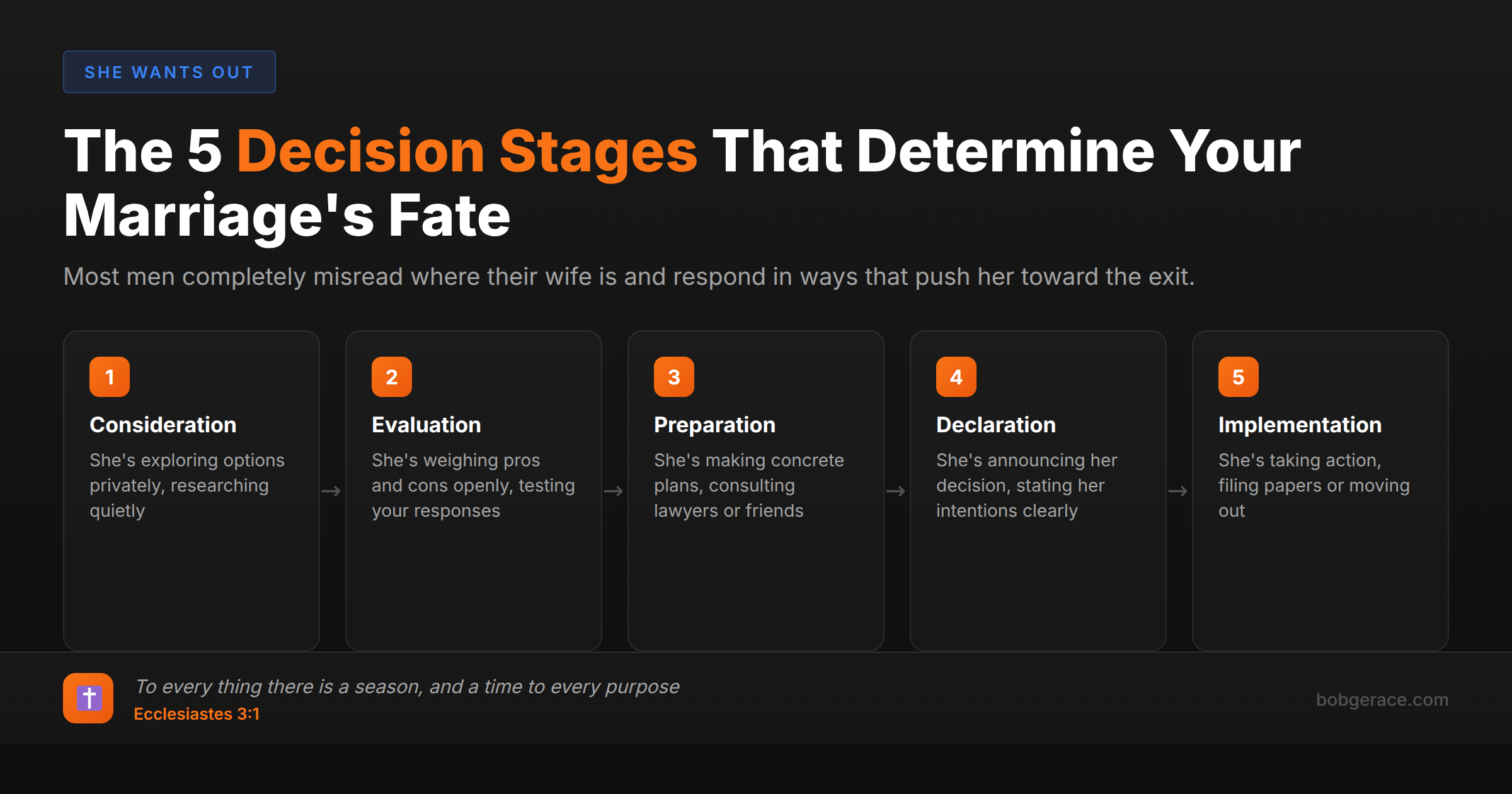
Your wife is likely in one of five distinct decision stages: Consideration (exploring options privately), Evaluation (weighing pros and cons openly), Preparation (making concrete plans), Declaration (announcing her decision), or Implementation (taking action). Each stage has specific markers and requires a different response from you. The stage she's in determines everything - how much influence you still have, what actions will help versus hurt, and how much time you realistically have. Most men misread these stages and respond inappropriately, actually pushing their wives further toward leaving. Understanding where she is right now gives you the roadmap for what comes next.
The Full Picture
Stage 1: Consideration (The Private Stage) She's quietly thinking about leaving but hasn't made any concrete plans. You might notice subtle changes - emotional distance, less engagement in future planning, or increased focus on personal interests. She's still hoping things might improve but beginning to imagine alternatives.
Stage 2: Evaluation (The Weighing Stage) She's actively comparing staying versus leaving. She may bring up problems more directly, suggest counseling, or ask pointed questions about your commitment to change. This is when many women start researching divorce, talking to friends, or considering practical logistics.
Stage 3: Preparation (The Planning Stage) She's moving from "what if" to "when." She might be consulting lawyers, opening separate accounts, or making concrete arrangements. The emotional detachment becomes more pronounced. She's building her exit strategy while still maintaining the appearance of working on the marriage.
Stage 4: Declaration (The Announcement Stage) She tells you she wants a separation, divorce, or needs space. This isn't the beginning of her decision process - it's near the end. She's mentally and emotionally prepared for this conversation and your response.
Stage 5: Implementation (The Action Stage) She's actively leaving - filing papers, moving out, or clearly ending the relationship. She's past the point of reconsidering and is focused on executing her plan.
The Critical Mistake: Most men treat every stage like Stage 1, thinking they have unlimited time to figure things out. By Stage 3, your window for influence is rapidly closing. By Stage 5, you're dealing with consequences, not choices.
What's Really Happening
Research on relationship dissolution shows that the decision to leave typically unfolds over 18-24 months, not weeks. This process follows a predictable pattern that mirrors the stages of grief, but in reverse - moving from hope toward acceptance of the relationship's end.
During the Consideration stage, women often experience what we call "ambivalent attachment" - simultaneously hoping for change while mentally preparing for disappointment. The Evaluation stage activates their analytical processing centers, which is why you'll see increased questioning and testing behaviors.
Neurologically, by the Preparation stage, the brain has begun shifting attachment bonds. The release of stress hormones like cortisol actually inhibits oxytocin production, making emotional reconnection more difficult. This biological reality explains why women often seem "cold" or "different" during this phase.
The Declaration stage represents what psychologists call "cognitive commitment" - she's announced her decision publicly, creating social pressure to follow through. This activates consistency bias, making her more likely to stick with her stated choice even if circumstances improve.
Implementation triggers the brain's goal-completion systems. At this point, changing direction feels like failure rather than flexibility. Understanding these psychological and neurological realities helps explain why timing and appropriate responses are crucial at each stage.
What Scripture Says
Scripture acknowledges that decisions unfold in stages and emphasizes the importance of timing and wisdom in our responses.
Ecclesiastes 3:1 reminds us, "To every thing there is a season, and a time to every purpose under the heaven." Your response must match the season your wife is in, not the season you wish she were in.
Proverbs 27:14 warns, "He that blesseth his friend with a loud voice, rising early in the morning, it shall be counted a curse to him." Even good intentions delivered at the wrong time or in the wrong way can backfire.
Luke 14:28 teaches, "For which of you, intending to build a tower, sitteth not down first, and counteth the cost?" Your wife is counting the cost right now. Understanding her process doesn't mean accepting defeat - it means responding wisely.
Galatians 6:9 encourages, "And let us not be weary in well doing: for in due season we shall reap, if we faint not." Each stage requires sustained, appropriate effort, not desperate attempts to rush the process.
Proverbs 15:23 declares, "A man hath joy by the answer of his mouth: and a word spoken in due season, how good is it!" The right word at the right time in the right stage can make all the difference.
God works in processes, not just moments. Trust His timing while doing your part wisely.
What To Do Right Now
-
1
Identify specific behaviors and statements from the past 30 days that indicate which stage she's in
-
2
Stop using responses that worked in earlier stages if she's moved beyond them
-
3
Adjust your timeline expectations based on her current stage, not your hopes
-
4
Focus on demonstrating change rather than promising change if she's in Evaluation or later
-
5
Seek professional guidance immediately if you identify Stage 3 or 4 markers
-
6
Document the positive changes you're making regardless of her current stage
Related Questions
- Is she testing me or serious?
- Did she plan this or is it impulsive?
- How long has she been thinking about this?
- What is 'the point of no return' and is she past it?
- How do I read her actions vs. her words?
- What does 'leaning out' behavior look like?
- What is 'emotional disengagement'?
- What is 'deactivation' and did I cause it?
- What is limerence?
- How do I assess how far gone she is?
Also find Bob on
Subscribe for weekly videos on Christian marriage.
Don't Misread This Moment
The stage she's in right now determines what works and what backfires. A coach who knows your specific situation can tell you exactly where she is and what your next 30 days need to look like.
Talk to Bob →