What does 'mutual submission' mean?
6 min read
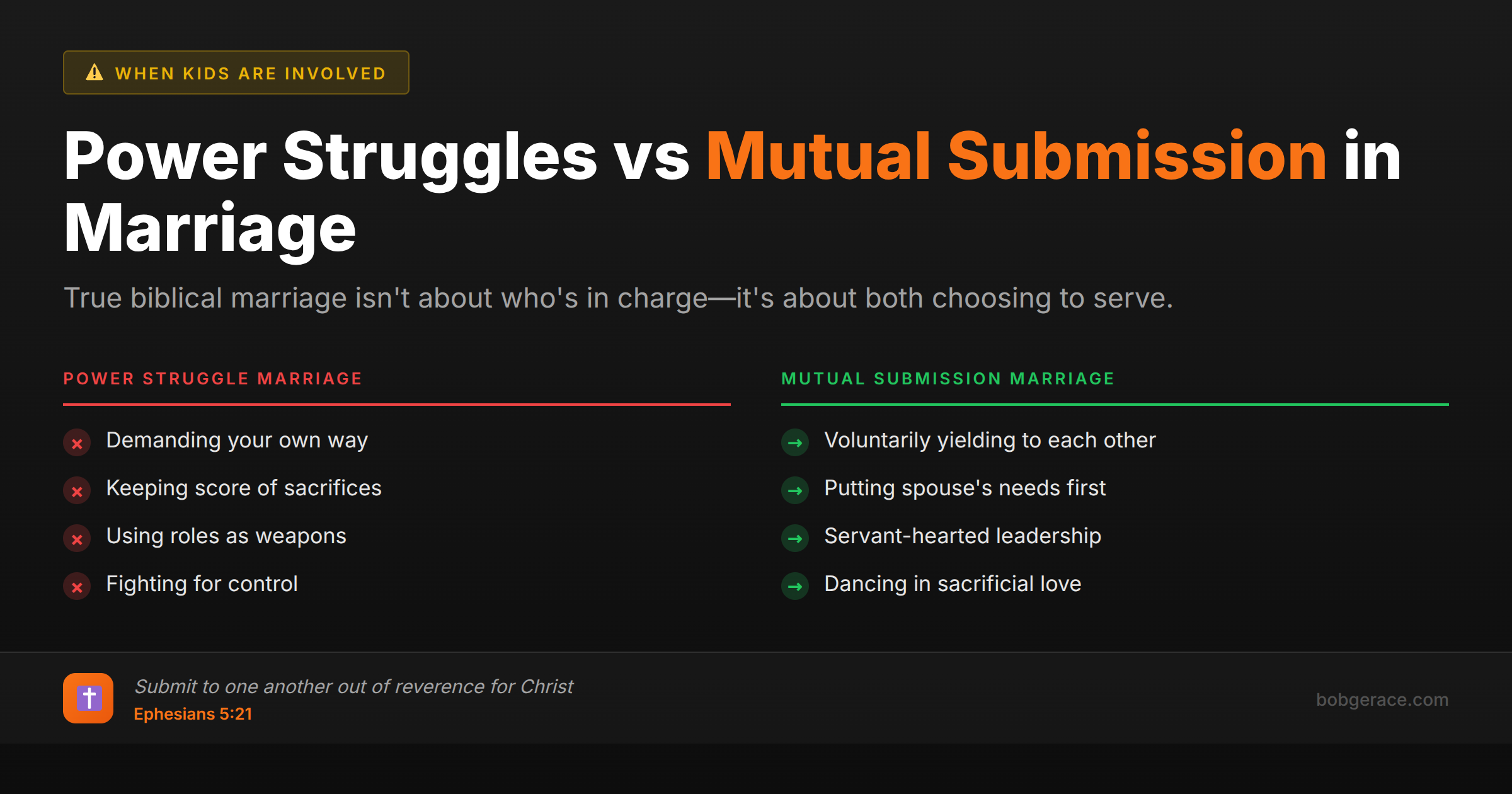
Mutual submission means both spouses voluntarily yielding to one another out of reverence for Christ, as commanded in Ephesians 5:21. It's the foundation that makes biblical roles work - both husband and wife choosing to put the other's needs first, creating a dance of sacrificial love rather than a power struggle. This isn't about eliminating leadership or making marriage a democracy. It's about both partners approaching their roles with servant hearts. The wife's submission flows from this mutual foundation, while the husband's sacrificial leadership is an expression of his submission to Christ and consideration for his wife. When both are submitted to Christ first, mutual submission becomes the natural overflow of Spirit-filled hearts.
The Full Picture
Mutual submission is the game-changer that most couples miss entirely. They get caught up arguing about who's in charge instead of understanding that both spouses are called to yield to one another in Christ.
Ephesians 5:21 sets the stage for everything that follows: "Submit to one another out of reverence for Christ." This isn't Paul contradicting himself or watering down biblical roles. This is the foundational heart attitude that makes everything else work.
Here's what mutual submission actually looks like: The husband leads, but he does so by constantly considering his wife's needs, wisdom, and perspective. He doesn't steamroll decisions - he values her input and often defers to her expertise in areas where she's stronger. The wife follows his leadership, but she does so as an equal partner who brings her full self to the marriage, including her opinions, gifts, and even respectful disagreement when necessary.
This creates a beautiful paradox: Both are yielding, yet both are fully themselves. Both are serving, yet both are being served. The husband's authority becomes a tool for blessing his wife, while the wife's submission becomes a gift that enables her husband to lead well.
Mutual submission eliminates the power struggles because both partners are focused on outdoing each other in honor and service. It's not about who gets their way - it's about both finding joy in blessing the other. This is only possible when both are submitted first to Christ, drawing from His love rather than trying to get their needs met through control or manipulation.
What's Really Happening
From a clinical perspective, mutual submission addresses the core issue in most marital conflicts: the battle for control. When both partners understand they're called to yield to one another, it fundamentally shifts the relationship dynamic from adversarial to collaborative.
Research consistently shows that successful marriages require both partners to influence each other. Dr. John Gottman's work demonstrates that marriages fail when either spouse becomes rigidly controlling or completely disengaged. Mutual submission provides the biblical framework for healthy mutual influence.
What I observe in my practice is that couples who embrace mutual submission experience several key benefits: First, they develop emotional safety because neither partner fears being steamrolled or ignored. Second, they make better decisions because both perspectives are valued and considered. Third, they resolve conflicts more effectively because both are committed to serving rather than winning.
The psychological beauty of mutual submission is that it requires both partners to develop emotional maturity. You can't genuinely yield to someone while remaining selfish or defensive. This mutual yielding forces growth in empathy, communication skills, and self-awareness.
Couples often resist this concept because they fear it means becoming a doormat or losing their identity. In reality, mutual submission requires both partners to be strong, secure individuals who choose to use their strength in service of the relationship. It's not weakness - it's the ultimate expression of emotional and spiritual maturity.
What Scripture Says
Scripture presents mutual submission as the foundation for all Christian relationships, especially marriage. Ephesians 5:21 establishes the principle: "Submit to one another out of reverence for Christ." This verse introduces the entire passage about marriage roles, making it clear that mutual yielding is the starting point.
Philippians 2:3-4 gives us the heart behind mutual submission: "Do nothing out of selfish ambition or vain conceit. Rather, in humility value others above yourselves, not looking to your own interests but each of you to the interests of the others." This is the mindset that makes biblical marriage work.
Romans 12:10 commands us to "honor one another above yourselves," while Galatians 5:13 tells us to "serve one another humbly in love." These aren't suggestions - they're clear commands for how believers should relate to each other.
1 Peter 5:5 reminds us that "God opposes the proud but shows favor to the humble," and instructs us to "clothe yourselves with humility toward one another." Pride destroys mutual submission; humility makes it possible.
The beauty of mutual submission is seen in 1 Corinthians 7:3-4, where Paul says spouses have authority over each other's bodies - a perfect picture of mutual yielding in the most intimate area of marriage. Ecclesiastes 4:9-12 shows how two people working together are stronger than either working alone.
Mutual submission isn't about erasing differences or eliminating leadership. It's about both partners approaching their roles with servant hearts, following Christ's example of using authority to bless and serve others.
What To Do Right Now
-
1
Confess areas where you've been demanding your own way instead of considering your spouse's needs and perspective first
-
2
Ask your spouse one specific question: 'How can I better serve and honor you in our relationship?'
-
3
Identify one decision this week where you'll intentionally seek your spouse's input before moving forward
-
4
Practice the phrase 'Help me understand your perspective' during your next disagreement instead of defending your position
-
5
Schedule 15 minutes daily to pray together, asking God to help both of you grow in mutual submission
-
6
Choose one area where your spouse is stronger than you and intentionally defer to their wisdom and leadership this week
Related Questions
- What does 'love your wife as Christ loves the church' mean?
- What is biblical headship?
- What does submission mean?
- What is the Ephesians 5 framework?
- What is 'servant leadership'?
- What are the main views on complementarian vs. egalitarian?
- How do I lead without controlling?
- What's the difference between leading and dominating?
- What does humble leadership look like?
- How do I honor her autonomy while fighting for us?
Also find Bob on
Subscribe for weekly videos on Christian marriage.
Ready to apply this to your actual marriage?
Mutual submission looks different in every marriage. A coach who knows your specific dynamic can help you and your wife figure out what this actually means for you two.
Talk to Bob →