What does submission mean?
5 min read
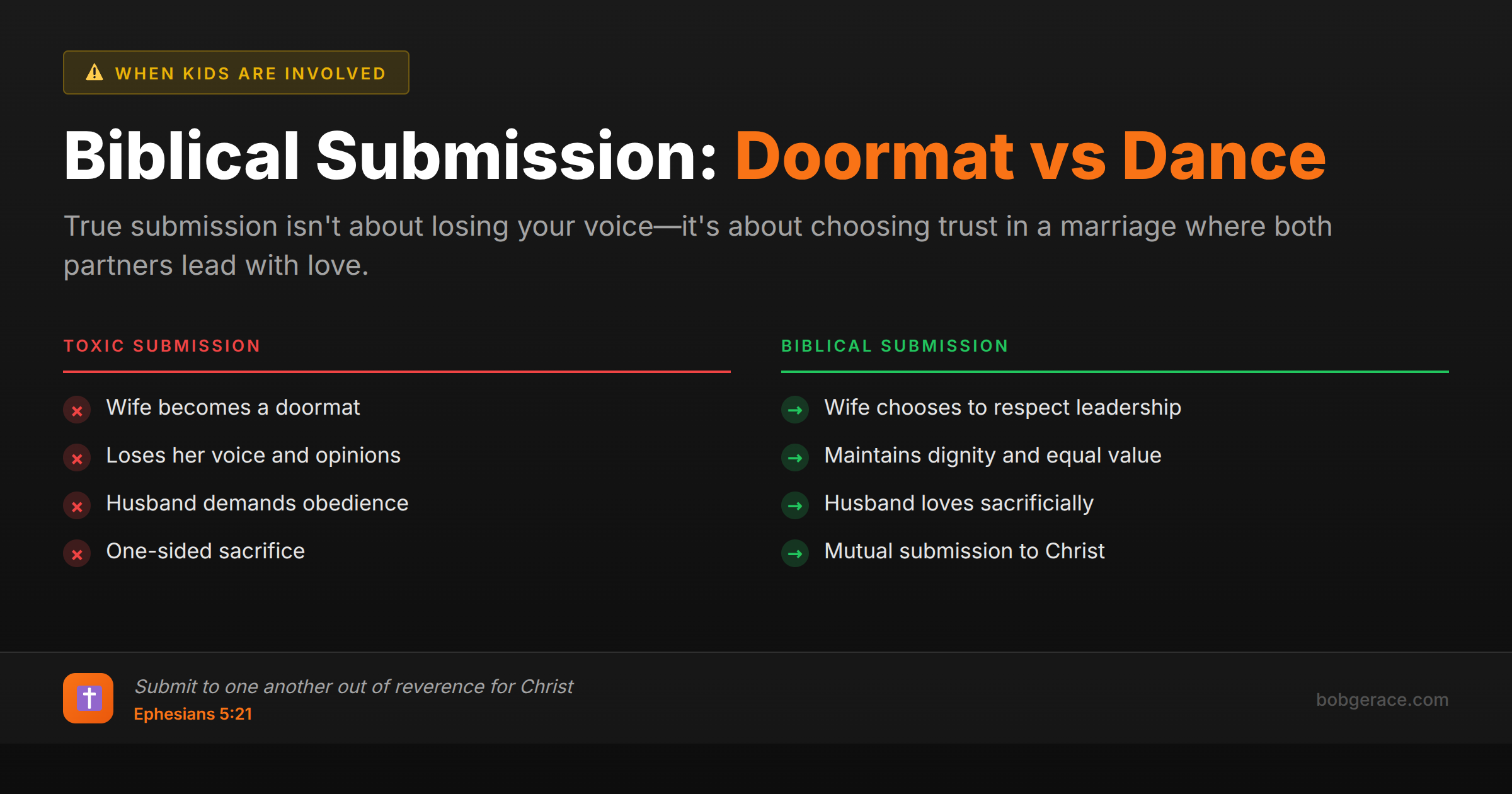
Biblical submission in marriage has been tragically misunderstood and misused. It's not about a wife becoming a doormat or losing her voice. True submission is a willing choice to respect and support your husband's leadership, while maintaining your dignity, opinions, and equal value before God. It's part of a mutual dance where both spouses submit to each other out of reverence for Christ. The husband leads by sacrificially loving like Christ loved the church - which means putting his wife's needs before his own. When both partners fulfill their roles as God designed, submission becomes a beautiful expression of trust, not oppression.
The Full Picture
Let's cut through the confusion and hurt that surrounds this topic. Biblical submission has been weaponized by controlling husbands and rejected by wives who've seen it abused. Both responses miss what God actually intended.
Submission is not: - Being a doormat or losing your voice - Accepting abuse or mistreatment - Agreeing with everything your husband says - Making yourself less intelligent or capable - Giving up your relationship with God
Biblical submission is: - A voluntary choice, not forced compliance - Trusting your husband's heart and decisions when you disagree - Supporting his leadership while offering your wisdom - Respecting his role while maintaining your equal worth - Part of mutual submission that flows both ways
The Greek word used in Ephesians 5 is *hupotasso*, which means "to arrange under" - like instruments in an orchestra. Each has a unique part, but they work together under a conductor's leadership to create something beautiful. The wife's submission and the husband's sacrificial love create harmony, not hierarchy of worth.
This only works when both partners understand their roles. A husband who demands submission without offering Christ-like love has missed the point entirely. A wife who refuses to trust her husband's leadership when he's loving her well also misses God's design. It's a dance that requires both partners to step into their roles with humility and love.
Real submission flourishes in safety. When a husband consistently puts his wife's needs first, speaks kindly, seeks her input, and leads with wisdom, submission becomes a natural response of trust and respect.
What's Really Happening
From a psychological perspective, healthy submission in marriage mirrors secure attachment patterns we see in thriving relationships. When submission is functioning properly, it's not about power dynamics - it's about trust and emotional safety.
Research consistently shows that relationships thrive when both partners feel heard, valued, and secure. What many couples miss is that biblical submission, when practiced correctly, actually creates this environment. The wife feels safe to trust because the husband has proven himself trustworthy through consistent, sacrificial love.
The problems arise when submission becomes about control rather than care. When a husband demands submission without creating safety, it triggers the wife's stress response systems. She becomes defensive, withdrawn, or rebellious - not because she's defying God, but because her nervous system is protecting her from perceived threat.
Healthy couples naturally develop patterns of deference and leadership that shift based on strengths, circumstances, and expertise. Biblical submission provides a framework for this, with the husband taking ultimate responsibility for major decisions while honoring his wife's wisdom and input.
The key psychological component is emotional attunement. When a husband is emotionally present and responsive to his wife's needs, her natural response is often to trust his leadership. When he's distant, dismissive, or self-serving, submission feels dangerous and unnatural. The biblical model only works when both partners are emotionally mature and committed to each other's wellbeing above their own comfort.
What Scripture Says
Scripture provides a clear but often misunderstood picture of submission in marriage. The key is reading the whole passage, not cherry-picking verses.
Ephesians 5:21-24 - *"Submit to one another out of reverence for Christ. Wives, submit yourselves to your own husbands as you do to the Lord. For the husband is the head of the wife as Christ is the head of the church... Now as the church submits to Christ, so also wives should submit to their husbands in everything."*
Notice it starts with mutual submission to each other. The wife's submission is part of this broader call for both spouses to put each other first.
Ephesians 5:25-28 - *"Husbands, love your wives, just as Christ loved the church and gave himself up for her... In this same way, husbands ought to love their wives as their own bodies. He who loves his wife loves himself."*
The husband's responsibility is actually more demanding - to love sacrificially like Christ, who died for the church.
1 Peter 3:7 - *"Husbands, in the same way be considerate as you live with your wives, and treat them with respect as the weaker partner and as heirs with you of the gracious gift of life, so that nothing will hinder your prayers."*
God holds husbands accountable for how they treat their wives. "Weaker partner" refers to physical strength, not worth or intelligence.
Colossians 3:18-19 - *"Wives, submit yourselves to your husbands, as is fitting in the Lord. Husbands, love your wives and do not be harsh with them."*
Both commands are given "in the Lord" - meaning this is about reflecting Christ's love, not worldly power structures.
What To Do Right Now
-
1
Study Ephesians 5:21-33 together, focusing on both roles and what they require
-
2
Wives: Identify one area where you can show more respect and trust for your husband's leadership
-
3
Husbands: Ask your wife how you can love her more sacrificially and create more safety for her
-
4
Discuss what healthy submission and leadership look like in your specific situation and personality types
-
5
Practice mutual submission by putting each other's needs first in small, daily decisions
-
6
Seek counseling if submission has been used to justify control, manipulation, or abuse in your marriage
Related Questions
- What does 'love your wife as Christ loves the church' mean?
- What is biblical headship?
- What is the Ephesians 5 framework?
- What does 'mutual submission' mean?
- What is 'servant leadership'?
- What's the difference between authority and authoritarianism?
- What does masculine leadership look like?
- How do I lead without controlling?
- What's the difference between leading and dominating?
- What does humble leadership look like?
Also find Bob on
Subscribe for weekly videos on Christian marriage.
Your Marriage Isn't a Textbook Case
Submission looks different in every marriage. A coach who knows your story can help you figure out what healthy leadership and respect actually look like in your specific situation.
Talk to Bob →