How do I lead without controlling?
6 min read
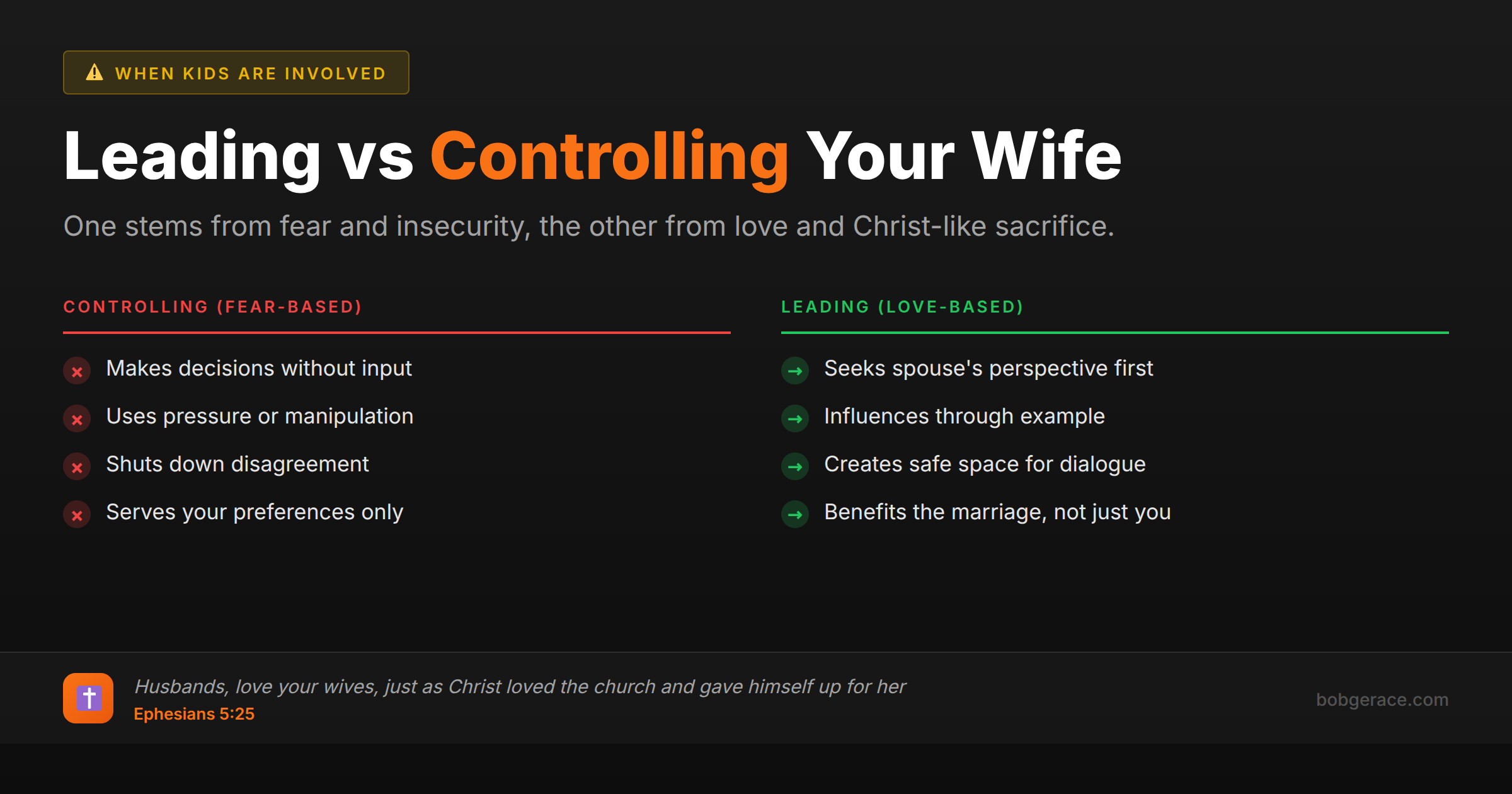
Biblical leadership in marriage looks radically different from worldly control. True leadership serves, protects, and empowers your spouse rather than dominating them. Christ modeled this perfectly - He leads the church through sacrificial love, not force or manipulation. The key difference is motivation and method. Control stems from fear, insecurity, and selfishness. It uses pressure, manipulation, or force to get compliance. Leadership flows from love, security in Christ, and genuine care for your spouse's wellbeing. It influences through example, creates safety for honest dialogue, and makes decisions that benefit the marriage, not just your preferences. When you lead like Jesus, your spouse feels valued, heard, and protected rather than diminished or controlled.
The Full Picture
The confusion between leadership and control has damaged countless marriages. Many men think biblical headship gives them license to make unilateral decisions, dismiss their wife's input, or demand compliance. This isn't leadership - it's tyranny.
True biblical leadership mirrors Christ's relationship with the church. Jesus doesn't control the church through fear or manipulation. He leads through love, sacrifice, and serving our best interests. He invites our input, respects our personhood, and creates an environment where we can flourish.
In marriage, this means leading through influence, not authority. Your wife follows your leadership not because she has to, but because she trusts your heart, respects your wisdom, and feels safe in your care. She sees that your decisions consistently benefit the marriage and family, not just your personal agenda.
Control reveals insecurity and selfishness. When you feel the need to control outcomes, micromanage decisions, or shut down your spouse's voice, you're operating from fear rather than faith. You're more concerned about getting your way than about what's actually best.
Leadership creates an environment where your spouse can thrive. You seek her input on major decisions. You consider her gifts, dreams, and perspectives. You protect her from unnecessary stress and create space for her to grow. You lead by example in your relationship with God, your character, and your commitment to the marriage.
The result? Your wife feels cherished, not controlled. She experiences freedom within the security of your loving leadership. She willingly follows because she trusts where you're leading and knows you have her best interests at heart.
What's Really Happening
From a psychological perspective, the need to control often stems from deep-seated anxiety and attachment insecurity. When someone feels uncertain about their worth or fears abandonment, they attempt to manage outcomes through control rather than building genuine influence through trust.
Controlling behaviors activate your spouse's threat detection system. When someone feels controlled, their nervous system interprets this as danger, triggering fight, flight, or freeze responses. This creates emotional distance and erodes intimacy. Over time, the controlled spouse either becomes compliant but resentful, or increasingly resistant and defensive.
Healthy leadership, however, creates psychological safety. When your spouse feels heard, valued, and respected in decision-making processes, their nervous system can relax. They experience what researchers call 'secure functioning' - the confidence that their partner has their back and will consider their wellbeing in important decisions.
The neurological difference is significant. Control-based interactions flood the brain with stress hormones like cortisol, impairing problem-solving and emotional regulation. Trust-based leadership interactions increase oxytocin and other bonding hormones, enhancing cooperation and emotional connection.
For lasting change, focus on building your own emotional regulation skills and addressing the underlying fears that drive controlling tendencies. Practice staying calm when outcomes feel uncertain, and learn to find security in your relationship with God rather than in controlling circumstances or people.
What Scripture Says
Scripture provides clear guidance on godly leadership versus ungodly control. The model is always Christ's sacrificial, serving leadership.
Ephesians 5:25-28 - "Husbands, love your wives, just as Christ loved the church and gave himself up for her... In this same way, husbands ought to love their wives as their own bodies. He who loves his wife loves himself." Christ's leadership is characterized by self-sacrifice, not self-service.
1 Peter 3:7 - "Husbands, in the same way be considerate as you live with your wives, and treat them with respect as the weaker partner and as heirs with you of the gracious gift of life, so that nothing will hinder your prayers." Biblical leadership treats your spouse with honor and respect, recognizing her equal value before God.
Mark 10:42-44 - "Jesus called them together and said, 'You know that those who are regarded as rulers of the Gentiles lord it over them... Not so with you. Instead, whoever wants to become great among you must be your servant.'" Jesus explicitly contrasts worldly domination with kingdom leadership through service.
Philippians 2:3-4 - "Do nothing out of selfish ambition or vain conceit. Rather, in humility value others above yourselves, not looking to your own interests but each of you to the interests of the others." This principle governs all Christian relationships, especially marriage.
Galatians 5:13 - "You, my brothers and sisters, were called to be free. But do not use your freedom to indulge the flesh; rather, serve one another humbly in love." Freedom in Christ leads to serving others, not controlling them.
Biblical leadership serves, protects, and empowers. It never diminishes, controls, or dominates.
What To Do Right Now
-
1
Audit your recent decisions - List major choices you've made affecting your marriage. Did you seek your spouse's input? Consider their perspective? Or did you decide unilaterally?
-
2
Identify your control triggers - What situations make you want to take charge or shut down discussion? Usually it's when outcomes feel uncertain or when you feel your preferences might not win.
-
3
Practice the consultation habit - Before making any decision affecting your spouse or family, ask: 'What are your thoughts on this?' and genuinely listen to understand, not just to respond.
-
4
Lead by example first - Focus on your own character, spiritual growth, and commitment to the marriage. Let your actions demonstrate the direction you want the marriage to go.
-
5
Create safety for disagreement - Make it clear that your spouse can disagree with you, express concerns, or offer different perspectives without facing anger, dismissal, or punishment.
-
6
Pray together about major decisions - Instead of presenting your spouse with conclusions, invite them to seek God's will with you. This models dependence on God rather than your own wisdom.
Related Questions
Also find Bob on
Subscribe for weekly videos on Christian marriage.
Leading Your Marriage Takes a Coach
You know what biblical leadership looks like. Doing it in your specific marriage—with your history, her wounds, your patterns—is different. A coach sees what you can't see alone.
Talk to Bob →