What's the difference between authority and authoritarianism?
6 min read
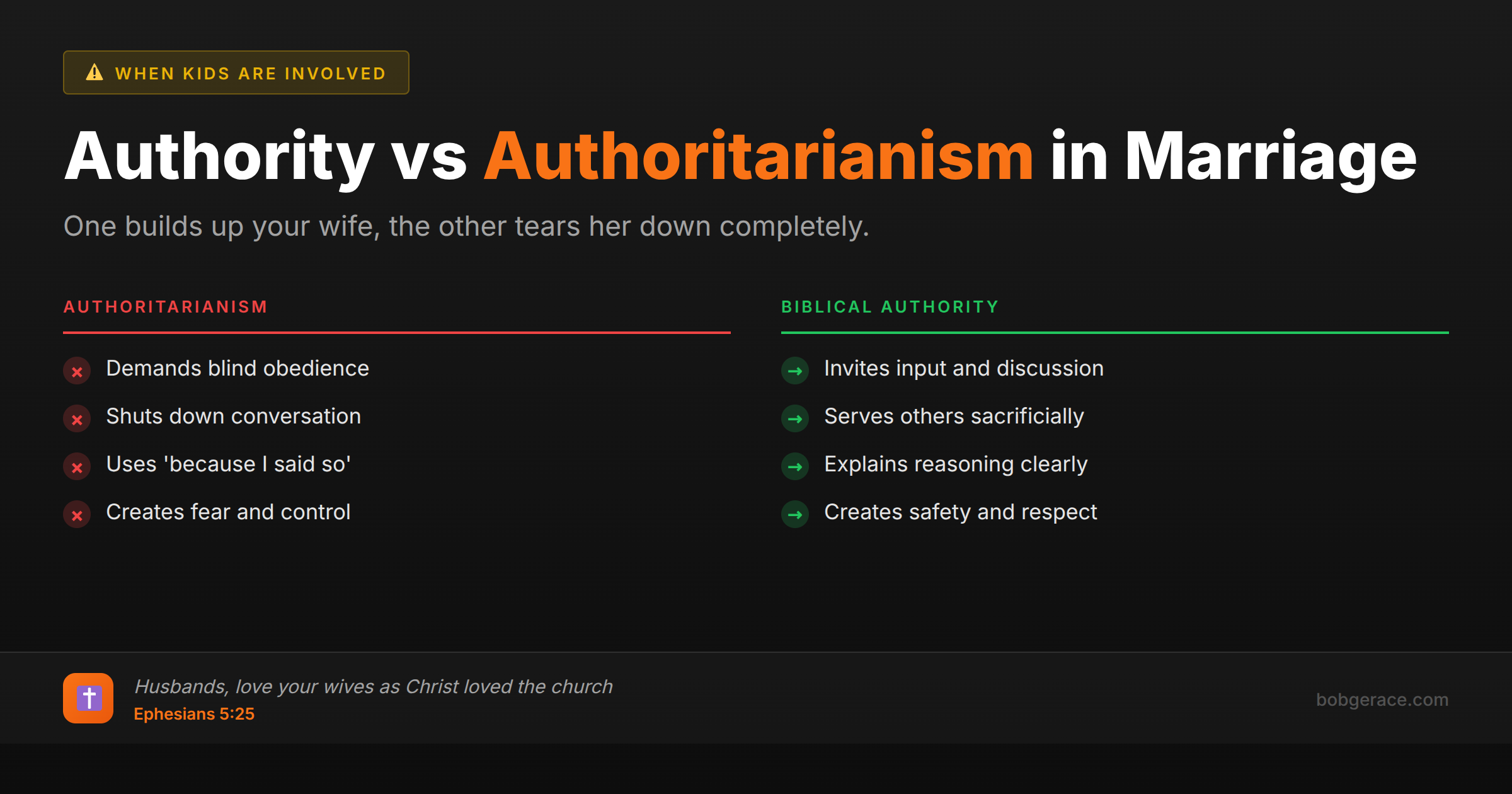
Authority and authoritarianism are night and day different. Biblical authority is servant leadership - it's about responsibility, sacrifice, and laying your life down for others. It seeks the best for those under your care and invites input, discussion, and mutual respect. Authoritarianism is about control, power, and getting your own way. It demands blind obedience, shuts down conversation, and serves itself rather than others. True authority lifts people up and creates safety. Authoritarianism tears people down and creates fear. Understanding this difference is crucial for healthy marriages because God calls husbands to servant leadership, not domination.
The Full Picture
This distinction matters more than almost anything else in marriage. I've seen too many couples where someone thinks biblical headship means being a dictator, and I've seen others where nobody wants to take any leadership responsibility at all. Both extremes destroy marriages.
True authority is modeled after Christ's leadership. Jesus had all power and authority, yet He washed His disciples' feet. He could have demanded anything, but instead He served, sacrificed, and gave His life. When God calls a husband to be the head of his home, He's calling him to be like Jesus - a servant leader who puts his wife's needs above his own.
This kind of authority: - Listens more than it speaks - Serves more than it's served - Takes responsibility when things go wrong - Shares credit when things go right - Makes decisions based on what's best for the family, not personal preference - Invites input and values his wife's wisdom - Creates an atmosphere of safety and respect
Authoritarianism is the opposite. It's selfish, controlling, and destructive. It demands submission without earning respect. It makes unilateral decisions without considering others. It uses guilt, manipulation, or intimidation to get its way. This isn't biblical headship - it's abuse wearing a Christian mask.
The fruit tells you everything. True authority produces peace, growth, and flourishing in a marriage. Authoritarianism produces fear, resentment, and emotional distance. If your 'leadership' is making your spouse smaller, quieter, or more fearful, you're doing it wrong.
What's Really Happening
From a psychological perspective, the difference between authority and authoritarianism often comes down to security versus insecurity. Healthy authority flows from internal security and genuine care for others. Authoritarianism typically stems from deep insecurity, fear of losing control, or unresolved trauma.
When someone leads from true authority, they're not threatened by questions, input, or even disagreement. They can admit mistakes because their identity isn't tied to being right all the time. They genuinely want what's best for their spouse and family, even when it costs them personally.
Authoritarian behavior, however, is driven by fear. Fear of losing control, fear of being wrong, fear of appearing weak. This creates a defensive posture where any challenge to their decisions feels like a personal attack. They often grew up in homes where power was misused, so they either repeat the pattern or swing to the opposite extreme of avoiding all leadership responsibility.
I frequently see men who confuse firmness with harshness, or who think that asking for their wife's input somehow diminishes their authority. The opposite is true. The most respected leaders I know - in families and organizations - are those who actively seek input, admit when they're wrong, and make decisions based on what serves others best, not what serves themselves.
The healthiest marriages I work with have husbands who see their role as creating an environment where their wives can flourish, speak freely, and contribute their unique gifts and perspectives to family decisions.
What Scripture Says
Scripture is crystal clear about what godly leadership looks like, and it's the opposite of authoritarianism.
Ephesians 5:25-28 - "Husbands, love your wives, just as Christ loved the church and gave himself up for her... In this same way, husbands ought to love their wives as their own bodies." Christ's love wasn't controlling or demanding - it was sacrificial and servant-hearted.
Mark 10:42-44 - "You know that those who are regarded as rulers of the Gentiles lord it over them, and their high officials exercise authority over them. Not so with you. Instead, whoever wants to become great among you must be your servant, and whoever wants to be first must be slave of all." Jesus explicitly rejects authoritarian leadership.
1 Peter 3:7 - "Husbands, in the same way be considerate as you live with your wives, and treat them with respect as the weaker partner and as heirs with you of the gracious gift of life, so that nothing will hinder your prayers." Notice the emphasis on consideration and respect, not control.
1 Corinthians 13:4-5 - "Love is patient, love is kind. It does not envy, it does not boast, it is not proud. It does not dishonor others, it is not self-seeking, it is not easily angered, it keeps no record of wrongs." This is the standard for how authority should be exercised.
Biblical authority serves others. It protects, provides, and creates an environment where people can flourish. Authoritarianism serves itself and creates fear, resentment, and spiritual damage.
What To Do Right Now
-
1
Examine your motives - ask yourself if your decisions serve your family or just serve you
-
2
Start asking for your spouse's input on decisions before making them, not after
-
3
Practice admitting when you're wrong and apologizing without making excuses
-
4
Look for ways to serve your spouse daily without expecting anything in return
-
5
Stop using phrases like 'because I said so' and start explaining your reasoning
-
6
Create regular times for your spouse to share concerns or feedback without getting defensive
Related Questions
- What is biblical headship?
- What is 'servant leadership'?
- What does Christ's leadership model for husbands?
- How do I lead without demanding submission?
- What does initiating look like vs. dominating?
- How do I earn the right to lead?
- What does masculine leadership look like?
- How do I lead without controlling?
- What's the difference between leading and dominating?
- What is 'secure-base leadership'?
Also find Bob on
Subscribe for weekly videos on Christian marriage.
Leading Your Marriage — Not Controlling It
You know the difference now. Applying it to your specific marriage — the patterns you've built, the ways she's experienced your leadership — is where a coach helps you see what you can't see alone.
Talk to Bob →