What does 'overcome evil with good' look like here?
6 min read
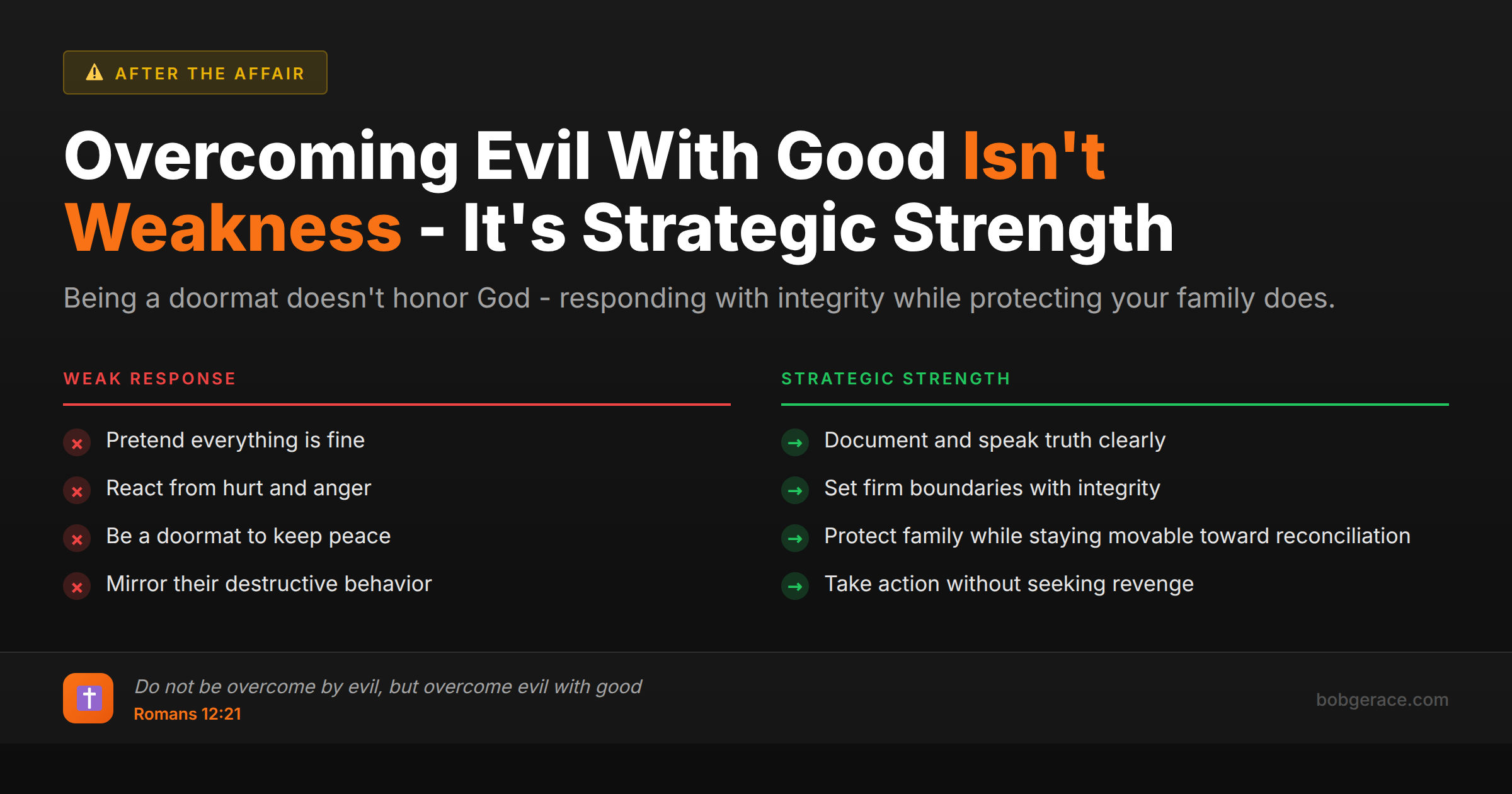
Overcoming evil with good doesn't mean being a doormat or pretending everything's fine. It means responding with strategic strength rooted in God's character rather than reacting from hurt and anger. This looks like setting firm boundaries while maintaining your integrity, speaking truth without vengeance, and taking protective action without seeking revenge. In practical terms, you document what's happening, protect your family financially and emotionally, and communicate clearly about consequences - all while refusing to mirror the destructive behavior you're facing. You become immovable in your standards while remaining movable in your heart toward eventual reconciliation if genuine repentance occurs.
The Full Picture
When Paul wrote "overcome evil with good" in Romans 12:21, he wasn't advocating for weakness disguised as spirituality. He was calling for a response so rooted in God's character that it exposes evil for what it is while demonstrating a better way.
This means responding with strength, not enabling. You don't overcome the evil of infidelity by pretending it's not happening or by making it easier for your spouse to continue destructive behavior. You overcome it by responding in ways that honor God, protect your family, and create the best environment for genuine change.
Good doesn't mean nice - it means righteous. Sometimes the most loving thing you can do is create consequences that wake someone up to the reality of their choices. This might mean separating, involving accountability, or taking legal action to protect assets. These aren't vengeful acts; they're protective measures taken with the right heart.
The goal is transformation, not punishment. When you overcome evil with good, you're not trying to "get back" at anyone. You're creating conditions where truth can emerge, where destructive patterns are interrupted, and where real change becomes possible. This requires wisdom, timing, and often professional guidance.
Your response sets the tone for recovery. How you handle this crisis will either escalate the destruction or create space for healing. When you respond with integrity rather than retaliation, you maintain the moral authority necessary to lead your family through this season and potentially toward restoration.
What's Really Happening
From a clinical perspective, "overcoming evil with good" activates several powerful psychological dynamics that can actually facilitate change rather than enable continued harmful behavior. When the //blog.bobgerace.com/when-theres-another-man-what-you-need-to-know-first/:betrayed spouse-all-the-details) responds with principled strength rather than reactive chaos, it creates what we call "cognitive dissonance" for the unfaithful partner.
This approach disrupts the typical cycle where the cheating spouse can justify their behavior by pointing to their partner's angry or destructive reactions. When you respond with integrity while maintaining firm boundaries, you remove their ability to deflect responsibility onto your reactions. This forces them to confront the reality of their choices without distraction.
Neurologically, this type of response also protects your own mental health. When you act in alignment with your values rather than reacting from trauma, you maintain a sense of agency and self-respect that's crucial for long-term recovery. You're not suppressing your emotions - you're channeling them into constructive action.
The key clinical insight is that this approach requires tremendous internal strength and usually professional support. It's not about being passive or weak; it's about being strategically strong. Many clients initially resist this approach because it feels like "letting them get away with it," but in reality, it's the most powerful position you can take for both immediate protection and long-term transformation.
What Scripture Says
Scripture gives us a clear framework for responding to evil in relationships, and it's far from passive or weak. Romans 12:21 tells us "Do not be overcome by evil, but overcome evil with good." This follows verses about not taking personal revenge while still acknowledging that justice exists.
Matthew 10:16 provides crucial balance: "Be as shrewd as snakes and as innocent as doves." Jesus himself modeled this - he was gentle with repentant sinners but confrontational with unrepentant ones. Wisdom and innocence aren't opposites; they work together.
Ephesians 4:15 calls us to "speak the truth in love." This doesn't mean speaking harsh truths harshly or avoiding difficult conversations. It means communicating reality with the goal of restoration rather than destruction.
Galatians 6:1 instructs us to restore those caught in sin "gently" - but restoration implies that sin is acknowledged and changed, not ignored or enabled. 1 Corinthians 5:11-13 even endorses separation from those who claim to be believers but persist in destructive behavior.
Proverbs 27:5-6 reminds us that "Better is open rebuke than hidden love. Wounds from a friend can be trusted." Sometimes love requires actions that feel difficult in the moment but serve long-term good.
The biblical pattern is clear: respond with integrity, speak truth, maintain your moral authority, and trust God with the outcomes while doing your part to protect what he's entrusted to you.
What To Do Right Now
-
1
Document the situation objectively without seeking to use information as ammunition later
-
2
Protect your family's financial and emotional security through practical measures, not reactive ones
-
3
Communicate truth clearly and calmly, focusing on facts and consequences rather than emotions
-
4
Seek wise counsel from mature believers who understand both grace and accountability
-
5
Maintain your own spiritual and emotional health through prayer, counseling, and supportive community
-
6
Take protective action when necessary while keeping your heart open to genuine repentance and change
Related Questions
- How do I love my enemy when he's sleeping with my wife?
- What does 'vengeance is mine' mean practically?
- What's the difference between justice and revenge?
- How do I handle righteous anger without sin?
- What does it mean that he's not my real enemy?
- How do I pray for the other man?
- What does biblical forgiveness require of me?
- How do I model grace without enabling?
- What does 'speaking truth in love' look like?
- How do I hold boundaries without hardening my heart?
Also find Bob on
Subscribe for weekly videos on Christian marriage.
Your Marriage Needs a Different Strategy
Responding with strength instead of revenge in your specific situation requires a coach who knows your story. Bob works with men who need to hold the line without losing themselves.
Talk to Bob →