What doesn't cause affairs that people think does?
6 min read
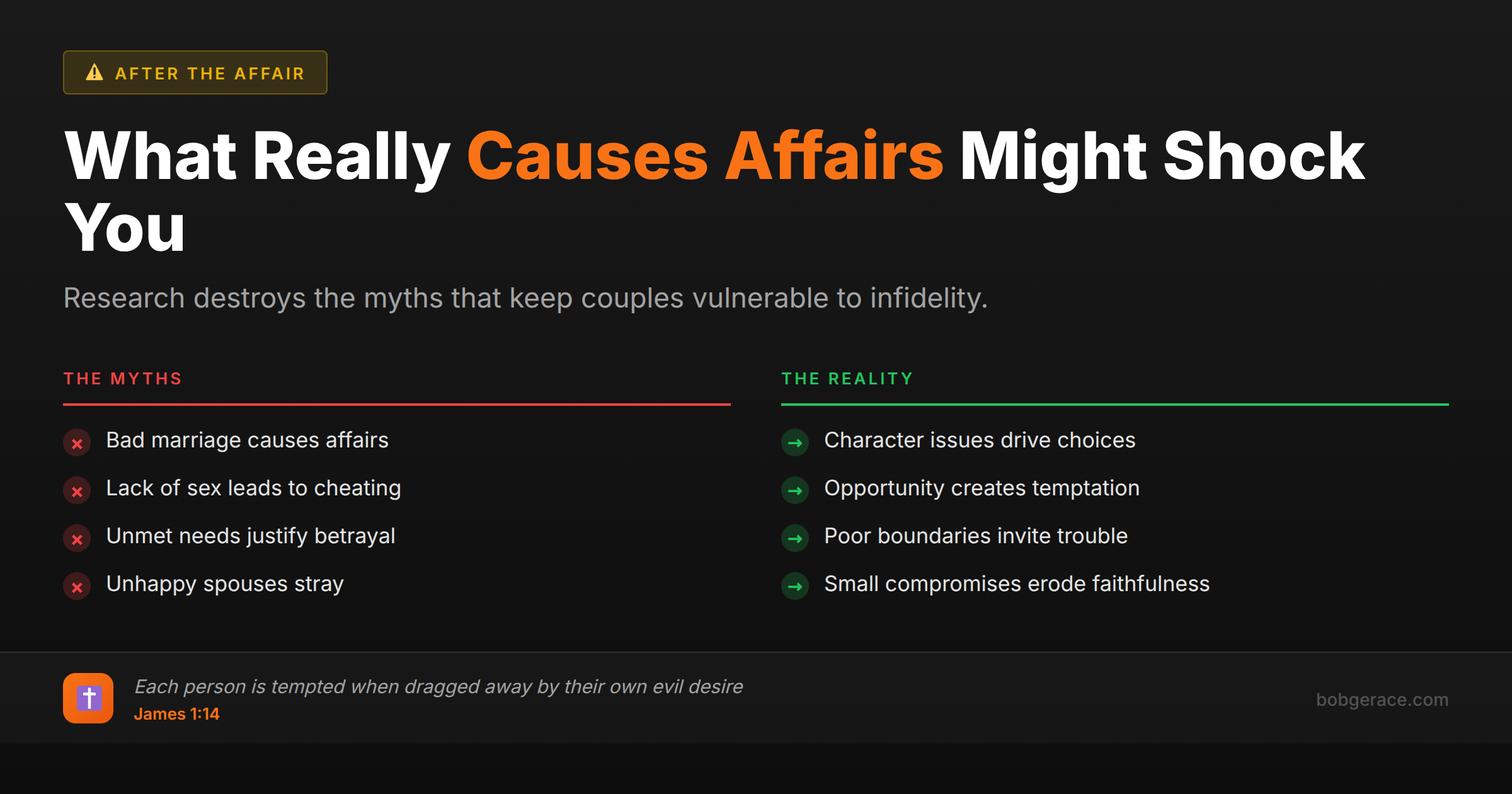
Research consistently debunks several common beliefs about what causes affairs. Contrary to popular assumptions, affairs aren't primarily caused by lack of sex, unhappy marriages, or unmet needs. Studies show that many people who have affairs report being satisfied with their marriages and sex lives. The "affair fog" narrative that affairs happen because something is missing at home oversimplifies the reality. What actually drives infidelity is more complex: opportunity, personal character issues, poor boundaries, and the gradual erosion of commitment through small compromises. Affairs often happen not because the marriage is broken, but because individuals make choices that prioritize immediate gratification over long-term faithfulness. Understanding these truths is crucial for both prevention and recovery.
The Full Picture
The mythology around affairs has created dangerous blind spots that actually make marriages more vulnerable. Let me set the record straight with what research actually shows.
The "Unhappy Marriage" Myth
One of the biggest misconceptions is that affairs only happen in unhappy marriages. Studies consistently show that many unfaithful partners report being satisfied with their marriages. Dr. Shirley Glass's research found that 56% of men and 34% of women who had affairs described their marriages as happy. This isn't about a broken marriage - it's about broken character.
The "Sexless Marriage" Fallacy
Another dangerous myth is that affairs happen because couples aren't having enough sex. While sexual disconnection can be a factor, it's rarely the primary cause. Many couples recovering from affairs discover they had regular, satisfying intimate lives. The affair wasn't about sex - it was about validation, excitement, or escape.
The "Unmet Needs" Trap
Perhaps the most harmful myth is that affairs happen because a spouse isn't meeting their partner's needs. This places blame on the betrayed spouse and misses the real issue: the unfaithful partner's choice to look outside the marriage rather than address issues within it. Every marriage has unmet needs - faithful spouses find appropriate ways to address them.
The "Just Happened" Lie
Affairs don't "just happen." They're the result of hundreds of small choices that gradually erode boundaries and commitment. Research shows that affairs typically involve a series of escalating decisions over weeks or months, not spontaneous moments of weakness.
What's Really Happening
In my practice, I see couples trapped by these myths every day, and it's heartbreaking because believing these falsehoods actually prevents real healing and prevention.
The research is clear: affairs are primarily about the individual who chooses to be unfaithful, not about deficiencies in the marriage or betrayed spouse. When we studied patterns of infidelity, we found that the strongest predictors weren't marital satisfaction levels, but individual factors like entitlement, poor boundary management, and what I call "permission-giving beliefs."
These myths are particularly dangerous because they shift //blog.bobgerace.com/marriage-focus-systems-christian-husband/:focus away from personal accountability. When someone believes affairs are caused by unmet needs or unhappy marriages, they unconsciously give themselves permission to look elsewhere rather than doing the hard work of addressing issues directly with their spouse.
What I've observed is that people who have affairs often struggle with emotional regulation, have difficulty with delayed gratification, or carry unresolved personal issues that have nothing to do with their marriage quality. They may have grown up in environments where boundaries were fluid, or they may have developed coping mechanisms that prioritize avoiding discomfort over maintaining integrity.
The most concerning pattern I see is how these myths prevent couples from implementing effective prevention strategies. Instead of focusing on individual character development and clear boundaries, they worry about being "perfect enough" to affair-proof their marriage - which is impossible and exhausting.
Recovery requires understanding that affairs are a choice, not an inevitable result of circumstances.
What Scripture Says
Scripture provides crystal-clear guidance that contradicts these cultural myths about affairs. God's Word consistently places responsibility on individual choices rather than circumstances.
Personal Responsibility for Sin
*"Each person is tempted when they are dragged away by their own evil desire and enticed. Then, after desire has conceived, it gives birth to sin; and sin, when it is full-grown, gives birth to death."* (James 1:14-15)
This passage destroys the myth that external circumstances cause affairs. Sin originates from within - from our own desires and choices.
The Heart Issue
*"Above all else, guard your heart, for everything you do flows from it."* (Proverbs 4:23)
Affairs aren't caused by what's missing externally but by what's happening internally. The heart that isn't carefully guarded will find reasons to justify unfaithfulness regardless of marriage quality.
No Excuse for Compromise
*"No temptation has overtaken you except what is common to mankind. And God is faithful; he will not let you be tempted beyond what you can bear. But when you are tempted, he will also provide a way out so that you can endure it."* (1 Corinthians 10:13)
This verse directly contradicts the "couldn't help it" narrative. God promises there's always a way out of temptation.
Covenant Commitment
*"'I hate divorce,' says the Lord God of Israel."* (Malachi 2:16)
God's design for marriage involves unwavering commitment that doesn't depend on circumstances or feelings. The covenant isn't conditional on perfect happiness or met needs.
Scripture never gives permission for unfaithfulness based on circumstances - it calls us to faithfulness regardless of difficulty.
What To Do Right Now
-
1
Stop believing the myths - recognize that affairs are always a choice, not an inevitable result of circumstances
-
2
Focus on character development and personal integrity rather than trying to affair-proof through perfect performance
-
3
Establish clear boundaries around opposite-sex relationships regardless of your marriage satisfaction level
-
4
Address marriage issues directly with your spouse instead of entertaining thoughts of looking elsewhere
-
5
Get individual counseling if you find yourself vulnerable to affair thinking or justifications
-
6
Commit to transparency and accountability in your relationships, especially during difficult seasons
Related Questions
Need Help Navigating Affair Recovery?
Don't let myths derail your healing. Get evidence-based guidance for your specific situation.
Get Help Now →