What evidence should I secure?
6 min read
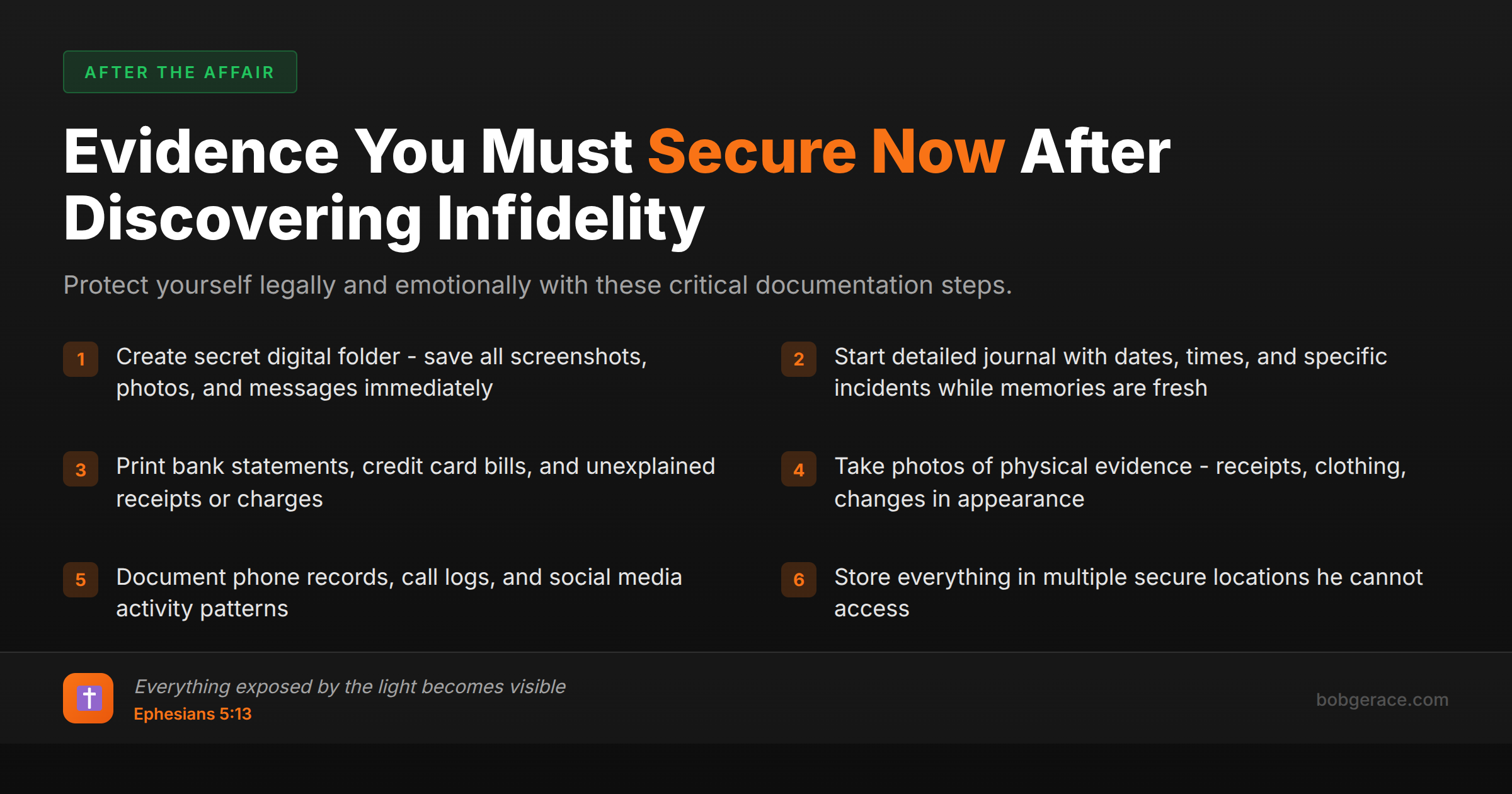
When you've discovered another man in your marriage, securing evidence serves three critical purposes: protecting yourself legally, establishing the truth clearly, and creating accountability. Document everything chronologically - texts, emails, photos, phone records, financial statements, and your own detailed journal entries with dates, times, and specific incidents. Save digital evidence to multiple secure locations and keep physical copies in a safe place your spouse cannot access. However, remember that gathering evidence isn't about building a case for revenge - it's about protection, clarity, and making informed decisions about your marriage's future. Your goal should be restoration if possible, but wisdom demands you protect yourself and your children first.
The Full Picture
The reality is stark: when there's another man in your marriage, evidence isn't just helpful - it's essential. But let's be clear about why you're doing this. You're not gathering evidence to destroy your husband or to win some marital court case. You're documenting truth because deception thrives in darkness, and healing requires light.
Start with digital communications. Screenshots of text messages, saved emails, social media interactions, and dating app discoveries need to be preserved immediately. Don't just save them to your phone - email them to a secure account your spouse doesn't know about. These communications often reveal the timeline, emotional investment, and physical extent of the relationship.
Financial evidence tells a powerful story. Bank statements, credit card records, unexplained expenses, hotel receipts, restaurant charges, and gift purchases create a clear picture of resources being diverted from your family. Check for new accounts, cash advances, and spending patterns that don't match his stated activities.
Your own detailed journal becomes crucial evidence. Record dates, times, conversations, behavioral changes, lies told, and your emotional responses. This isn't about keeping score - it's about maintaining clarity when you're being told your perceptions are wrong.
Physical evidence matters too. Unexplained receipts, clothing items, cologne scents, and changes in personal habits should be noted. If safe to do so, photograph anything that supports your observations.
The key principle: document everything, assume nothing, and protect the evidence like your future depends on it - because it might.
What's Really Happening
From a clinical perspective, securing evidence serves multiple psychological and practical functions that many people don't fully understand. First, it combats the //blog.bobgerace.com/gaslighting-recovery-christian-marriage-timeline/:gaslighting that almost always accompanies infidelity. When someone is deceiving you, they instinctively work to make you question your own perceptions and reality. Having concrete evidence anchors you to truth and protects your mental health.
Second, evidence gathering provides a sense of agency during a time when you feel completely powerless. The process of methodical documentation can actually help regulate your nervous system and provide some emotional stability in chaos. However, be careful not to become obsessed with surveillance - this can become an unhealthy coping mechanism that prevents you from processing the emotional reality of betrayal.
Third, quality evidence enables you to make informed decisions rather than reactive ones. When you have a clear picture of what you're dealing with - whether it's an emotional affair, physical relationship, or ongoing deception - you can respond strategically rather than emotionally.
Finally, documentation protects you legally and financially. Infidelity affects divorce proceedings, custody decisions, and asset division in many states. Even if reconciliation is your goal, having evidence protects your interests and those of your children. The goal isn't vindictiveness - it's wisdom and protection while you work toward whatever healing is possible.
What Scripture Says
Scripture doesn't shy away from the need for truth and evidence, even in painful situations. 'But everything exposed by the light becomes visible—and everything that is illuminated becomes a light' (Ephesians 5:13). God calls us to bring deception into the light, not to hide from uncomfortable truths.
The Bible also teaches us about wisdom and protection. 'The simple believe anything, but the prudent give thought to their steps' (Proverbs 14:15). Gathering evidence isn't about being suspicious - it's about being prudent when you've already discovered deception.
Jesus himself spoke about the need for evidence and witnesses: 'But if they will not listen, take one or two others along, so that every matter may be established by the testimony of two or three witnesses' (Matthew 18:16). While this verse deals with church discipline, the principle of establishing truth through evidence applies to marriage as well.
'Above all else, guard your heart, for everything you do flows from it' (Proverbs 4:23). Protecting yourself isn't selfish - it's biblical. You cannot pour from an empty cup, and you cannot restore a marriage from a position of complete vulnerability.
However, Scripture also calls us to ultimate purposes of restoration: 'Brothers and sisters, if someone is caught in a sin, you who live by the Spirit should restore that person gently' (Galatians 6:1). Evidence serves truth and restoration, not revenge. 'In your anger do not sin' (Ephesians 4:26) - let your evidence gathering be motivated by love for truth and protection, not by hatred or vengeance.
What To Do Right Now
-
1
Create a secure digital folder in a private email account he doesn't know about - save all screenshots, photos, and digital evidence here immediately
-
2
Start a detailed journal with dates, times, specific incidents, conversations, and your observations - write in it daily while memories are fresh
-
3
Gather financial evidence by printing bank statements, credit card bills, and any unexplained receipts or charges you can find
-
4
Take photos of any physical evidence - receipts, clothing, changes in appearance, or items that don't belong in your home
-
5
Secure copies of all evidence in multiple locations - cloud storage, physical copies in a safe deposit box, and with a trusted friend or family member
-
6
Consult with a Christian attorney to understand your legal rights and how evidence might affect potential proceedings - knowledge protects you even if you choose reconciliation
Related Questions
- Should I screenshot everything?
- Should I gather more evidence first?
- I found texts — do I confront her?
- How do I confirm she's actually cheating?
- What do I do about finances immediately?
- Should I confront immediately or wait?
- How does moving out affect my legal position?
- What do I document?
- What financial protections should I put in place?
- Should I get a lawyer now or wait?
Also find Bob on
Subscribe for weekly videos on Christian marriage.
Get a Coach on This Today
Evidence matters, but so does your next move with her. A coach who knows your specific situation helps you protect yourself without torching what might still be salvageable.
Talk to Bob →