What is the neuroscience of limerence?
6 min read
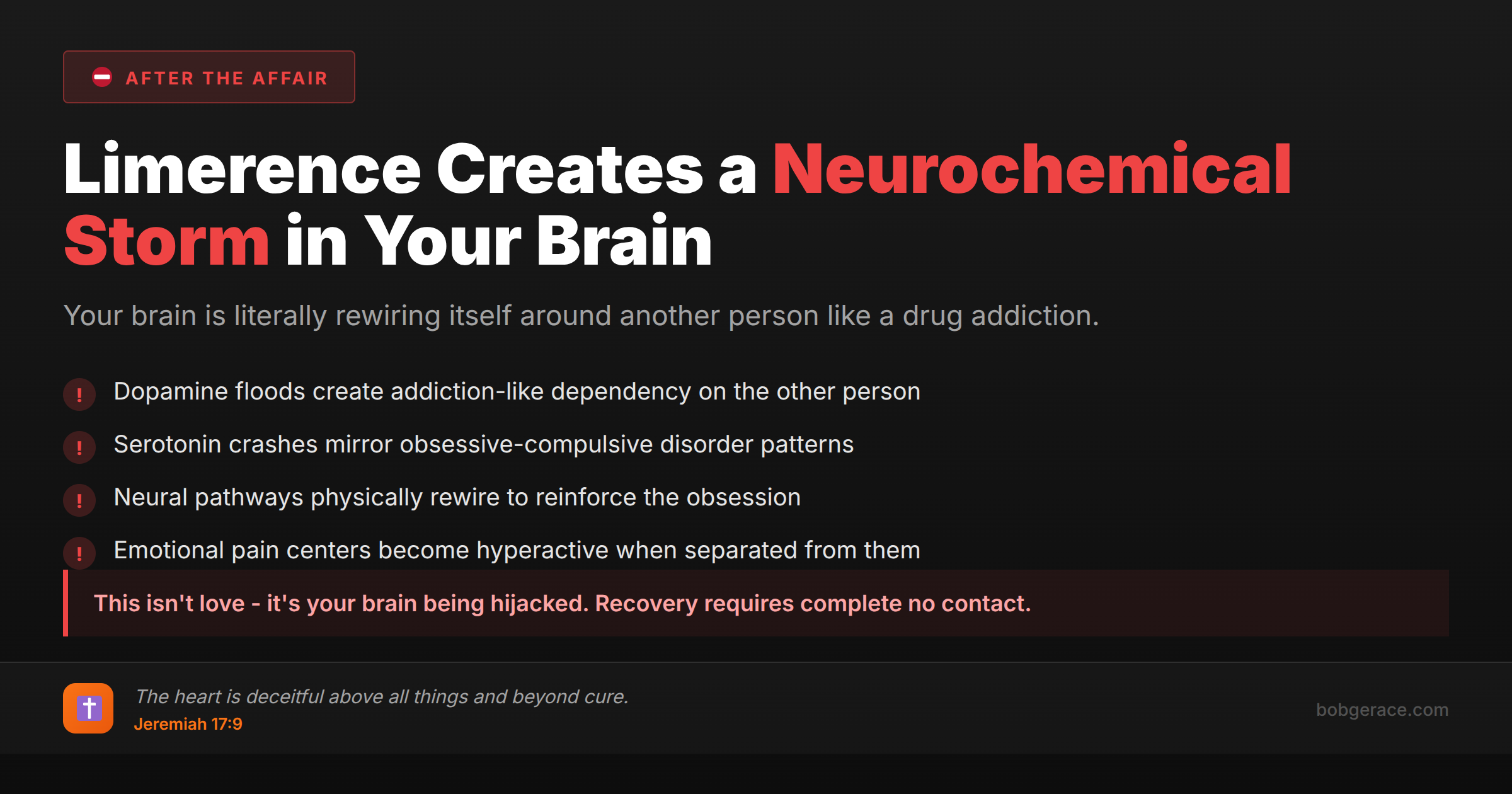
Limerence creates a neurochemical storm in your brain similar to addiction. Your reward system floods with dopamine when you think about or interact with the limerent object, while norepinephrine creates the racing heart and obsessive thoughts. Meanwhile, serotonin levels drop significantly - the same pattern seen in obsessive-compulsive disorder - explaining why you can't stop thinking about them. This isn't just attraction or infatuation. Your brain is literally rewiring itself around this person, creating neural pathways that reinforce the obsession. The anterior cingulate cortex, which processes emotional pain, becomes hyperactive when separated from the limerent object. This is why the pain of not being with them feels so physically real - because neurologically, it is.
The Full Picture
When you're in limerence, your brain undergoes dramatic neurochemical changes that mirror addiction patterns. The dopamine reward system becomes hijacked, creating intense cravings for contact with the limerent object. Every text, glance, or interaction triggers a dopamine surge that reinforces the obsessive behavior.
Norepinephrine levels spike, causing the physical symptoms you recognize - racing heart, sweaty palms, inability to eat or sleep. This stress hormone keeps you in a constant state of arousal and hypervigilance about the other person. You're literally experiencing a chronic stress response.
Most significantly, serotonin plummets by 40-60% - the same drop seen in severe depression and OCD. This explains the intrusive thoughts that consume 85% of your waking hours. Your brain's emotional regulation system is compromised, making rational decision-making nearly impossible.
The anterior cingulate cortex and insula light up intensely during separation from the limerent object. These brain regions process physical and emotional pain identically, which is why the ache of separation feels genuinely torturous. Your brain interprets emotional distance as a threat to survival.
Oxytocin and vasopressin create false intimacy bonds, even from minimal contact. These 'attachment hormones' make you feel profoundly connected to someone you may barely know, overriding your logical mind's recognition that this connection isn't real or healthy.
The prefrontal cortex - your executive decision-making center - becomes suppressed while the limbic system dominates. This neurological shift explains why intelligent, rational people make devastating choices during limerent episodes. Your brain is literally operating in survival mode, not rational mode.
What's Really Happening
From a clinical perspective, limerence represents a temporary but profound alteration in brain function that I see regularly in affair recovery cases. The neurochemical profile is remarkably consistent: elevated dopamine and norepinephrine coupled with severely depleted serotonin creates what we call 'affair fog' - a state where normal judgment is neurologically compromised.
What makes this particularly challenging is that the brain changes are reinforcing. Each contact with the limerent object strengthens the neural pathways associated with reward and //blog.bobgerace.com/combat-conversations-christian-marriage-fight-connection/:attachment-between-feeling-known-and-wanting-sex). The person literally becomes physiologically dependent on interactions with someone who isn't their spouse. This isn't weakness or moral failure - it's neurochemistry.
The timeline for neurochemical recovery typically follows predictable patterns. Dopamine regulation begins normalizing around 90 days of no contact, but can take 6-18 months for full recovery. Serotonin levels usually restore within 3-6 months with proper support and often medication. The key insight for couples is understanding that this is a medical-level brain state requiring clinical intervention, not just willpower.
I often explain to couples that trying to reason with someone in active limerence is like trying to reason with someone having a panic attack. The neurological capacity for rational processing is temporarily compromised. This doesn't excuse harmful choices, but it does explain them and guides our treatment approach. Recovery requires both time for brain chemistry to normalize and intensive work to rebuild healthy neural patterns focused on the marriage.
What Scripture Says
Scripture warns us about the power of disordered affections and misplaced desires. Jeremiah 17:9 tells us, *'The heart is deceitful above all things and beyond cure. Who can understand it?'* This isn't just poetic language - it's a recognition that our emotional and neurological systems can lead us profoundly astray.
Romans 1:28 describes what happens when we don't honor God with our minds: *'Since they did not think it worthwhile to retain the knowledge of God, so God gave them over to a depraved mind.'* The word 'depraved' here means 'not functioning as designed.' When we feed limerent obsessions, our minds literally stop functioning as God designed them.
2 Corinthians 10:5 gives us the battle plan: *'We demolish arguments and every pretension that sets itself up against the knowledge of God, and we take captive every thought to make it obedient to Christ.'* This isn't just spiritual advice - it's describing the neuroplasticity principle. We can literally rewire our brains by controlling our thought patterns.
1 Corinthians 6:12 provides crucial wisdom: *'I have the right to do anything, but not everything is beneficial. I have the right to do anything, but I will not be mastered by anything.'* Limerence is precisely about being mastered by neurochemical responses rather than walking in freedom.
God designed our brains to bond deeply with our spouses through the same neurochemical systems that limerence hijacks. Genesis 2:24 describes becoming 'one flesh' - a process that involves these same oxytocin and dopamine pathways, but directed toward covenant relationship rather than fantasy obsession. The cure for limerence isn't just breaking the unhealthy neural patterns, but rebuilding them properly within marriage.
What To Do Right Now
-
1
Implement absolute no contact - Your brain cannot recover while still receiving dopamine hits from the limerent object
-
2
Consider medical evaluation - Severely depleted serotonin often requires professional intervention and possibly medication
-
3
Practice thought-stopping techniques - When intrusive thoughts start, immediately redirect to prayer, scripture, or physical activity
-
4
Rebuild dopamine pathways with your spouse - Plan novel, exciting activities together to reactivate healthy reward circuits
-
5
Get accountability partners - Your prefrontal cortex is compromised; you need external rational support
-
6
Commit to 90-day minimum recovery - Brain chemistry changes take time; shorter timelines typically result in relapse
Related Questions
- What is limerence?
- What brain chemicals are involved?
- How does limerence affect perception and memory?
- How is limerence similar to drug addiction?
- What does dopamine addiction look like in affairs?
- What happens in her brain when she sees him vs. me?
- What's happening in my brain when I rage?
- What is 'amygdala hijack' and how do I interrupt it?
- What does chronic stress do to her capacity for connection?
- What is 'neuroplasticity' and how do I leverage it?
Also find Bob on
Subscribe for weekly videos on Christian marriage.
Your Brain Won't Fix This Alone
Limerence rewired you for someone else. A coach who knows your marriage can help you rewire back—faster than white-knuckling it solo.
Talk to Bob →