What brain chemicals are involved?
6 min read
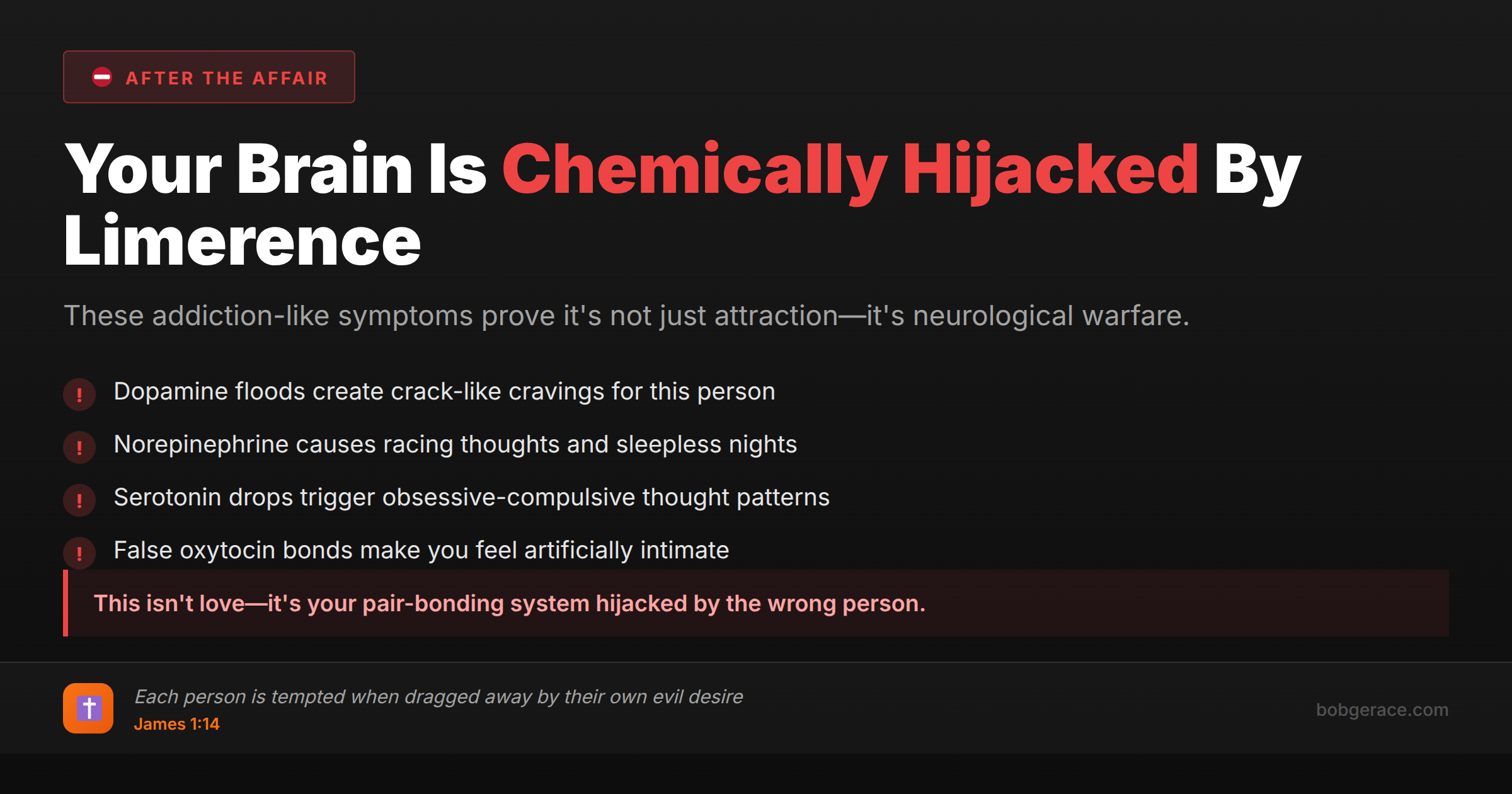
Limerence involves a powerful cocktail of brain chemicals that create addiction-like symptoms. Dopamine floods your reward system, creating intense pleasure and craving for the other person. Norepinephrine acts like a stimulant, causing racing thoughts, sleeplessness, and that "high" feeling. Meanwhile, serotonin drops significantly - the same pattern seen in obsessive-compulsive disorder - which explains the intrusive thoughts and inability to stop thinking about them. This isn't just "attraction" - it's your brain hijacked by chemicals designed for pair bonding, but triggered by the wrong person. Oxytocin and vasopressin create false intimacy through shared secrets and emotional connection. The result? Your brain literally becomes addicted to this person, making rational decisions nearly impossible.
The Full Picture
Understanding the neurochemistry of limerence is crucial because it explains why you feel so powerless against these emotions. This isn't a character flaw - it's your brain's reward system being hijacked.
The Dopamine Rush: When you see a text from them or anticipate meeting, dopamine floods your brain's reward pathways. This is the same chemical involved in gambling, drug addiction, and other compulsive behaviors. It creates an intense high followed by craving for more contact.
Norepinephrine's Stimulation: This stress hormone creates the physical symptoms - racing heart, sweaty palms, inability to sleep, loss of appetite. It's why you feel "electric" around them and can't calm down. Your body is in a constant state of arousal and alertness.
Serotonin Depletion: Studies show limerent individuals have serotonin levels 40% lower than normal - identical to people with OCD. This explains the obsessive thoughts, the inability to focus on anything else, and why you feel anxious when not thinking about them.
False Bonding Chemicals: Oxytocin (the "love hormone") and vasopressin create feelings of deep connection and attachment. Emotional intimacy, shared secrets, and even arguments trigger these chemicals, making you feel incredibly bonded to someone you barely know.
The Addiction Cycle: Like any addiction, tolerance builds. You need more contact, deeper connection, greater risks to achieve the same high. Meanwhile, withdrawal symptoms (anxiety, depression, obsessive thoughts) drive you back to the source.
This chemical storm typically lasts 18-36 months, but can be extended indefinitely through intermittent contact - which is why "no contact" is so crucial for recovery.
What's Really Happening
From a clinical perspective, limerence represents a hijacking of attachment and reward systems designed for healthy pair bonding. The brain chemicals involved create a perfect storm that mimics both addiction and obsessive-compulsive patterns.
The dopamine surge in limerence is particularly insidious because it operates on what we call "intermittent reinforcement" - the most addictive reward schedule known to psychology. Every uncertain text, every ambiguous interaction, every stolen moment triggers a massive dopamine release that's more powerful than consistent rewards.
What makes this especially dangerous for marriages is that these chemicals create what I call "synthetic intimacy." The combination of norepinephrine-induced arousal, oxytocin from emotional sharing, and dopamine from novelty creates feelings of //blog.bobgerace.com/combat-conversations-christian-marriage-fight-connection/:connection that feel more intense than years of marriage - but it's neurochemically artificial.
The serotonin depletion explains why clients describe feeling "crazy" or unlike themselves. Lower serotonin disrupts impulse control, decision-making, and emotional regulation. This is why someone who's never cheated suddenly finds themselves making choices that shock everyone, including themselves.
Recovery requires understanding that these are real, measurable brain changes - not just "feelings" you can think your way out of. The good news is that neuroplasticity means these patterns can be rewired through consistent behavioral changes, time, and often therapeutic intervention. But it requires treating it with the seriousness of any addiction, including complete cessation of the triggering stimulus - contact with the limerent object.
What Scripture Says
Scripture doesn't use modern neuroscience terms, but it clearly understands the power of desire to overwhelm our rational minds and lead us into sin.
James 1:14-15 perfectly describes the limerence cycle: *"But each person is tempted when they are dragged away by their own evil desire and enticed. Then, after desire has conceived, it gives birth to sin; and sin, when it is full-grown, gives birth to death."* The Greek word for "dragged away" (exelkó) means to be pulled by force - exactly what these brain chemicals do.
Romans 7:19 captures the helplessness: *"For I do not do the good I want to do, but the evil I do not want to do—this I keep on doing."* Paul understood what neuroscience now confirms - we can be overwhelmed by impulses that feel stronger than our will.
1 Corinthians 10:13 offers hope: *"No temptation has overtaken you except what is common to mankind. And God is faithful; he will not let you be tempted beyond what you can bear. But when you are tempted, he will also provide a way out so that you can endure it."* Even neurochemical addiction has an escape route through God's provision.
Romans 12:2 points to the solution: *"Do not conform to the pattern of this world, but be transformed by the renewing of your mind."* Neuroplasticity - the brain's ability to rewire - is God's design for transformation.
2 Corinthians 10:5 gives the strategy: *"We demolish arguments and every pretension that sets itself up against the knowledge of God, and we take captive every thought to make it obedient to Christ."* This is active, intentional rewiring of thought patterns.
Galatians 5:16 promises victory: *"Walk by the Spirit, and you will not gratify the desires of the flesh."* God's Spirit provides power beyond our neurochemistry.
What To Do Right Now
-
1
Acknowledge the addiction: Stop minimizing this as "just feelings." Your brain is chemically compromised and needs the same seriousness as any addiction.
-
2
Implement complete no-contact: Every interaction resets the chemical cycle. Block numbers, avoid locations, eliminate all possible contact points immediately.
-
3
Create dopamine alternatives: Exercise, music, accomplishing goals, and serving others provide healthy dopamine without the addiction cycle.
-
4
Practice thought-stopping techniques: When obsessive thoughts start, immediately redirect to prayer, scripture memory, or physical activity to break the neural pathways.
-
5
Increase serotonin naturally: Regular sleep, sunlight exposure, physical exercise, and proper nutrition help restore healthy brain chemistry.
-
6
Seek professional help: Consider therapy and possibly medication consultation to address the neurochemical imbalances while you work on behavioral changes.
Related Questions
- What is limerence?
- What is the neuroscience of limerence?
- How is limerence similar to drug addiction?
- What does dopamine addiction look like in affairs?
- Why does she seem high/manic about him?
- What happens in her brain when she sees him vs. me?
- What's happening in my brain when I rage?
- What role does cortisol play in my reactivity?
- What is 'neuroplasticity' and how do I leverage it?
- How does chronic stress affect her capacity for connection?
Also find Bob on
Subscribe for weekly videos on Christian marriage.
Your Brain Chemistry Won't Fix Itself
Knowing what's happening in your head doesn't stop the flood. A coach who knows your specific situation can help you interrupt these patterns before they destroy what's left.
Talk to Bob →