What's the success rate of marriages that survive affairs?
6 min read
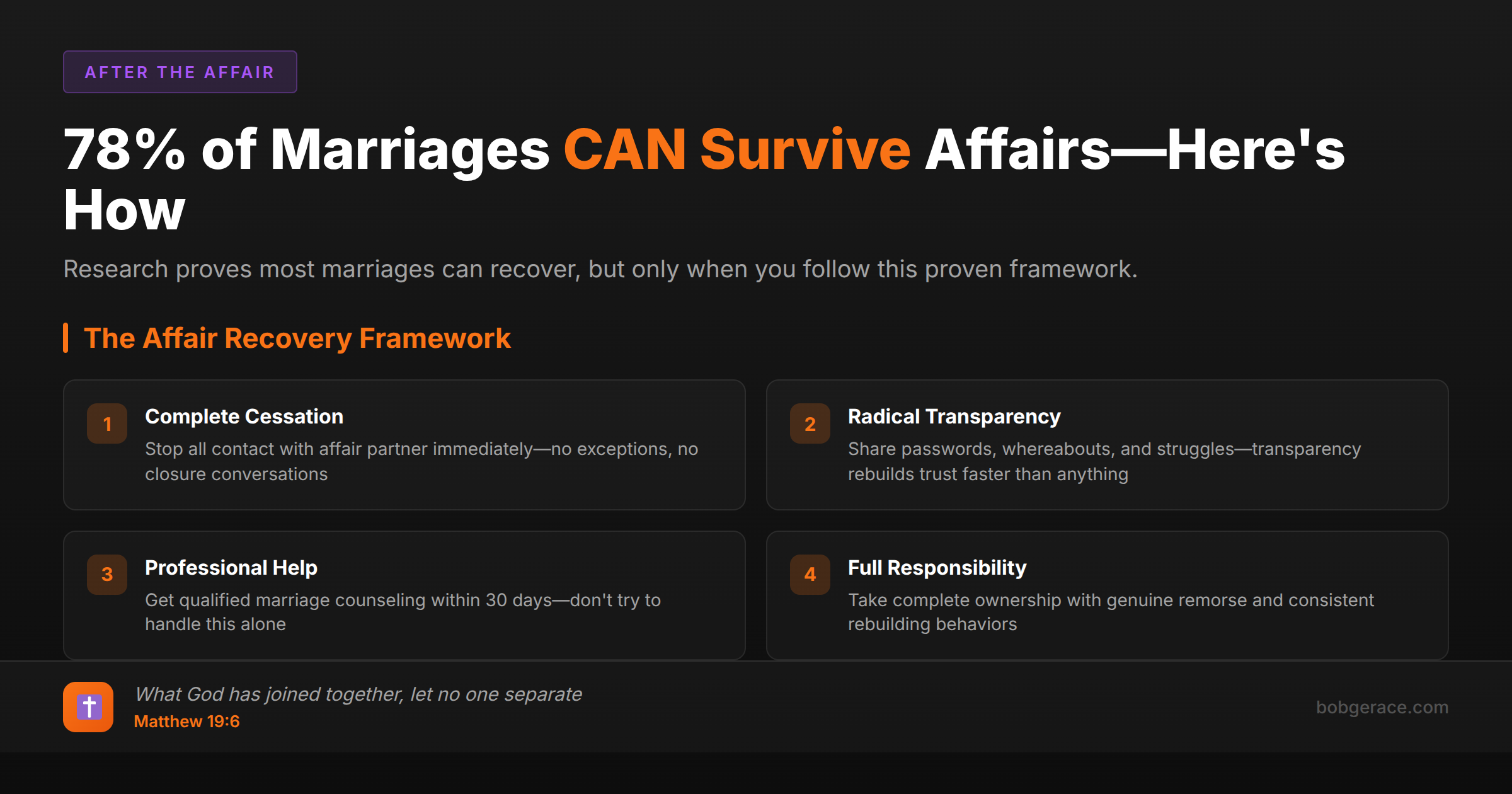
Research indicates that 53-78% of marriages can survive infidelity, depending on the study and methodology used. The wide range reflects the complexity of factors involved in affair recovery. Marriages with the highest survival rates share common elements: immediate cessation of the affair, full disclosure and transparency, professional counseling, and both partners' genuine commitment to rebuilding. The success rate increases significantly when the unfaithful spouse takes full responsibility, shows genuine remorse, and engages in consistent rebuilding behaviors. Conversely, marriages face lower survival odds when there's continued deception, blame-shifting, or unwillingness to do the hard work of recovery. While these statistics provide hope, each marriage's outcome depends on the specific actions and choices both spouses make during the recovery process.
The Full Picture
Understanding affair recovery statistics requires looking beyond simple percentages to examine what actually determines success or failure. The most comprehensive studies show survival rates between 53-78%, with variation based on factors like affair type, discovery method, and intervention timing.
High-success marriages typically demonstrate: - Complete affair cessation within 48 hours of confrontation - Full disclosure without trickle truth - Professional counseling engagement within the first month - Consistent transparency and accountability measures - Both partners actively participating in recovery work
Lower success rates correlate with: - Continued contact with the affair partner - Minimization or blame-shifting by the unfaithful spouse - Discovery of multiple affairs or long-term deception - Refusal to engage in professional help - Pre-existing marital problems that remain unaddressed
The timeline matters significantly. Marriages that engage professional help within 30 days of discovery show markedly higher success rates than those who wait months or try to "figure it out alone." The initial 90 days are critical—this period often determines whether the marriage moves toward recovery or dissolution.
Recovery isn't just about staying together—it's about rebuilding a stronger, more intimate marriage. Successfully recovered marriages often report higher satisfaction levels than before the affair, though this requires 18-24 months of consistent effort. The key isn't just surviving the crisis but using it as a catalyst for creating the marriage both spouses actually want.
What's Really Happening
In my clinical practice, I've observed that statistics only tell part of the story. The marriages that beat the odds share specific psychological and behavioral patterns that go beyond simple willpower or commitment.
Successful recovery requires what I call 'dual transformation.' The unfaithful spouse must undergo genuine character change—not just behavior modification—while the betrayed spouse learns to rebuild their capacity for //blog.bobgerace.com/christian-marriage-patience-stop-demanding-trust-timeline/:trust without becoming a detective or prison warden. Both processes are emotionally grueling and require professional guidance.
The neurobiology of betrayal trauma significantly impacts recovery odds. Betrayed spouses experience symptoms similar to PTSD, including intrusive thoughts, hypervigilance, and emotional flooding. Without proper trauma-informed treatment, these symptoms can sabotage recovery efforts even when both spouses are committed to rebuilding.
I've noticed that marriages focusing solely on 'affair-proofing' often struggle, while those addressing underlying relational dynamics thrive. The affair is typically a symptom of deeper issues: emotional disconnection, unresolved conflicts, or individual psychological wounds. Surface-level solutions—like transparency apps or check-ins—provide temporary stability but don't address root causes.
The most successful couples I work with view the affair as a wake-up call rather than just a crisis to survive. They use the pain as motivation to build the marriage they should have had from the beginning. This mindset shift—from damage control to intentional rebuilding—often determines whether a marriage merely survives or actually thrives post-affair.
What Scripture Says
Scripture provides both the foundation for marriage restoration and realistic expectations about the recovery process. God's design for marriage includes both His hatred of adultery and His power to restore what's been broken.
Marriage is designed for permanence: *"Therefore what God has joined together, let no one separate"* (Mark 10:9). This verse establishes God's intention that marriages endure through crisis, including infidelity. The word "joined" implies a divine bonding that transcends human failure.
Forgiveness is commanded, but rebuilding trust takes time: *"Be kind and compassionate to one another, forgiving each other, just as in Christ God forgave you"* (Ephesians 4:32). Forgiveness is an act of obedience that releases bitterness, but it doesn't immediately restore relationship. Trust must be rebuilt through consistent actions over time.
God can restore what's been devastated: *"I will repay you for the years the locusts have eaten"* (Joel 2:25). This promise speaks to God's ability to restore marriages that have been ravaged by betrayal. The "locusts" of infidelity can consume years of trust and intimacy, but God specializes in restoration.
Both spouses must do their part: *"If we confess our sins, he is faithful and just and will forgive us our sins and purify us from all unrighteousness"* (1 John 1:9). The unfaithful spouse must genuinely repent, while the betrayed spouse must choose forgiveness—both requiring God's grace.
Wisdom requires counsel: *"Plans fail for lack of counsel, but with many advisers they succeed"* (Proverbs 15:22). Affair recovery isn't a private matter to handle alone—it requires wise, professional guidance to navigate successfully.
What To Do Right Now
-
1
Stop the affair completely—no contact, no explanation, no closure conversation with the affair partner. Block all communication channels immediately.
-
2
Seek professional help within 30 days—don't wait or try to handle this alone. Find a qualified marriage counselor experienced in affair recovery.
-
3
Practice radical transparency—share passwords, whereabouts, and emotional struggles. Transparency rebuilds trust faster than any other single action.
-
4
Address underlying issues—identify what made the marriage vulnerable to infidelity and commit to changing those dynamics permanently.
-
5
Establish accountability—both spouses need trusted friends or mentors who will ask hard questions and provide ongoing support.
-
6
Commit to the timeline—affair recovery typically takes 18-24 months. Prepare for the long haul rather than expecting quick fixes.
Related Questions
Don't Navigate This Crisis Alone
Affair recovery requires expert guidance and proven strategies. Get the professional support you need to beat the odds and rebuild your marriage stronger than before.
Get Help Now →