What does rebuilding trust as a leader require?
6 min read
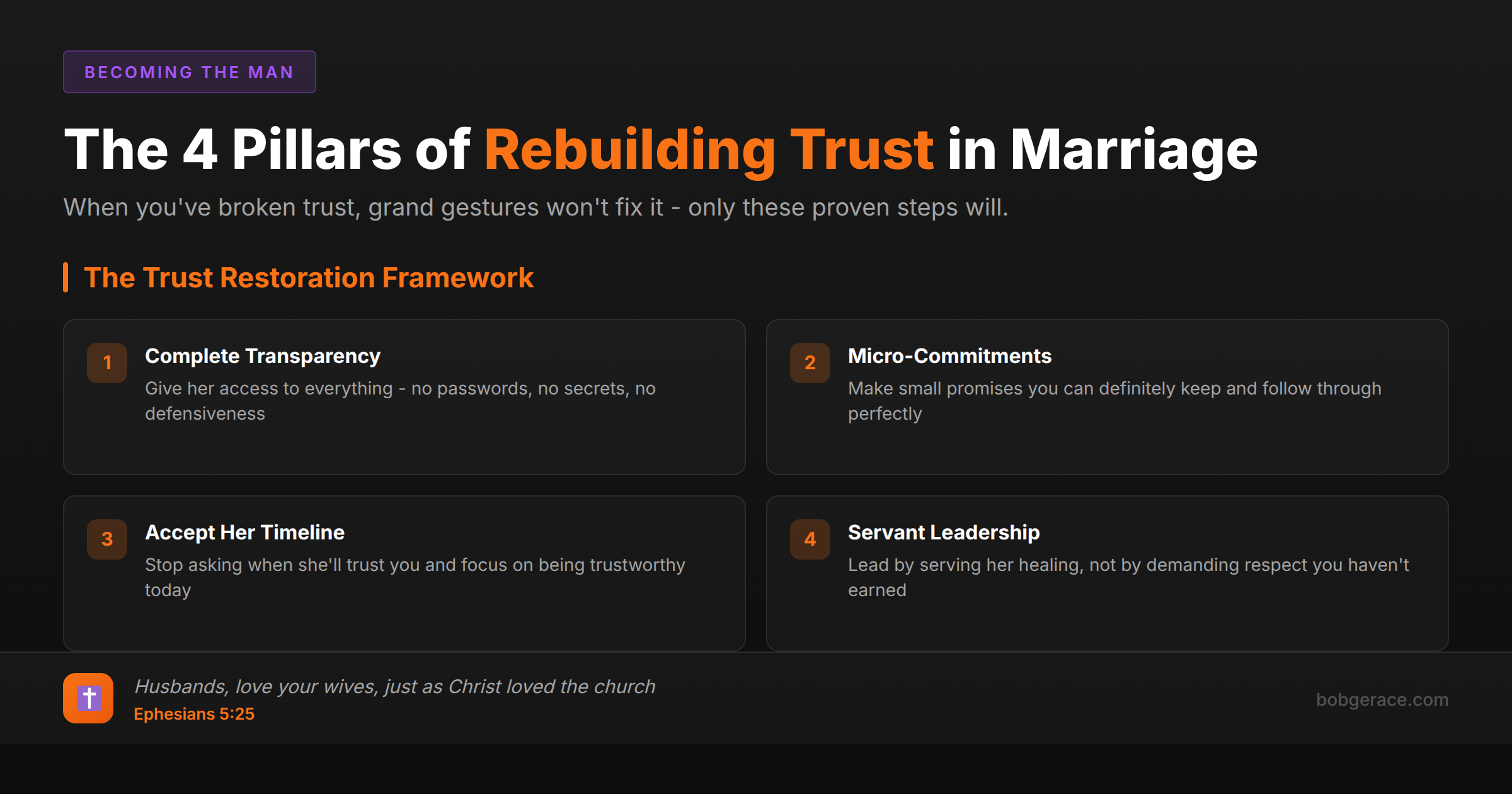
Rebuilding trust as a leader in your marriage requires complete transparency, consistent follow-through, and servant leadership over time. This isn't about grand gestures or quick fixes - it's about proving through daily actions that you're a different man than the one who broke trust in the first place. You must be willing to submit to accountability, follow through on every commitment no matter how small, and lead by serving rather than demanding respect. The process is slow, often painful, and requires you to earn back what you once took for granted. But when done with genuine humility and biblical wisdom, it creates a foundation stronger than what existed before.
The Full Picture
Trust isn't rebuilt through words - it's rebuilt through a consistent pattern of trustworthy actions over time. When you've failed as a leader in your marriage, whether through infidelity, broken promises, addiction, or simply years of selfish decisions, you're starting from negative territory. You don't just need to build trust; you need to overcome the deficit of broken trust first.
The harsh reality is that rebuilding trust takes much longer than breaking it. You can shatter decades of trust in a single moment, but rebuilding it requires months or years of consistent, trustworthy behavior. Your wife isn't being unreasonable when she doesn't immediately trust your promises to change - she's being wise based on her experience with you.
True leadership in this season looks different than you might expect. It's not about taking charge or making decisions for your family. It's about leading yourself first - managing your emotions, following through on commitments, and being completely transparent about your thoughts, feelings, and actions. You earn the right to lead others by first proving you can lead yourself.
The process requires three fundamental shifts: First, from secrecy to transparency - your wife needs to see everything, not because she's controlling, but because you've proven secrecy leads to betrayal. Second, from promises to patterns - stop making grand declarations about change and start building small, consistent habits that demonstrate change. Third, from demanding respect to earning it - leadership isn't a position you hold; it's influence you earn through service and sacrifice.
What's Really Happening
When trust is broken in a marriage, we're dealing with trauma in the relationship system. The betrayed spouse develops hypervigilance - their nervous system is constantly scanning for signs of deception or threat. This isn't personal mistrust; it's a biological protection mechanism. Understanding this helps the rebuilding process because it explains why small inconsistencies feel like major betrayals and why the process takes so much time.
Neurologically, trust is built through predictable patterns that create safety in the brain. When a husband consistently follows through on small commitments - calling when he says he will, coming home when expected, being emotionally present when promised - he's literally rewiring his wife's neural pathways from threat detection back to safety and connection.
The rebuilding process often triggers shame spirals in men because progress feels painfully slow. They want to fix things quickly, but trust operates on a different timeline than problem-solving. The key is understanding that every trustworthy action, no matter how small, is making deposits into the relationship account. The compound effect of these deposits eventually reaches a tipping point where trust begins to feel natural again rather than effortful.
Success requires what we call 'radical accountability' - taking responsibility not just for your actions, but for the impact those actions have on your spouse, even when that impact feels disproportionate to the action. This isn't about accepting abuse; it's about understanding the reality of how broken trust affects the entire relationship dynamic.
What Scripture Says
Scripture presents leadership as service, not dominance. Ephesians 5:25-26 commands, 'Husbands, love your wives, just as Christ loved the church and gave himself up for her to make her holy, cleansing her by the washing with water through the word.' Christ's leadership was sacrificial service, not self-serving authority. When rebuilding trust, you're following this model by sacrificing your comfort, your timeline, and your preferences for your wife's healing.
Luke 16:10 teaches, 'Whoever is faithful in very little is also faithful in much, and whoever is dishonest in very little is also dishonest in much.' This principle is crucial for rebuilding trust. Your wife is watching how you handle small commitments because they reveal your character in larger matters. Being five minutes late consistently matters because it demonstrates whether your word has value.
Proverbs 28:13 declares, 'Whoever conceals their sins does not prosper, but the one who confesses and renounces them finds mercy.' Rebuilding trust requires ongoing confession - not just of past failures, but of current struggles, temptations, and mistakes. Transparency isn't just about big issues; it's about creating a culture of honesty in your relationship.
1 Peter 5:5-6 instructs, 'Clothe yourselves with humility toward one another, because God opposes the proud but shows favor to the humble. Humble yourselves, therefore, under God's mighty hand, that he may lift you up in due time.' Rebuilding trust requires humbling yourself under your wife's reasonable boundaries and timeline, trusting that God will restore your leadership as you prove faithful in this season of rebuilding.
What To Do Right Now
-
1
Submit to complete transparency - give your wife access to phones, accounts, schedules, and thoughts without defensiveness
-
2
Start with micro-commitments - make small promises you can definitely keep and follow through perfectly on each one
-
3
Accept her timeline for healing - stop asking when she'll trust you again and focus on being trustworthy today
-
4
Practice radical accountability - take responsibility for your actions and their impact without defending or explaining
-
5
Lead by serving - look for ways to serve your wife's healing process rather than demanding she move forward
-
6
Get consistent accountability - meet regularly with a mentor, counselor, or pastor who will call out your blind spots
Related Questions
- How do I lead when I've lost credibility?
- What is 'earned authority'?
- What does humble leadership look like?
- How do I become a safe person again?
- What does 'taking responsibility' actually look like?
- How do I lead without being positional?
- What are markers of genuine remorse vs. guilt?
- What does rebuilding trust require from her?
- How do I trust her again?
- What does genuine repair look like for old wounds?
Also find Bob on
Subscribe for weekly videos on Christian marriage.
You Don't Have to Rebuild Alone
A coach who knows your marriage can see what you're missing and keep you accountable when consistency gets hard. Bring your specific situation to someone who's done this work.
Talk to Bob →