What is defensiveness in Gottman's Four Horsemen?
6 min read
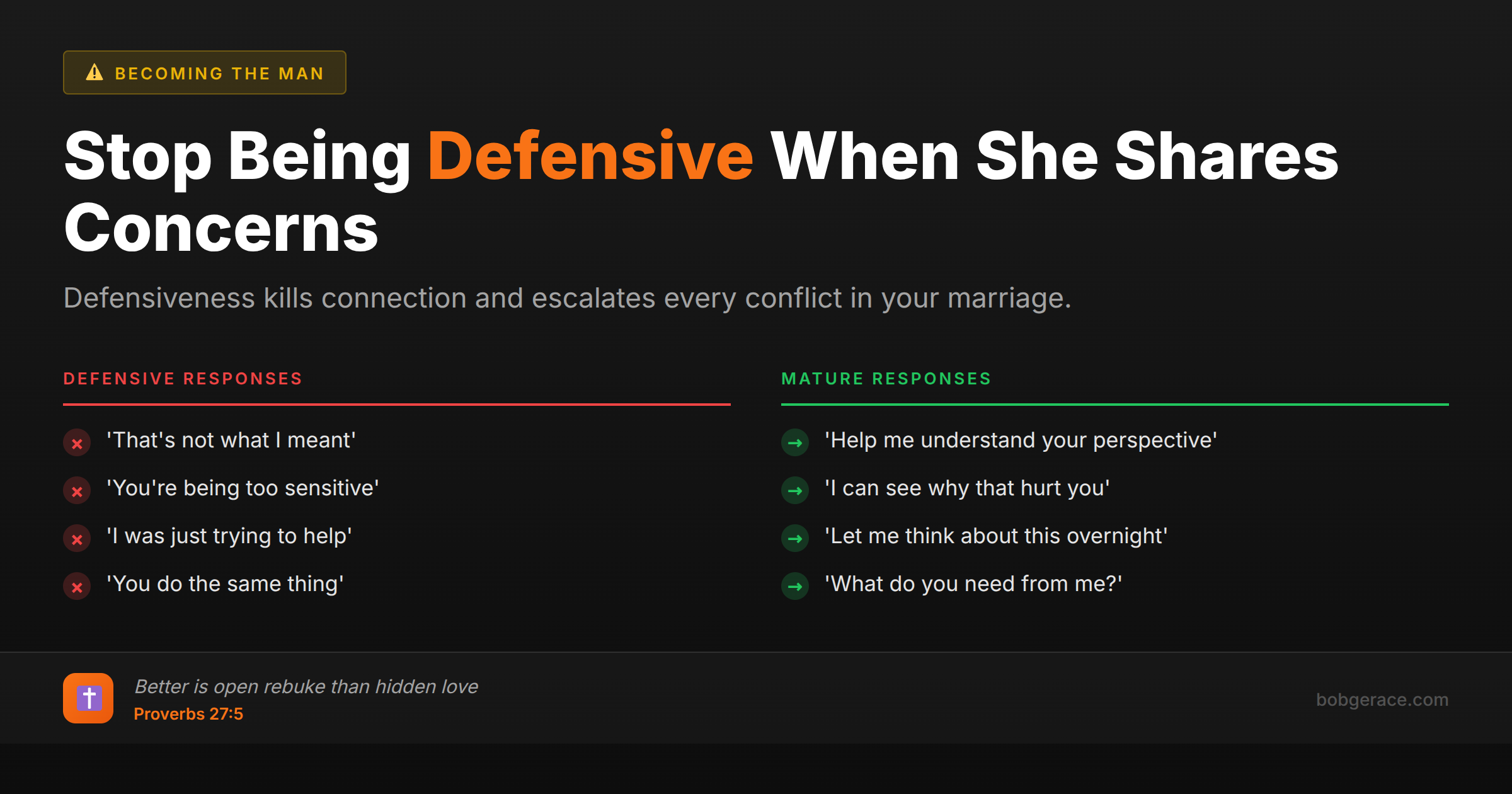
Defensiveness is the second of Gottman's Four Horsemen and occurs when you counter-attack your spouse's concerns with justifications, excuses, or playing the victim instead of taking responsibility. It's essentially saying 'the problem isn't me, it's you' when your spouse brings up an issue. While defensiveness feels protective in the moment, it actually escalates conflict and prevents resolution. When you get defensive, you're deflecting rather than listening, which leaves your spouse feeling unheard and more frustrated. This creates a cycle where both partners become increasingly entrenched in their positions, making it impossible to address the underlying issues that need attention in your marriage.
The Full Picture
Defensiveness shows up in multiple ways that might surprise you. The most obvious form is counter-attacking - when your wife says 'You never help with dishes,' you fire back with 'I took out the trash yesterday!' But defensiveness also appears as making excuses ('I was too tired'), playing the victim ('You're always criticizing me'), or whataboutism ('What about when you forgot to pick up groceries?').
The real damage isn't the defensive response itself - it's what defensiveness prevents. When you're defensive, you're not actually hearing your spouse's underlying need or hurt. Your wife's comment about dishes might really be about feeling overwhelmed or unsupported, but defensiveness keeps you focused on proving you're not the bad guy instead of understanding her heart.
Gottman's research shows that defensiveness escalates 96% of conversations because it communicates that your spouse's concerns aren't valid. This creates what researchers call 'negative sentiment override' - where your spouse starts expecting defensive responses and approaches you with more criticism, creating a vicious cycle.
Here's what's tricky: defensiveness often feels completely justified. Your spouse might be wrong about the facts, or bringing things up poorly, or even being unfair. But defensiveness still backfires because it prioritizes being right over being connected. The goal isn't to become a doormat - it's to respond in ways that actually resolve issues instead of escalating them.
The deeper issue is that defensiveness reveals a fundamental misunderstanding about marriage conflict. You're treating your spouse like an adversary to defeat rather than a partner to understand. This adversarial mindset makes every disagreement feel like a threat to your character rather than an opportunity to grow closer.
What's Really Happening
From a neurological perspective, defensiveness is your brain's threat detection system hijacking rational conversation. When you perceive criticism, your amygdala triggers fight-or-flight responses before your prefrontal cortex can engage in thoughtful listening. This is why defensiveness feels so automatic and compelling - your brain literally perceives your spouse's concerns as danger.
Defensiveness often stems from shame-based thinking patterns. Individuals with high shame sensitivity interpret any feedback as confirmation that they're fundamentally flawed. The defensive response is actually an attempt to protect an already fragile sense of self-worth. This explains why people become defensive even about minor issues - it's not really about the dishes, it's about feeling like a failure as a partner.
I frequently see defensiveness linked to childhood experiences where mistakes were met with harsh criticism or emotional withdrawal. These individuals learned that admitting fault equals being rejected, so defensiveness becomes a survival strategy. Understanding this pattern is crucial because simply trying harder to 'not be defensive' rarely works without addressing the underlying fear.
The therapeutic approach involves developing what we call 'differentiation' - the ability to maintain your sense of self while staying emotionally connected to your spouse. This means you can hear your partner's concerns without it threatening your core identity. When you're well-differentiated, feedback becomes information rather than attack, allowing for genuine curiosity about your spouse's experience instead of immediate self-protection.
What Scripture Says
Scripture consistently calls us away from defensiveness toward humility and teachability. Proverbs 27:5-6 reminds us that 'Better is open rebuke than hidden love. Wounds from a friend can be trusted, but an enemy multiplies kisses.' When your spouse brings concerns to you, even imperfectly, they're acting as a friend who cares enough to address issues rather than letting them fester.
The Bible directly addresses our tendency to deflect responsibility. Proverbs 12:1 states, 'Whoever loves discipline loves knowledge, but whoever hates correction is stupid.' That's pretty direct language about how God views our resistance to feedback. Defensiveness is essentially hating correction because it feels uncomfortable, but wisdom requires embracing the discomfort of growth.
Jesus modeled non-defensive responses even under false accusations. In Matthew 26:62-63, when the high priest questioned Him with false charges, 'Jesus remained silent.' He didn't counter-attack, make excuses, or play victim. While we shouldn't remain silent about everything, Jesus shows us that our identity and worth aren't threatened by others' opinions or even unfair treatment.
Paul gives us the positive alternative to defensiveness in Ephesians 4:2-3: 'Be completely humble and gentle; be patient, bearing with one another in love. Make every effort to keep the unity of the Spirit through the bond of peace.' Notice that unity requires effort and intentionality - it doesn't just happen when we follow our defensive instincts.
The heart issue behind defensiveness is pride, which Scripture consistently warns against. Proverbs 16:18 tells us 'Pride goes before destruction, a haughty spirit before a fall.' In marriage, defensiveness is often our pride protecting itself, but this very protection destroys the intimacy we actually want. James 4:6 offers hope: 'God opposes the proud but shows favor to the humble.' When we choose humility over defensiveness, we position ourselves to receive God's grace and our spouse's heart.
What To Do Right Now
-
1
Recognize your defensive triggers - Notice what topics, tones, or timing make you most likely to get defensive, and share these patterns with your spouse
-
2
Practice the 24-hour rule - When you feel defensive, say 'Let me think about what you've said and get back to you tomorrow' instead of responding immediately
-
3
Use the phrase 'Help me understand' - Instead of explaining why you're right, ask questions about your spouse's experience and perspective
-
4
Take responsibility for your part first - Before addressing anything your spouse did wrong, acknowledge what you contributed to the problem
-
5
Apologize for defensiveness itself - When you catch yourself being defensive, stop and say 'I'm sorry, I got defensive. Let me try again to really hear you'
-
6
Create a signal system - Ask your spouse to gently point out when you're getting defensive, and commit to pausing rather than arguing about whether you're being defensive
Related Questions
- What are the behavioral markers of defensiveness?
- What's the antidote to defensiveness?
- What does 'taking responsibility' actually look like?
- How do I receive feedback without counter-attacking?
- What does a non-defensive response sound like?
- Why does feedback feel like attack?
- What are the Four Horsemen and which ones killed us?
- What does Gottman research say about how marriages die?
- What is 'stonewalling' and why does she do it?
- What does it mean when contempt enters a marriage?
Also find Bob on
Subscribe for weekly videos on Christian marriage.
You Don't Have to Keep Guessing Alone
A coach who knows your marriage can help you see where defensiveness shows up in your specific conversations and what to do instead when you feel it rising.
Talk to Bob →