What is triggered vs. legitimately upset?
6 min read
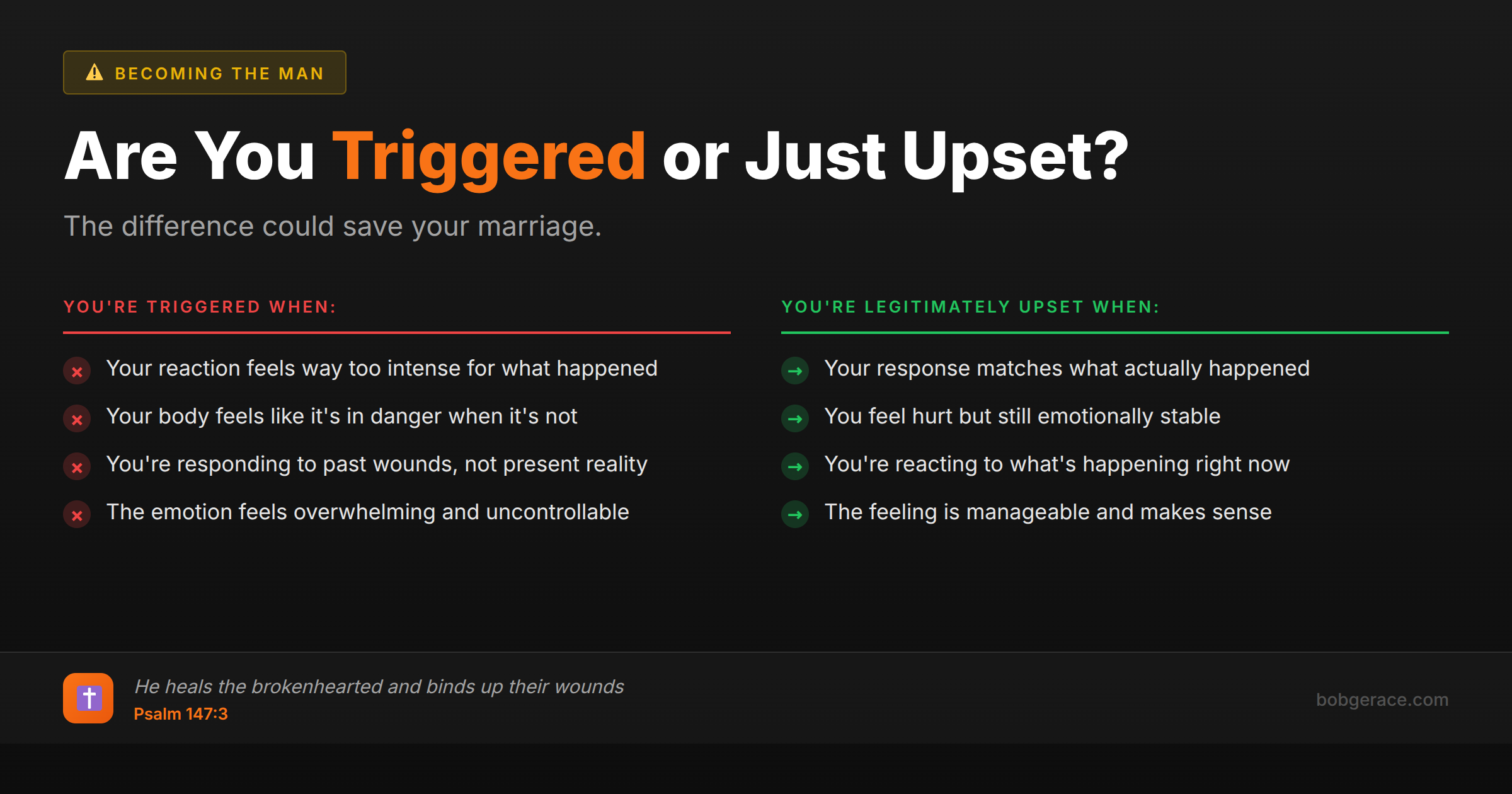
Being triggered means your nervous system is reacting to a present situation based on past trauma or wounds, often with intensity that doesn't match the current circumstance. Your body and emotions respond as if you're in danger, even when you're not. Being legitimately upset, however, is a proportionate emotional response to what's actually happening right now - like feeling hurt when your husband dismisses your feelings or being angry when boundaries are crossed. The key difference is proportion and timing: triggers pull from the past and feel overwhelming, while legitimate upset matches the present moment and feels manageable. Understanding this distinction is crucial for healing because it helps you know when to address current relationship issues versus when to focus on healing past wounds.
The Full Picture
Let me paint you a picture. Your husband comes home late without calling, and you find yourself in a full-blown panic - heart racing, mind spinning with worst-case scenarios, feeling abandoned and furious all at once. The intensity feels huge, overwhelming, like your world is crashing down. That's likely a trigger.
Now contrast that with this scenario: Your husband comes home late without calling, and you feel annoyed and disrespected. You think, 'That was inconsiderate, and we need to talk about it.' You're upset, but you can think clearly and address it calmly. That's a legitimate upset.
The difference isn't about the situation itself - it's about your internal response. Triggers hijack your nervous system, pulling you into fight, flight, or freeze mode. They make you react to ghosts from your past rather than responding to your present reality. Legitimate upsets, on the other hand, are appropriate emotional responses to what's actually happening right now.
Here's what makes this tricky: Sometimes both can happen simultaneously. You might have a legitimate reason to be upset AND be triggered by past wounds. Maybe your husband really was inconsiderate, but your response is amplified because his behavior reminds your nervous system of feeling abandoned by your father.
The goal isn't to never feel upset - that would be unhealthy. The goal is to recognize when your past is driving the bus so you can address both the current issue AND the underlying wound. When you can distinguish between the two, you can respond instead of react, communicate instead of explode, and heal instead of just survive.
What's Really Happening
From a clinical perspective, understanding triggers versus legitimate upset comes down to recognizing how trauma lives in your body and nervous system. When you're triggered, your amygdala - the brain's alarm system - perceives a threat based on past experiences and floods your system with stress hormones. This happens faster than your thinking brain can process what's actually occurring.
Trauma responses often include physical symptoms: shallow breathing, muscle tension, feeling hot or cold, nausea, or feeling disconnected from your body. You might experience emotional flooding - feeling multiple intense emotions at once - or conversely, feeling completely numb. Time can feel distorted, and you might have thoughts like 'This always happens' or 'I can't handle this.'
Legitimate upset, however, engages your prefrontal cortex - your thinking brain - alongside appropriate emotional responses. Your body remains relatively regulated, you can access your problem-solving abilities, and your emotional response matches the severity of the situation. You're present in your body and in the current moment.
The healing journey involves learning to pause and check in with yourself: 'Is my response proportionate to what's happening right now?' This pause creates space between stimulus and response, allowing you to choose how to proceed. With practice, you can learn to recognize your unique trigger patterns and develop tools to self-regulate, creating safety for both you and your marriage.
What Scripture Says
Scripture beautifully addresses both our woundedness and God's desire for our healing. Psalm 147:3 reminds us that 'He heals the brokenhearted and binds up their wounds.' God sees our triggers - those automatic responses born from past pain - and He wants to heal the root causes, not just manage the symptoms.
Proverbs 27:14 warns us about uncontrolled emotional responses: 'Like a city whose walls are broken through is a person who lacks self-control.' This isn't about suppressing emotions, but about learning to respond rather than react. When we're triggered, our emotional 'walls' are compromised, and we can't protect what matters most - including our marriage.
2 Corinthians 10:5 calls us to 'take captive every thought to make it obedient to Christ.' This is particularly relevant to triggers, which often involve thoughts and beliefs formed during past wounds. When triggered thoughts arise - 'He doesn't care about me,' 'I'm not safe,' 'This always happens' - we can learn to question them and align them with truth.
Ephesians 4:26-27 acknowledges that anger itself isn't sin: 'In your anger do not sin: Do not let the sun go down while you are still angry, and do not give the devil a foothold.' Legitimate upset can include anger, but when we're triggered, anger often becomes destructive rather than constructive.
Isaiah 43:18-19 speaks to God's healing work: 'Forget the former things; do not dwell on the past. See, I am doing a new thing!' While we shouldn't ignore our wounds, God wants to heal them so our past doesn't control our present. He invites us into freedom from reactive patterns.
What To Do Right Now
-
1
Pause and breathe deeply when you notice intense emotions rising. Ask yourself: 'Is my response matching what's actually happening right now?'
-
2
Check your body for signs of activation: racing heart, shallow breathing, muscle tension, or feeling disconnected. These often indicate you're triggered rather than just upset.
-
3
Use the 24-hour rule before addressing relationship issues when you're feeling overwhelmed. This gives your nervous system time to regulate and helps you respond rather than react.
-
4
Journal about patterns you notice in your emotional responses. What situations tend to trigger you? What themes keep appearing? This builds self-awareness.
-
5
Practice self-compassion when you recognize you've been triggered. Shame only makes triggers worse. Instead, acknowledge your pain and commit to healing.
-
6
Seek professional help for trauma healing if triggers are significantly impacting your marriage. Some wounds require professional support to heal properly.
Related Questions
- What is 'window of tolerance' and how do I widen mine?
- What is 'amygdala hijack' and how do I interrupt it?
- What's happening in my brain when I rage?
- How do I separate behavior criticism from identity attack?
- What happens in my brain when I feel criticized?
- How do I stay in prefrontal cortex during conflict?
- What is 'betrayal trauma' and do I have it?
- What's happening to my nervous system right now?
- What does trauma recovery look like?
- What is the 'trauma loop' and how do I interrupt it?
Also find Bob on
Subscribe for weekly videos on Christian marriage.
Bring Your Marriage to a Coach
You're doing the work. But a coach who knows your specific story can see what you can't—and help you stop the patterns that keep you stuck.
Talk to Bob →