How do I evaluate his program quality?
6 min read
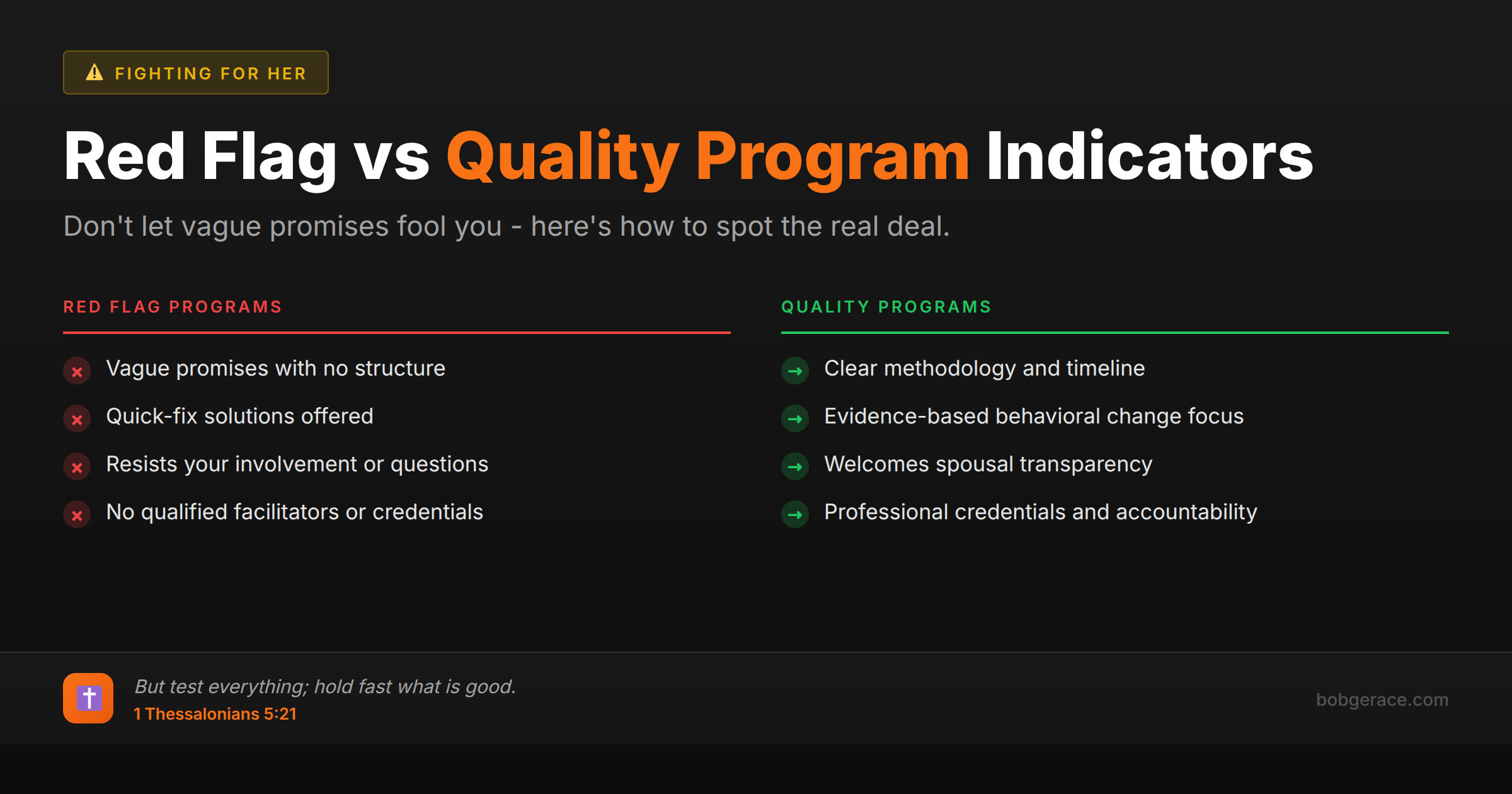
Evaluating your husband's program quality requires looking at specific, measurable indicators rather than just his promises. A quality program will have clear structure, accountability measures, professional credentials, and evidence-based approaches. Look for programs that require regular participation, have qualified facilitators, include peer support, and focus on behavioral change rather than just talk. The most important factor is transparency - you should be able to understand the program's methodology, timeline, and expectations. Quality programs welcome spousal involvement and provide regular progress updates. Red flags include vague promises, lack of structure, resistance to your involvement, or programs that seem too easy or quick-fix oriented.
The Full Picture
When your husband enters any kind of improvement or recovery program, you need concrete ways to assess whether it's legitimate and effective. This isn't about being controlling - it's about being wise and protecting your marriage's future.
Professional Standards Matter Legitimate programs have qualified facilitators with proper credentials, licensing, and training. They should be transparent about their methodology and willing to explain their approach. Quality programs are often affiliated with recognized organizations and follow evidence-based practices.
Structure and Accountability Effective programs have clear structure with regular meetings, assignments, and accountability measures. They require active participation, not passive attendance. Look for programs that include peer support, mentoring, or group dynamics - transformation rarely happens in isolation.
Measurable Progress Quality programs define success clearly and provide ways to measure progress. They set realistic timelines and milestones. Be wary of programs promising quick fixes or dramatic changes without ongoing work.
Transparency with Spouses Reputable programs understand that marriage issues affect both partners. They should welcome appropriate spousal involvement, provide updates on progress (with your husband's consent), and offer resources for you as well. Programs that operate in complete secrecy or discourage your involvement are red flags.
Focus on Behavioral Change The best programs emphasize concrete behavioral changes, not just emotional insights or theoretical understanding. They should address real-world application and provide tools for handling triggers, conflicts, and challenges.
What's Really Happening
From a clinical perspective, program quality directly correlates with long-term behavioral change success. Research consistently shows that programs with certain characteristics produce better outcomes.
Effective programs incorporate multiple therapeutic modalities and understand that sustainable change requires both cognitive and behavioral components. They address underlying thought patterns while providing practical skills for new behaviors.
Accountability structures are crucial because they create external motivation when internal motivation wanes. Programs that lack regular check-ins, progress assessments, or peer support have significantly lower success rates.
The transparency factor is particularly important for couples. When programs operate in secrecy, it often indicates either poor methodology or enables continued deceptive behavior. Quality programs understand that family system dynamics affect individual change and welcome appropriate family involvement.
Beware of programs that promise dramatic personality changes or use shame-based approaches. Effective change happens gradually through consistent application of new skills and insights. Programs that create dependency rather than building internal capacity are also problematic.
As a spouse, trust your instincts. If something feels off about the program or your husband's participation in it, investigate further. Your observations about changes (or lack thereof) in his daily behavior are valuable indicators of program effectiveness.
What Scripture Says
Scripture provides clear guidance for evaluating the quality and authenticity of any program or teaching your husband engages with.
Test Everything Against Truth *"But test everything; hold fast what is good."* (1 Thessalonians 5:21) You have not only the right but the responsibility to evaluate whether his program aligns with biblical principles and produces good fruit.
Look for Genuine Fruit *"By their fruit you will recognize them. Do people pick grapes from thornbushes, or figs from thistles?"* (Matthew 7:16) Quality programs should produce visible positive changes in character, behavior, and relationships over time.
Seek Wise Counsel *"Plans fail for lack of counsel, but with many advisers they succeed."* (Proverbs 15:22) Don't evaluate his program in isolation. Seek input from mature believers, counselors, or mentors who can provide objective perspectives.
Demand Accountability *"As iron sharpens iron, so one person sharpens another."* (Proverbs 27:17) Biblical change happens in community with accountability. Programs that isolate participants or discourage transparency are suspect.
Prioritize Humility and Growth *"All Scripture is God-breathed and is useful for teaching, rebuking, correcting and training in righteousness."* (2 Timothy 3:16) Quality programs will incorporate biblical principles and encourage submission to God's Word, not human wisdom alone.
Remember that true transformation comes from God working through people and processes. While programs can provide structure and tools, lasting change requires genuine repentance and submission to Christ.
What To Do Right Now
-
1
Research the program's credentials, methodology, and success rates online
-
2
Ask your husband specific questions about the program structure and requirements
-
3
Request contact information for the program facilitator to ask questions directly
-
4
Connect with other spouses whose partners have completed the program
-
5
Establish clear expectations for transparency and progress updates
-
6
Set measurable goals together for what success looks like in your marriage
Related Questions
- What are red flags in coaching/therapy?
- What should he be working on in order?
- What are the stages of change work?
- What does integration mean vs. just learning?
- What questions should I ask about his process?
- What does real transformation look like?
- How long does real transformation take?
- What is 'white-knuckling' vs. internalized change?
Also find Bob on
Subscribe for weekly videos on Christian marriage.
Not Sure What to Look For?
Evaluating his program from the outside is hard. A coach who knows your specific situation can help you see what actually matters—and what you're allowed to require.
Talk to Bob →