How do I co-regulate with someone who won't engage?
6 min read
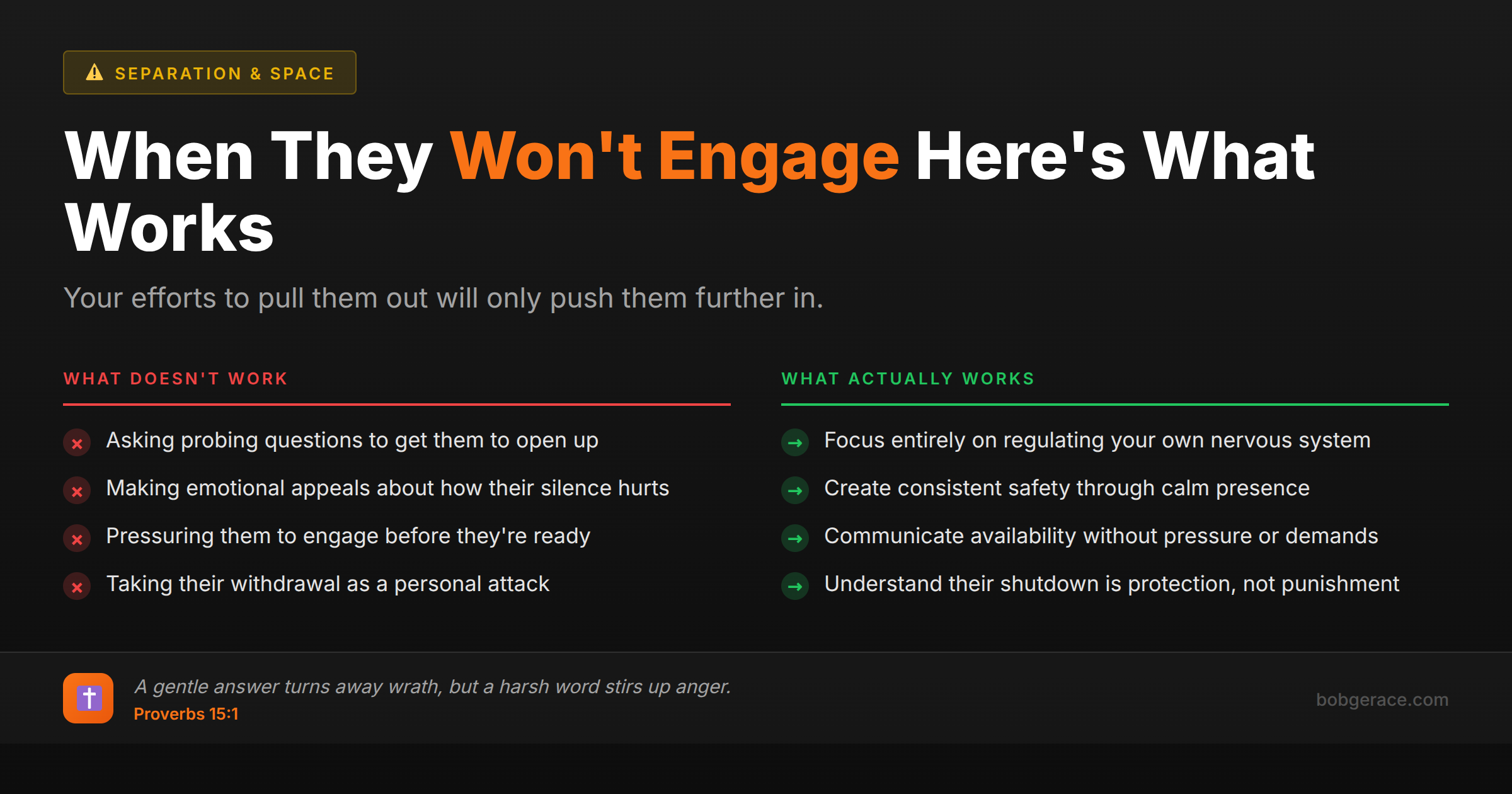
Co-regulating with someone who won't engage requires you to focus entirely on your own nervous system regulation first. You cannot force co-regulation, but you can create the conditions for it by maintaining your own calm, grounded presence even when they're shut down. This means staying in your ventral vagal state - calm, connected, and safe - regardless of their defensive responses. The key is understanding that their withdrawal is a protective mechanism, not a personal attack. When someone is in dorsal vagal shutdown or sympathetic fight-flight, they literally cannot engage in the way you're hoping. Your job is to be a consistent, regulated presence that signals safety over time, not to pull them out of their protective state through effort or persuasion.
The Full Picture
When your spouse has checked out and won't engage, you're dealing with a nervous system that's in a protective state. Understanding polyvagal theory helps you see what's really happening beneath the surface of their withdrawal.
The Three States of Engagement
Your spouse's nervous system operates in three primary states. The *ventral vagal state* is where connection happens - they feel safe, calm, and able to engage with you meaningfully. The *sympathetic state* shows up as anger, criticism, defensiveness, or agitation. The *dorsal vagal state* is complete shutdown - numbness, withdrawal, and disconnection.
When someone won't engage, they're likely stuck in dorsal shutdown. This isn't stubbornness or manipulation - it's their nervous system's way of protecting them from what feels like overwhelming threat or stress.
Why Traditional Approaches Fail
Most people try to solve disengagement by doing more - talking more, trying harder, explaining better, or escalating emotions to get a response. These approaches backfire because they signal danger to an already defensive nervous system. You can't think or talk someone out of a nervous system state.
Co-Regulation Isn't Control
True co-regulation means your regulated nervous system helps create safety for theirs. It's not about getting them to respond or engage on your timeline. It's about being so consistently calm and safe that their nervous system gradually learns to trust that connection with you won't result in threat or overwhelm.
This requires tremendous patience and a fundamental shift in your approach from trying to change them to creating sustainable conditions for natural connection to emerge.
What's Really Happening
From a polyvagal perspective, disengagement is often dorsal vagal shutdown - the nervous system's most primitive protective response. When someone is in this state, their capacity for connection is literally offline. The social engagement system that allows for eye contact, vocal warmth, and relational attunement is inaccessible.
This shutdown typically develops after prolonged periods of sympathetic activation (fight-flight). If someone has experienced chronic conflict, criticism, or relational stress, their system eventually gives up trying to fight or flee and simply shuts down. It's actually an adaptive response to what the nervous system perceives as inescapable threat.
Co-regulation works through what we call 'neuroception' - the unconscious detection of safety or threat. When you maintain your own ventral vagal regulation, you're broadcasting safety cues through your tone of voice, facial expressions, body posture, and energy. Over time, these consistent safety signals can help their nervous system begin to shift.
The critical insight is that you cannot co-regulate from your own dysregulated state. If you're anxious, frustrated, or desperate for their engagement, you're actually sending threat signals that reinforce their shutdown. The most powerful thing you can do is develop your own capacity to stay regulated even when they can't meet you there.
This process requires what I call 'differentiated presence' - being fully yourself and regulated while allowing them to be exactly where they are without trying to change or fix them.
What Scripture Says
Scripture provides profound wisdom about creating safety and connection with those who have withdrawn or shut down.
Be a Safe Harbor *"A gentle answer turns away wrath, but a harsh word stirs up anger."* (Proverbs 15:1) Your regulated, gentle presence creates space for their heart to soften, while pressure or demands will only reinforce their protective walls.
Practice Long-Suffering Love *"Love is patient, love is kind. It does not envy, it does not boast, it is not proud. It does not dishonor others, it is not self-seeking, it is not easily angered, it keeps no record of wrongs."* (1 Corinthians 13:4-5) Co-regulation requires this kind of patient love that doesn't keep score or demand immediate response.
Trust God's Timing *"There is a time for everything, and a season for every activity under the heavens... a time to be silent and a time to speak."* (Ecclesiastes 3:1, 7) Sometimes love means respecting their need for silence and space rather than forcing engagement.
Focus on Your Own Heart *"Above all else, guard your heart, for everything you do flows from it."* (Proverbs 4:23) Your primary job is maintaining your own spiritual and emotional regulation, not managing theirs.
Be Steadfast *"Let us hold unswervingly to the hope we profess, for he who promised is faithful."* (Hebrews 10:23) Co-regulation requires unwavering consistency in your presence and character, regardless of their response.
Trust the Process *"And let us not grow weary of doing good, for in due season we will reap, if we do not give up."* (Galatians 6:9) Creating genuine safety takes time, and breakthrough often comes after long periods of faithful, patient presence.
What To Do Right Now
-
1
Focus entirely on regulating your own nervous system - practice deep breathing, grounding exercises, and prayer to stay calm regardless of their response
-
2
Stop all attempts to pull them out of their shutdown state - no probing questions, emotional appeals, or efforts to make them engage
-
3
Create physical and emotional safety through consistent, predictable, non-threatening presence in your daily interactions
-
4
Communicate your availability without pressure - 'I'm here when you're ready' rather than 'We need to talk'
-
5
Build your own capacity for differentiated presence through prayer, counseling, or coaching so you can stay regulated long-term
-
6
Trust the process and God's timing while maintaining hope - co-regulation happens gradually as safety is established over time
Related Questions
- What is 'co-regulation' and why can't we do it?
- How do I become a safe presence again?
- What does safety look like to her nervous system?
- What signals threat to her nervous system?
- What would help her ventral vagal (social engagement)?
- Is she in shutdown, not choosing coldness?
- How do I stay connected when my body wants to fight?
- What does emotional co-regulation look like?
- How do I self-regulate before I connect?
- How do I regulate my own system?
Also find Bob on
Subscribe for weekly videos on Christian marriage.
Your Marriage Isn't a Textbook Case
Co-regulation theory is one thing. Doing it when she's shut down and you're flooded is another. A coach who knows your specific dynamic can help you stay grounded when the pattern kicks in.
Talk to Bob →