What does 'commits adultery' in Matthew 19 mean?
6 min read
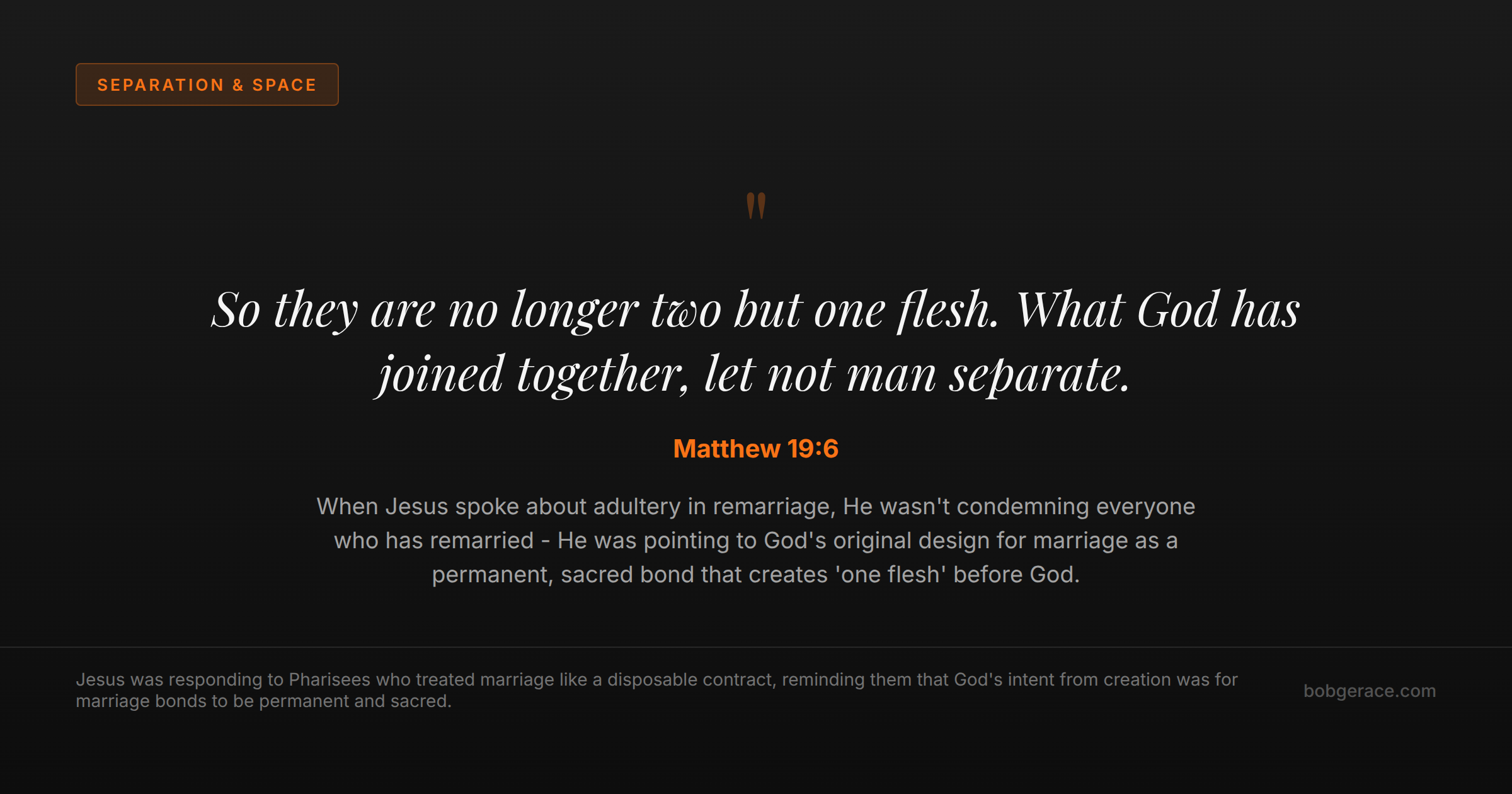
In Matthew 19, when Jesus says someone 'commits adultery' through remarriage, He's addressing the sacred covenant nature of marriage. The Greek word 'moichao' refers to violating the exclusive bond that marriage creates between two people. Jesus is teaching that marriage isn't just a legal contract you can dissolve—it's a spiritual covenant that creates 'one flesh' before God. This doesn't mean Jesus is condemning everyone who has remarried, but rather establishing God's original design and the seriousness of marriage commitment. The context shows Jesus responding to Pharisees testing Him about casual divorce practices of their culture. He's pointing them back to God's intent from creation—that marriage bonds are meant to be permanent and sacred, not easily broken for convenience.
The Full Picture
To understand Jesus' statement about adultery in Matthew 19, we need to see the complete context. The Pharisees approached Jesus with a loaded question about divorce, trying to trap Him in a theological debate between competing rabbinical schools. Some taught divorce was acceptable for almost any reason, while others held stricter views.
Jesus' response cut through their debate by going back to Genesis—God's original design where 'the two become one flesh.' This isn't just poetic language; it describes a spiritual reality where marriage creates a new entity, a covenant bond that transcends legal paperwork.
When Jesus mentions adultery in remarriage, He's using the strongest possible language to communicate how seriously God views the marriage covenant. The word 'adultery' (Greek: moichao) specifically refers to violating the exclusive sexual and emotional bond that marriage creates. It's not that remarried people are constantly sinning, but that the original covenant created something sacred that shouldn't be casually dismissed.
The disciples' shocked response—'If this is the case, it's better not to marry!'—shows how radical Jesus' teaching sounded. They understood He wasn't giving easy answers about relationship do-overs, but calling them to a higher standard.
This passage isn't meant to condemn but to elevate marriage to its proper place as a reflection of God's faithful covenant with His people. Understanding this helps us see why Jesus takes marriage commitment so seriously.
What's Really Happening
From a therapeutic perspective, Jesus' teaching in Matthew 19 addresses something we see constantly in marriage counseling—the misunderstanding of what marriage actually creates between two people. Many couples enter marriage with a consumer mentality: if it doesn't work out, we'll get a divorce and try again.
But research consistently shows that marriage creates profound psychological, emotional, and even neurological bonds. The 'one flesh' reality Jesus describes has measurable effects on brain chemistry, attachment patterns, and identity formation. When these bonds are severed through divorce, there's genuine trauma—what we call 'ambiguous loss'—because part of the person's identity was intertwined with their spouse.
Jesus' strong language about adultery isn't legalistic condemnation; it's protective wisdom. He understands that treating marriage as easily dissoluble causes deep psychological harm. The attachment disruption, identity confusion, and trust issues that follow divorce affect not just the couple but their children and extended relationships.
I've counseled hundreds of individuals struggling with remarriage guilt, wondering if God can bless their second marriage. The key insight is that Jesus isn't creating a permanent shame category for divorced and remarried people. He's establishing the seriousness of covenant commitment to prevent the cascading damage that casual attitudes toward marriage create. Understanding this can bring freedom from false guilt while maintaining proper reverence for marriage.
What Scripture Says
Scripture provides a comprehensive framework for understanding marriage, divorce, and God's heart for restoration:
Genesis 2:24 - 'Therefore a man shall leave his father and mother and hold fast to his wife, and they shall become one flesh.' This establishes marriage as creating a new entity, not just a partnership.
Matthew 19:6 - 'So they are no longer two but one flesh. What therefore God has joined together, let not man separate.' Jesus emphasizes the divine element in marriage—it's not just human agreement but God's joining.
1 Corinthians 7:10-11 - 'To the married I give this charge (not I, but the Lord): the wife should not separate from her husband (but if she does, she should remain unmarried or else be reconciled to her husband), and the husband should not divorce his wife.' Paul shows God's preference for reconciliation.
Matthew 19:9 - 'And I say to you: whoever divorces his wife, except for sexual immorality, and marries another, commits adultery.' This provides the exception clause, showing God's understanding of covenant violation.
Romans 7:2-3 - Paul uses marriage's permanence as an analogy for our relationship with God, showing how seriously Scripture views marriage bonds.
1 John 1:9 - 'If we confess our sins, he is faithful and just to forgive us our sins and to cleanse us from all unrighteousness.' God's grace covers all failures, including marriage failures.
What To Do Right Now
-
1
If you're married, recommit to viewing your marriage as a sacred covenant, not just a legal contract
-
2
Study Genesis 1-2 and Matthew 19 together as a couple to understand God's design for marriage
-
3
If you're divorced and remarried, receive God's forgiveness and commit to honoring your current marriage covenant
-
4
Seek godly counseling if you're struggling with guilt or shame about past marriage decisions
-
5
If you're considering divorce, pursue intensive marriage counseling and exhaust all reconciliation options first
-
6
Share this biblical perspective with engaged couples to help them understand the seriousness of marriage commitment
Related Questions
- What does Scripture say about divorce?
- What did Jesus say about divorce?
- What's the exception clause?
- Does adultery justify divorce?
- If I divorce, can I remarry?
- What is 'porneia' and what does it include?
- What does biblical forgiveness require of me?
- What's the difference between forgiveness and reconciliation?
- Does forgiveness mean no consequences?
- Should I forgive adultery?
Also find Bob on
Subscribe for weekly videos on Christian marriage.
Bring Your Actual Marriage to a Coach
If you're trying to figure out what this means for your specific situation—your history, your wife, your next right move—Bob can help you work through it.
Talk to Bob →