Does divorce always prohibit remarriage?
6 min read
No, divorce does not always prohibit remarriage according to Scripture. While God's ideal is one marriage for life, the Bible recognizes specific circumstances where remarriage is permitted. Jesus acknowledged adultery as grounds for divorce and remarriage in Matthew 19:9. Paul addressed abandonment by an unbelieving spouse in 1 Corinthians 7:15, stating the believer is 'not bound' in such cases. However, this isn't a license for casual remarriage. Scripture calls for careful consideration, genuine repentance for any personal failures, and seeking God's will. The key is understanding that while marriage is sacred and divorce grieves God's heart, His grace extends to those who find themselves in broken marriages through no fault of their own or who have genuinely repented of their failures.
The Full Picture
The question of remarriage after divorce sits at the intersection of God's perfect design and our fallen reality. God's original intention was clear: one man, one woman, for life. Jesus himself said, "What God has joined together, let no one separate" (Matthew 19:6). This remains His ideal.
But we live in a broken world where marriages fail, hearts are hardened, and people make devastating choices. The Pharisees tried to trap Jesus with this very issue, asking about divorce. His response was nuanced - acknowledging Moses' allowance for divorce "because of the hardness of your hearts" while pointing back to God's original design.
Here's what we know from Scripture: Remarriage is specifically permitted in cases of adultery (Matthew 19:9) and abandonment by an unbelieving spouse (1 Corinthians 7:15). Some theologians also include physical abuse under the abandonment principle, as it violates the fundamental covenant commitment to love and protect.
What about other situations? This is where faithful Christians disagree. Some hold that only the 'innocent party' in adultery cases may remarry. Others believe that genuine repentance and God's forgiveness can restore anyone to the possibility of remarriage. Still others maintain that remarriage is never permitted while the former spouse lives.
The truth is, every situation is complex. A person might be technically at fault for the divorce but have endured years of emotional abuse, neglect, or manipulation. Another might have made poor choices in their youth but have genuinely transformed through Christ.
God's heart is always toward restoration - of individuals, of families, and of His people. While we must take Scripture seriously, we must also remember that "there is now no condemnation for those who are in Christ Jesus" (Romans 8:1).
What's Really Happening
From a therapeutic perspective, I see tremendous damage done when we make absolute pronouncements about remarriage without considering individual circumstances. The shame and isolation this creates often drives people away from the very community they need for healing.
Many divorced individuals carry overwhelming guilt, even when they were victims of betrayal or abuse. They've often endured years of trying to save their marriage, exhausting every resource, before finally accepting that their spouse wouldn't change. To then tell them they can never remarry feels like a second punishment.
Research consistently shows that healthy, stable marriages benefit both adults and children. When we categorically prohibit remarriage, we may inadvertently prevent the very healing and stability that God desires for families. I've worked with many blended families where God clearly blessed a second marriage, bringing healing to wounded hearts and creating loving homes for children from broken families.
The key factors I look for are genuine healing from the previous relationship, taking responsibility for one's own failures, and realistic expectations about marriage. Someone who rushes into remarriage without processing their divorce is likely to repeat destructive patterns. But someone who has done the hard work of healing and growth can absolutely create a healthy second marriage.
We must also consider the children involved. While divorce wounds children, ongoing conflict or a parent's isolation and bitterness can be equally damaging. I've seen many cases where a parent's wise remarriage provided the stability and healing their children desperately needed.
What Scripture Says
Scripture provides clear guidance while acknowledging the complexity of human relationships. Jesus addressed divorce directly in Matthew 19:9: "I tell you that anyone who divorces his wife, except for sexual immorality, and marries another woman commits adultery." This exception clause has been debated, but most scholars agree it permits remarriage for the innocent party in cases of adultery.
Paul expanded on this teaching in 1 Corinthians 7:15: "But if the unbeliever leaves, let it be so. The brother or the sister is not bound in such circumstances; God has called us to live in peace." The phrase "not bound" strongly suggests freedom to remarry, particularly given the context of Paul's other marriage teachings.
Deuteronomy 24:1-4 shows that even under the Old Covenant, remarriage was recognized as legitimate in certain circumstances. While Jesus raised the standard, He didn't completely prohibit what Moses allowed.
Most importantly, we see God's heart of restoration throughout Scripture. In Isaiah 54:4-6, God speaks to Israel as a divorced woman whom He will take back: "'For your Maker is your husband... For the Lord will call you back as if you were a wife deserted and distressed in spirit.'"
Romans 7:2-3 teaches that death breaks the marriage bond, freeing both parties to remarry. This establishes the principle that marriage bonds can be legitimately broken. The key question becomes: what constitutes a broken bond? Scripture clearly includes adultery and abandonment.
Finally, 1 John 1:9 reminds us: "If we confess our sins, he is faithful and just and will forgive us our sins and purify us from all unrighteousness." God's forgiveness is complete, and His plans for our lives don't end with our failures.
What To Do Right Now
-
1
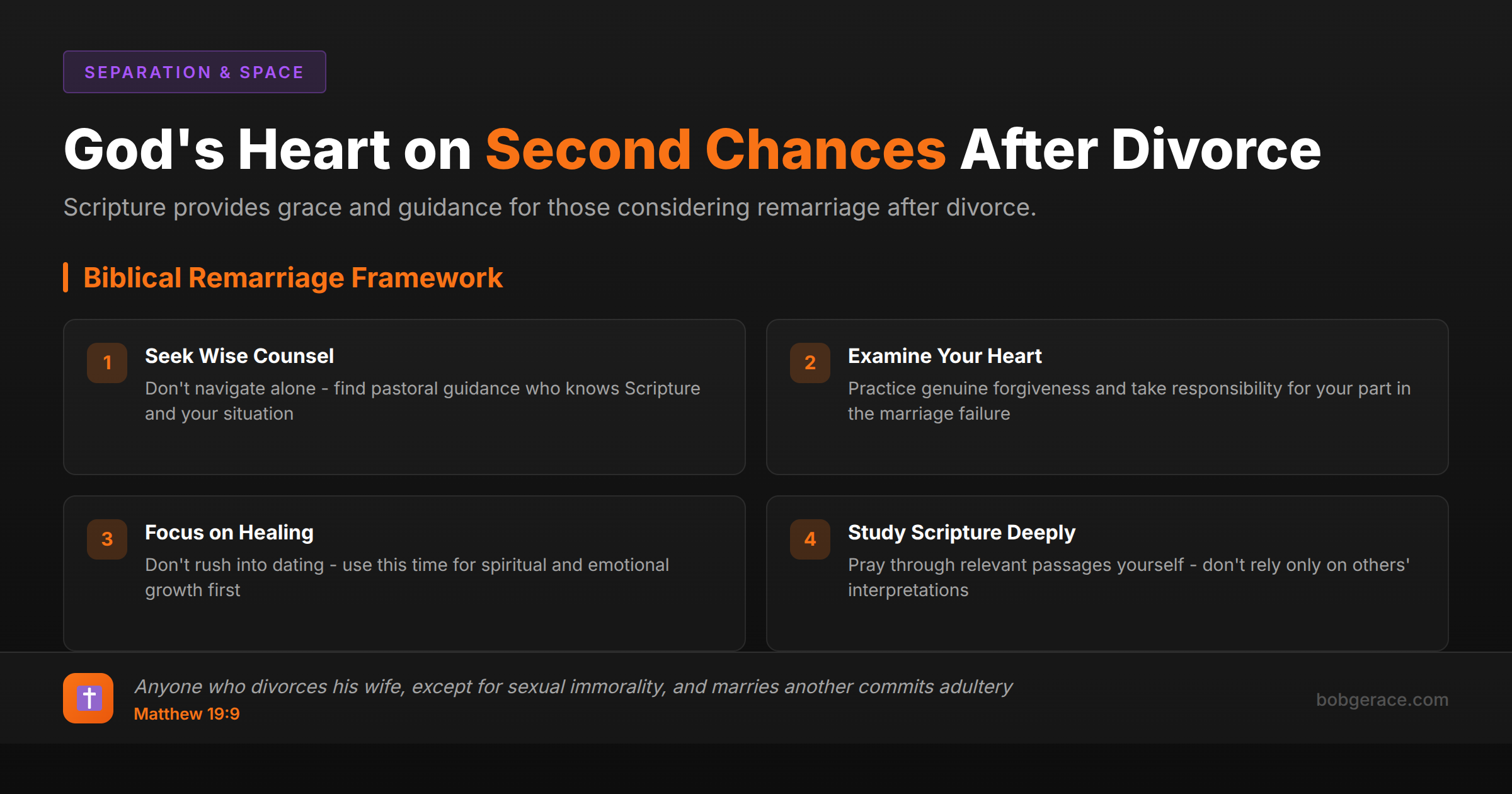
Seek wise counsel - Don't navigate this alone. Find a pastor or counselor who understands both Scripture and your specific situation
-
2
Examine your heart honestly - Have you truly forgiven your ex-spouse? Have you taken responsibility for your own failures in the marriage?
-
3
Focus on healing first - Don't rush into dating or remarriage. Use this time to grow spiritually and emotionally
-
4
Study Scripture deeply - Don't rely on others' interpretations alone. Pray through the relevant passages and seek God's specific will for your life
-
5
Consider the children - If you have children, how will remarriage affect them? Include them appropriately in your decision-making process
-
6
Move forward in faith - Once you've sought God's will and received counsel, don't let fear or others' opinions paralyze you from God's good plans
Related Questions
- What does Scripture say about divorce?
- What did Jesus say about divorce?
- If I divorce, can I remarry?
- What is 'porneia' and what does it include?
- Does the exception clause allow divorce or require it?
- What if I was the innocent party?
- What does biblical forgiveness require of me?
- What does restoration look like in Scripture?
- How do I make this decision?
Also find Bob on
Subscribe for weekly videos on Christian marriage.
Your Marriage Story Isn't Generic
Scripture gives principles. Your actual situation has details—history, kids, fault lines, what you're actually responsible for. A coach who knows your story can help you see what applies to you.
Talk to Bob →