If I divorce, can I remarry?
6 min read
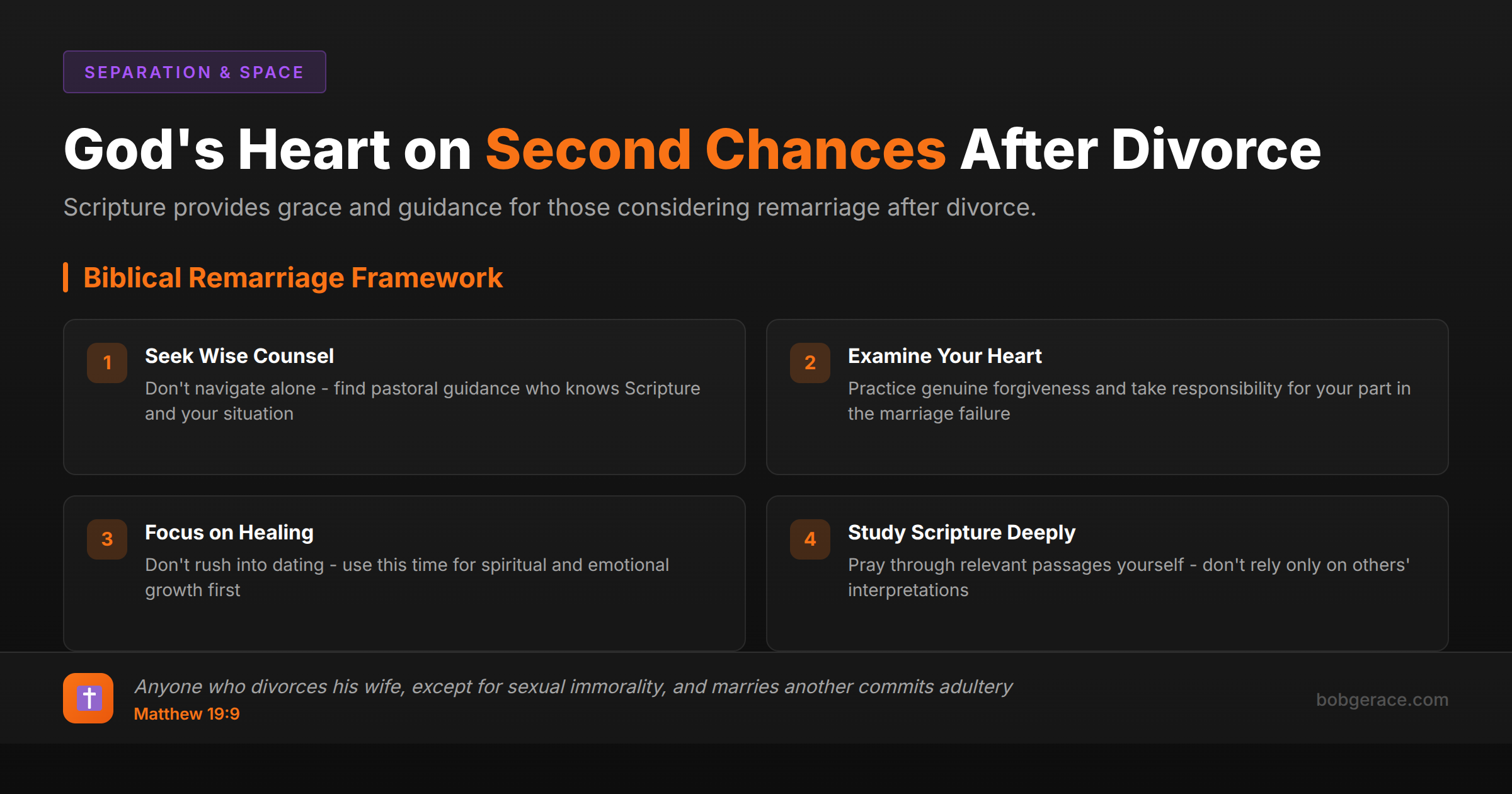
The Bible allows remarriage in specific circumstances, primarily adultery (Matthew 19:9) and abandonment by an unbelieving spouse (1 Corinthians 7:15). However, God's preference is always reconciliation when possible. If you're facing divorce, the focus should first be on every effort toward healing your current marriage through counseling, prayer, and biblical intervention. Remarriage isn't automatically permitted just because you're divorced - it depends on the biblical grounds for your divorce and whether those circumstances apply to your situation. This isn't about legal permission but about aligning with God's design for marriage. Even when remarriage may be biblically permissible, it requires careful consideration, pastoral guidance, and genuine repentance for any personal contributions to the first marriage's failure.
The Full Picture
Let me be straight with you - this question usually comes up when a marriage is already in serious trouble, and someone's looking for an exit strategy. I get it. But before we talk remarriage, we need to address the elephant in the room: are you absolutely certain your current marriage cannot be saved?
The biblical position on remarriage isn't a simple yes or no. Scripture teaches that marriage is a covenant, not just a contract you can break when things get difficult. Jesus himself said, "What God has joined together, let no one separate" (Matthew 19:6). This isn't just poetic language - it's a fundamental principle about the permanence God intends for marriage.
Here's what the Bible clearly permits for remarriage: - When your spouse commits adultery and remains unrepentant (Matthew 19:9) - When an unbelieving spouse abandons the marriage (1 Corinthians 7:15) - When your spouse dies (Romans 7:2-3)
But here's what many people miss: biblical grounds for divorce don't automatically mean remarriage is the best choice. Even when you have biblical permission, you still need to consider whether you've done the heart work necessary to succeed in a second marriage.
I've seen too many people rush into remarriage without addressing the patterns, wounds, and character issues that contributed to their first marriage's failure. The statistics are brutal - second marriages fail at an even higher rate than first marriages. Why? Because people often carry the same unresolved issues into their new relationship.
The real question isn't "can I remarry?" but "should I remarry, and am I prepared to do marriage God's way this time?" That requires honest self-examination, genuine repentance, and often significant personal growth work.
What's Really Happening
From a therapeutic perspective, the question about remarriage often reveals deeper emotional and psychological dynamics at play. Many individuals asking this question are experiencing what we call "anticipatory grief" - they're already mentally and emotionally divorcing before the legal process begins.
This psychological positioning can actually prevent the vulnerable work necessary for marriage restoration. When someone is focused on their "next chapter," they're less likely to engage in the difficult but necessary work of addressing their own contributions to marital problems.
Research consistently shows that individuals who remarry without processing their first marriage experience carry forward attachment wounds, trust issues, and maladaptive relationship patterns. The success of any future marriage largely depends on one's ability to take responsibility for their part in the previous relationship's breakdown.
I often see clients who have biblical grounds for divorce but haven't done the internal work to understand their own relational patterns. They may have been the "victim" of adultery or abandonment, but they still need to examine how their own emotional availability, communication patterns, or unmet needs contributed to the marital dynamic.
The most successful remarriages I've witnessed involve individuals who took significant time - often 2-3 years - to process their grief, develop better relationship skills, and establish healthy boundaries before entering a new relationship. This isn't about blame or shame; it's about taking responsibility for your own growth and healing.
What Scripture Says
Scripture approaches remarriage with both truth and grace, but it's more restrictive than our culture suggests. Let's look at what God actually says:
Jesus on divorce and remarriage: *"I tell you that anyone who divorces his wife, except for sexual immorality, and marries another woman commits adultery"* (Matthew 19:9). This establishes that adultery creates a biblical ground for both divorce and remarriage.
Paul on abandonment: *"But if the unbeliever leaves, let it be so. The brother or sister is not bound in such circumstances; God has called us to live in peace"* (1 Corinthians 7:15). When an unbelieving spouse abandons the marriage, the believer is "not bound" - which most biblical scholars interpret as freedom to remarry.
The permanence principle: *"So they are no longer two, but one flesh. Therefore what God has joined together, let no one separate"* (Matthew 19:6). God's design is for marriage to be permanent, making divorce and remarriage the exception, not the norm.
Marriage ends at death: *"So then, if she has sexual relations with another man while her husband is still alive, she is called an adulteress. But if her husband dies, she is released from that law and is not an adulteress if she marries another man"* (Romans 7:3).
God's heart for restoration: *"'Return, faithless people,' declares the Lord, 'for I am your husband'"* (Jeremiah 3:14). Even when addressing unfaithful Israel, God's heart is always toward reconciliation and restoration.
The call to forgiveness: *"Be kind and compassionate to one another, forgiving each other, just as in Christ God forgave you"* (Ephesians 4:32). Before considering remarriage, we must seriously wrestle with whether forgiveness and reconciliation are possible in our current marriage.
What To Do Right Now
-
1
Seek pastoral counsel - Don't make this decision alone. Get guidance from a biblical counselor or pastor who can help you determine if you have biblical grounds for divorce and remarriage.
-
2
Exhaust reconciliation efforts - Have you tried marriage counseling, pastoral intervention, or intensive programs? Don't give up until you've genuinely tried everything.
-
3
Examine your own heart - Ask God to reveal your own contributions to the marriage problems. Take responsibility for your part before considering remarriage.
-
4
Wait and heal - If divorce becomes necessary, plan to wait at least 1-2 years before considering remarriage. Use this time for personal growth and healing.
-
5
Address your issues - Work with a counselor to understand your relationship patterns, attachment wounds, and areas needing growth before entering a new relationship.
-
6
Prepare biblically - If remarriage becomes appropriate, go through premarital counseling that specifically addresses second marriage challenges and biblical expectations.
Related Questions
- What does Scripture say about divorce?
- Does adultery justify divorce?
- What is 'porneia' and what does it include?
- Does divorce always prohibit remarriage?
- What if I was the innocent party?
- What about divorce before I was a Christian?
- What does biblical forgiveness require of me?
- Does God want me to stay in this marriage?
- What does repentance look like for accumulated sin?
Also find Bob on
Subscribe for weekly videos on Christian marriage.
Don't Navigate This Alone
This question isn't theoretical for you. A coach who knows your marriage, your history, and where you actually are can help you see what's biblical for your specific situation.
Talk to Bob →