What if I was the guilty party but have repented?
6 min read
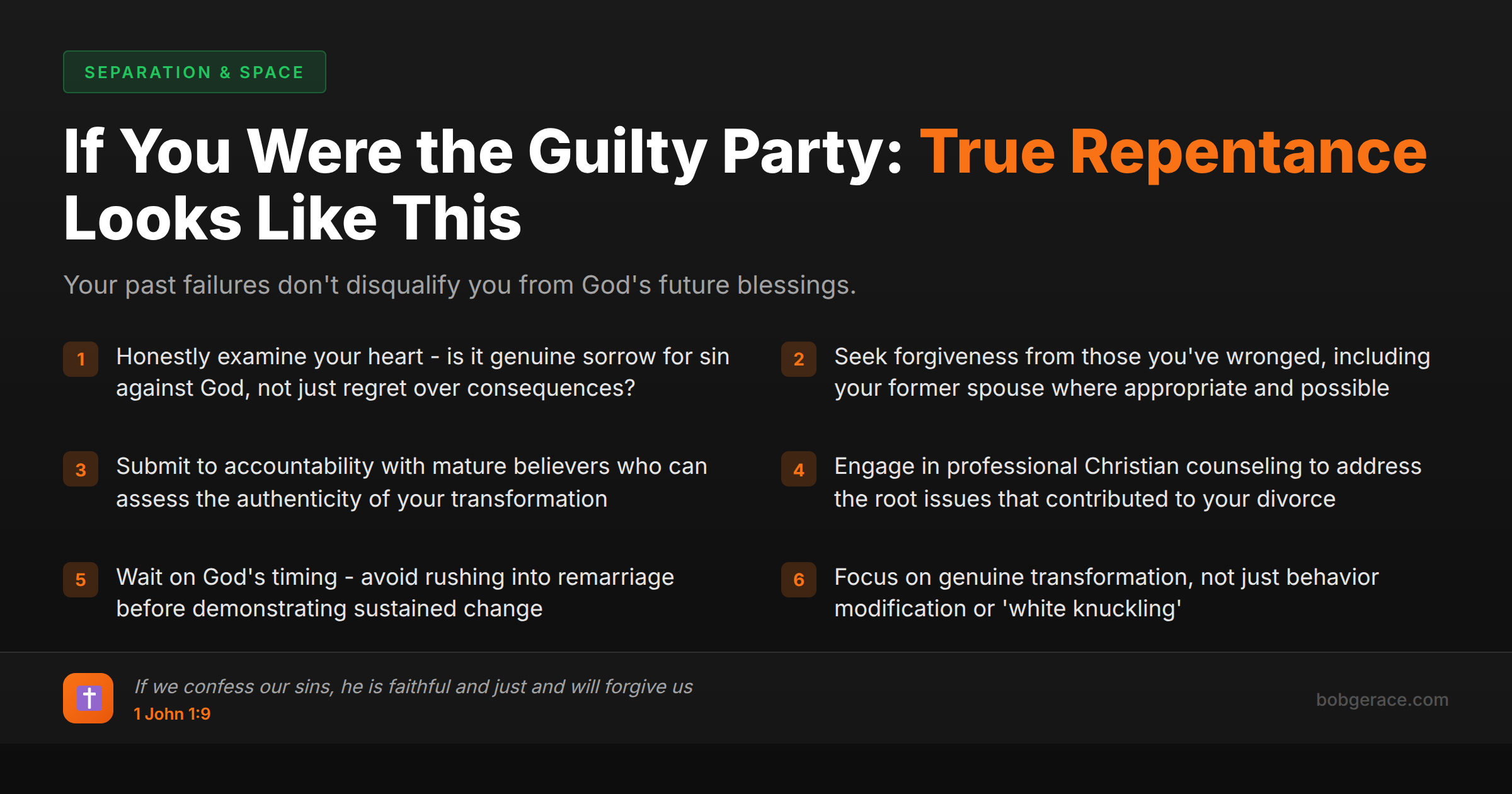
If you were the guilty party in your divorce but have genuinely repented, God's grace extends to you completely. True repentance involves acknowledging your sin, turning from it, making amends where possible, and walking in obedience moving forward. The question of remarriage becomes more complex when you were at fault, but Scripture shows God's heart for restoration. The key isn't perfection—it's genuine transformation. David committed adultery and murder, yet God restored him. The woman at the well had five husbands, yet Jesus offered her living water. Your past failures don't disqualify you from God's future blessings, but they do require careful consideration of His will for remarriage and the spiritual maturity to handle marriage differently this time.
The Full Picture
Being the guilty party in a divorce carries weight that shouldn't be minimized or dismissed. Whether through adultery, abandonment, abuse, or other destructive behaviors, your actions contributed to the breakdown of a covenant relationship. This reality matters—not because it defines your eternal worth, but because it shapes how you approach restoration and future relationships.
True repentance goes beyond regret. Feeling sorry about consequences isn't the same as genuine repentance. Biblical repentance involves recognizing your sin as an offense against God, taking full responsibility without excuses, turning completely from those behaviors, and demonstrating fruit that proves the change is real. It's not a one-time prayer but an ongoing posture of humility and transformation.
Your former spouse deserves consideration. Even if legal proceedings are complete, your repentance should include attempts to make amends where appropriate and possible. This doesn't mean pursuing reconciliation if they've moved on, but it may involve apologies, restitution, or simply respecting their boundaries while treating them with honor moving forward.
The church community plays a role. Genuine repentance is often best demonstrated and confirmed within the context of spiritual community. Accountability, counseling, and the witness of mature believers can help validate whether your transformation is authentic and whether remarriage aligns with God's will for your life.
Timing matters significantly. Rushing into remarriage shortly after divorce—especially when you were at fault—raises questions about the genuineness of repentance and the wisdom of the decision. God's restoration often includes seasons of healing, growth, and proving the reality of change before opening doors to new covenant relationships.
What's Really Happening
Guilt and shame after causing a divorce create complex psychological dynamics that affect readiness for future relationships. Many people confuse emotional regret with genuine repentance, leading to premature decisions about remarriage before real transformation occurs.
The guilt-shame cycle often drives people toward quick fixes rather than deep healing. Shame whispers 'you're irredeemable,' while guilt says 'you did something wrong.' Healthy repentance processes guilt appropriately while rejecting shame's lies. This distinction is crucial because shame-driven remarriage often repeats destructive patterns, while guilt that leads to genuine repentance can produce lasting change.
Neurologically, the habits and thought patterns that contributed to your first marriage's failure don't disappear with a prayer or good intentions. Real change requires intentional rewiring through consistent new behaviors, accountability relationships, and often professional counseling. The brain's plasticity means change is possible, but it takes time and deliberate effort.
I frequently see individuals rush toward remarriage as a way to escape the discomfort of facing themselves alone. This avoidance actually prevents the deep work necessary for a successful second marriage. The healthiest remarriages among former 'guilty parties' involve people who've spent significant time in personal healing, developed new relational skills, and can demonstrate sustained behavioral change.
The question isn't whether God can forgive—He absolutely can and does. The question is whether you've done the internal work necessary to honor a new covenant relationship and whether remarriage serves God's purposes for your life rather than just meeting your emotional needs.
What Scripture Says
Scripture reveals God's heart for restoration while maintaining the seriousness of covenant relationships. 1 John 1:9 promises, 'If we confess our sins, he is faithful and just and will forgive us our sins and purify us from all unrighteousness.' God's forgiveness is complete for those who genuinely repent, including those who broke their marriage covenant.
However, forgiveness doesn't automatically remove all consequences. Galatians 6:7 reminds us, 'Do not be deceived: God cannot be mocked. A man reaps what he sows.' Your past actions may create ongoing challenges or limitations, not as punishment, but as natural consequences that God can use for your growth and His glory.
2 Corinthians 5:17 declares, 'Therefore, if anyone is in Christ, the new creation has come: The old has gone, the new is here!' This speaks to genuine transformation, not just positional forgiveness. The question becomes whether your life demonstrates this new creation reality in ways that would honor a new marriage covenant.
David's story provides hope for the guilty party. After his adultery with Bathsheba and murder of Uriah, Psalm 51:10 records his prayer: 'Create in me a pure heart, O God, and renew a steadfast spirit within me.' God restored David, though consequences remained. The key was genuine brokenness and transformation, not just regret over consequences.
Ezekiel 36:26 promises, 'I will give you a new heart and put a new spirit in you; I will remove from you your heart of stone and give you a heart of flesh.' This transformation is possible for every repentant believer, including those considering remarriage after being at fault in divorce.
What To Do Right Now
-
1
Honestly examine your repentance - is it genuine sorrow for sin against God, or just regret over consequences?
-
2
Seek forgiveness from those you've wronged, including your former spouse where appropriate and possible
-
3
Submit to accountability with mature believers who can help assess the authenticity of your transformation
-
4
Engage in professional Christian counseling to address the root issues that contributed to your divorce
-
5
Wait on God's timing - avoid rushing into remarriage before demonstrating sustained life changes
-
6
Study Scripture on marriage, divorce, and remarriage to align your desires with God's will
Related Questions
- Does divorce always prohibit remarriage?
- What if I was the innocent party?
- What about divorce before I was a Christian?
- What does the church say about remarriage?
- Can God heal what happened to me?
- What is redemption of my story?
- What does biblical forgiveness require of me?
- What does 'godly sorrow' look like in practice?
- What does repentance look like for accumulated sin?
- What does 'new creation' mean for my history?
Also find Bob on
Subscribe for weekly videos on Christian marriage.
Your Story Needs More Than General Principles
Repentance is real, but remarriage after fault isn't one-size-fits-all. A coach who knows your specific history can help you discern what obedience actually looks like for you.
Talk to Bob →