What is 'emotional fatigue' in marriage?
5 min read
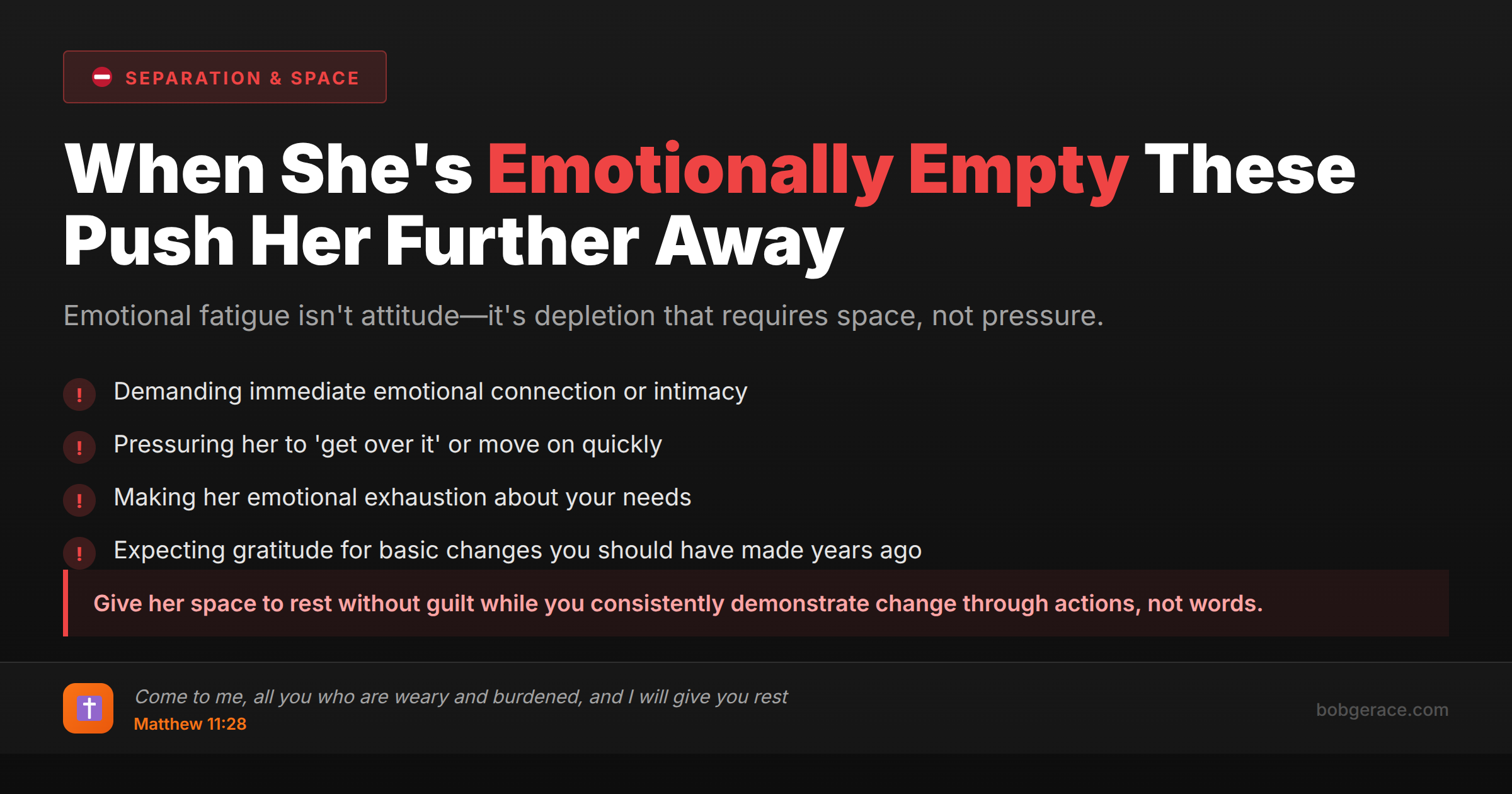
Emotional fatigue in marriage is a state of mental and emotional exhaustion that occurs when one spouse—often the wife—has expended all their emotional energy trying to make the relationship work without adequate reciprocal investment or support. It's not just feeling tired; it's a deep depletion that affects their ability to engage emotionally, physically, and mentally in the marriage. This condition typically develops over months or years of unresolved conflict, unmet emotional needs, or carrying disproportionate responsibility for the relationship's health. When emotional fatigue sets in, the affected spouse often appears to have 'checked out'—becoming distant, less responsive, and seemingly indifferent to efforts to reconnect.
The Full Picture
Emotional fatigue in marriage isn't something that happens overnight. It's the result of a slow leak in your spouse's emotional tank that's been draining faster than it's being filled. Think of it like running a marathon without proper training or hydration—eventually, your body gives out.
The Build-Up Process This exhaustion typically builds through repeated cycles of hope and disappointment. Your spouse invests emotional energy trying to improve the relationship, communicate their needs, or resolve ongoing issues. When these efforts consistently fail to produce lasting change, they begin to withdraw that investment. Each disappointment chips away at their emotional reserves until they reach a point of complete depletion.
What It Looks Like Emotionally fatigued spouses often exhibit several telltale signs: they stop initiating difficult conversations, show less interest in resolving conflicts, appear detached during arguments, and may seem almost relieved to avoid emotional discussions. They're not being stubborn or manipulative—they literally don't have the emotional energy to engage.
The Protective Response This withdrawal is actually a protective mechanism. Just as your body forces you to rest when physically exhausted, emotional fatigue causes people to conserve their remaining emotional resources. They're not trying to punish you; they're trying to survive in a relationship that has become emotionally unsustainable for them.
Why It's Often Misunderstood Many husbands interpret this withdrawal as rejection, stubbornness, or lack of love. In reality, it's often the opposite—it may represent the aftermath of loving too much, trying too hard, and giving too much without adequate return on that emotional investment.
What's Really Happening
From a clinical perspective, emotional fatigue in marriage shares characteristics with caregiver burnout and compassion fatigue. The neurological impact is real—chronic emotional stress literally changes brain chemistry, affecting the production of neurotransmitters like serotonin and dopamine that regulate mood and motivation.
The Neurological Reality When someone experiences prolonged emotional stress in their primary relationship, their brain shifts into a protective mode. The prefrontal cortex, responsible for emotional regulation and decision-making, becomes overworked and begins to shut down non-essential emotional responses. This is why emotionally fatigued individuals often appear flat or disengaged—their brain is conserving resources for basic survival functions.
Attachment Theory Connection Emotional fatigue often occurs in marriages where secure attachment has been compromised. When one partner repeatedly experiences their bids for emotional connection being dismissed, criticized, or ignored, their attachment system becomes dysregulated. They may shift from anxious attachment (pursuing connection) to avoidant attachment (withdrawing to protect themselves).
The Recovery Timeline Recovery from emotional fatigue isn't quick or linear. Even when positive changes begin in the marriage, the emotionally fatigued spouse needs time to rebuild their emotional reserves and trust that changes will be sustained. This process typically takes months, not weeks, and requires consistent, patient investment from both partners.
Clinical Indicators Professionally, I look for specific markers: decreased emotional responsiveness, reduced conflict engagement, increased focus on individual rather than couple activities, and what appears to be emotional numbness toward relationship issues that previously caused strong reactions.
What Scripture Says
Scripture acknowledges the reality of emotional exhaustion and provides both understanding and hope for recovery. God doesn't expect us to operate indefinitely without rest and renewal, even in our most important relationships.
The Need for Rest *"Come to me, all you who are weary and burdened, and I will give you rest"* (Matthew 11:28). Jesus recognizes that we can become weary—not just physically, but emotionally and spiritually. This principle applies to marriage, where emotional fatigue signals a need for rest and restoration.
The Depletion of Giving Without Receiving *"Give, and it will be given to you. A good measure, pressed down, shaken together and running over, will be poured into your lap"* (Luke 6:38). While often applied to material giving, this principle applies to emotional investment in marriage. When giving becomes one-directional without receiving, depletion is inevitable.
Bearing One Another's Burdens *"Carry each other's burdens, and in this way you will fulfill the law of Christ"* (Galatians 6:2). Emotional fatigue often results when one spouse carries the majority of the relationship's emotional burden. Biblical marriage calls for mutual burden-bearing, not one-sided emotional labor.
The Call to Gentleness *"Be completely humble and gentle; be patient, bearing with one another in love"* (Ephesians 4:2). When your spouse is emotionally fatigued, gentleness and patience aren't just nice—they're commanded. Pushing for immediate emotional engagement violates this biblical standard.
Restoration and Renewal *"He restores my soul"* (Psalm 23:3). God is in the business of restoration, including emotional restoration in marriage. The same God who renews our spiritual strength can renew our emotional capacity for loving well in marriage.
What To Do Right Now
-
1
Stop pushing for emotional engagement and give your spouse space to rest without pressure or guilt
-
2
Take full responsibility for your contribution to their emotional depletion without expecting immediate forgiveness
-
3
Begin consistently meeting basic emotional needs (respect, appreciation, security) without expecting reciprocation
-
4
Remove additional stressors from their life by taking on more household or family responsibilities
-
5
Demonstrate sustained change in your behavior patterns for at least 3-6 months before expecting emotional re-engagement
-
6
Seek professional counseling to address the underlying relationship dynamics that created this fatigue
Related Questions
- What is 'emotional disengagement'?
- Why did she stop fighting?
- What does giving up look like vs. regulating?
- What is 'stonewalling' and why does she do it?
- Why does indifference feel worse than anger?
- What does it mean when contempt has replaced anger?
- She seems happier when I'm not around
- She's physically present but emotionally gone
- She says she loves me but isn't 'in love'
- How did we get here without me noticing?
Also find Bob on
Subscribe for weekly videos on Christian marriage.
Your Wife's Fatigue Has a History
A coach who knows your marriage can map what got you here and what moves next—not generic advice, calibrated to her specific exhaustion and your actual dynamic.
Talk to Bob →