How long does it take to save a marriage?
5 min read
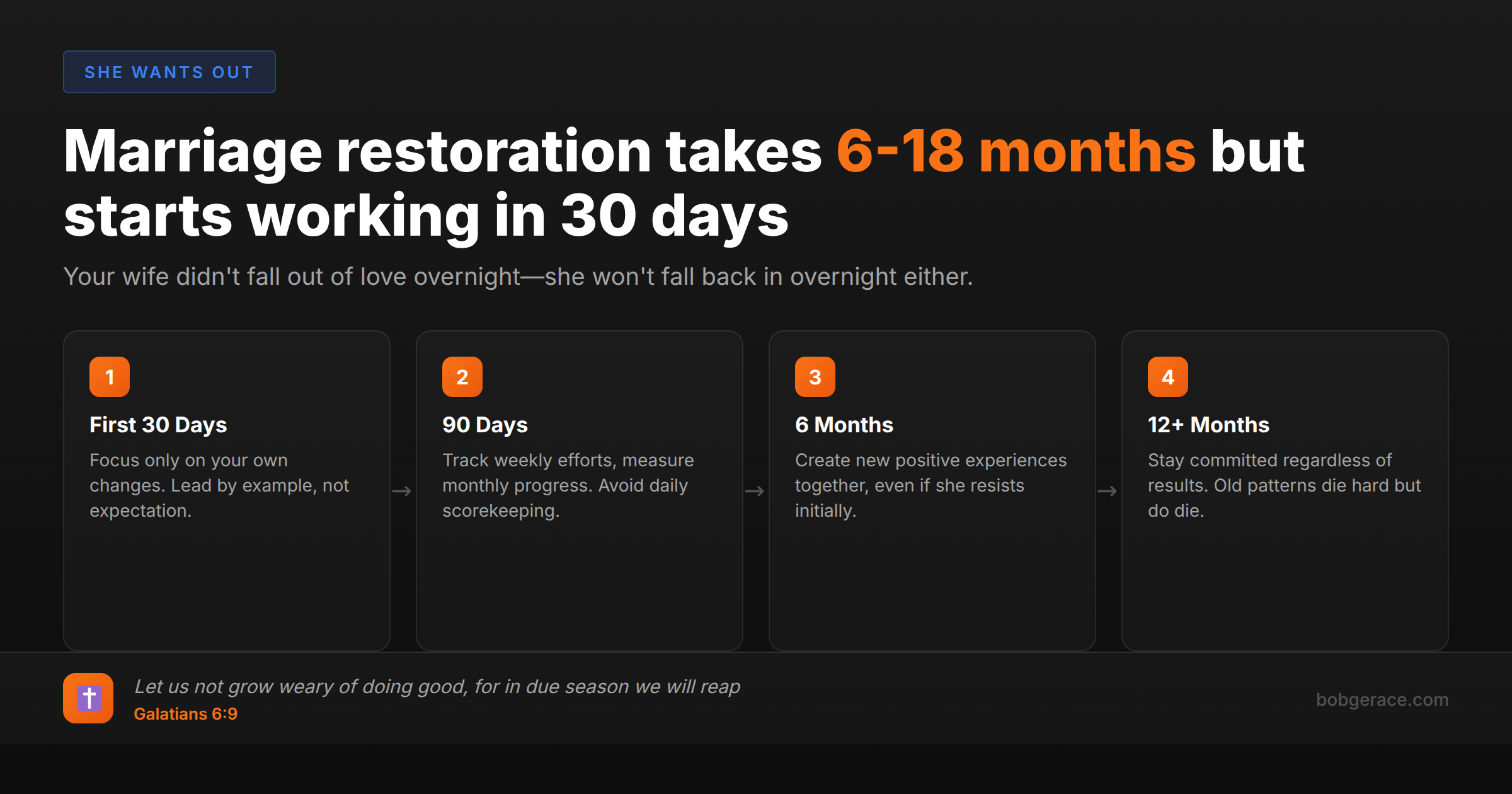
The honest answer: saving a marriage typically takes 6-18 months of consistent, intentional work, but you can see meaningful shifts within the first 30 days. Here's what most men don't understand—your wife didn't fall out of love overnight, and she won't fall back in overnight either. The timeline depends on how deep the damage goes, how willing you both are to change, and whether you're addressing the root issues or just the symptoms. I've seen marriages turn around in 3 months when both people fully commit, and I've seen others take 2+ years because old patterns die hard. The key isn't rushing the process—it's starting immediately and staying consistent. Your marriage didn't break in a day, and it won't heal in one either.
The Full Picture
Think of saving your marriage like rehabbing a serious injury. You wouldn't expect to run a marathon two weeks after knee surgery, but you'd start physical therapy immediately. Marriage restoration follows a similar pattern—early wins build momentum, but lasting change takes time.
Here's the typical timeline I see:
• First 30 days: Crisis stabilization. Stop the bleeding. Your wife might notice you're trying, but she's watching to see if it's real. • Months 2-3: New patterns emerge. She starts believing the change might stick. This is when many couples see their first breakthrough. • Months 4-6: Deeper intimacy returns. Trust rebuilds incrementally. You're both learning new ways of connecting. • Months 7-12: Integration phase. New behaviors become natural. Your marriage feels genuinely different. • Year 2+: Solidification. You've weathered some storms with your new tools. The marriage is stronger than before.
What speeds up the process? Both spouses fully engaging, professional guidance, addressing root causes (not just symptoms), and your willingness to own your part completely. What slows it down? Defensiveness, inconsistency, trying to rush intimacy before trust is rebuilt, and focusing on changing her instead of yourself.
The biggest mistake I see men make is giving up at the 3-month mark when they don't see dramatic results. Your wife spent months or years building walls—they don't come down because you had three good weeks.
What's Really Happening
From a therapeutic standpoint, marriage restoration involves rewiring deeply ingrained neural pathways and attachment patterns. Research by Dr. John Gottman shows that couples need approximately 5 positive interactions to offset every 1 negative interaction—and this ratio must be maintained consistently over time.
The brain's neuroplasticity allows for change, but it requires repetition and emotional safety. When trust has been broken, the injured partner's nervous system remains hypervigilant, scanning for threats. This is why your wife might not immediately respond to your efforts—her brain is literally protecting her from further harm.
Attachment theory tells us that secure bonding develops through consistent, reliable responses over time. If your marriage involved betrayal, addiction, or chronic conflict, your wife's attachment system shifted into protective mode. Restoring secure attachment typically requires 6-12 months of consistent, trustworthy behavior.
Trauma-informed therapy recognizes that marital wounds often trigger deeper attachment injuries. The timeline extends when addressing childhood wounds alongside marital issues. However, couples who engage in structured therapy programs show measurable improvement within 8-12 sessions when both partners participate fully.
The key neurological insight: change happens gradually, then suddenly. Your brain builds new neural highways slowly, but once established, new patterns can feel automatic. This is why consistency matters more than perfection in the early stages.
What Scripture Says
Scripture gives us both patience and urgency when it comes to restoration. Ecclesiastes 3:1 reminds us, *"To everything there is a season, and a time to every purpose under heaven."* Your marriage has seasons—this difficult season has purpose, and restoration has its own timing.
Galatians 6:9 encourages persistence: *"And let us not grow weary of doing good, for in due season we will reap, if we do not give up."* The phrase "due season" suggests God's timing, not ours. Your consistency in loving actions will bear fruit, but you can't force the harvest.
Hosea's entire story illustrates long-term restoration. God called Hosea to pursue his unfaithful wife Gomer persistently, year after year. This wasn't a quick fix—it was a lifestyle of faithful love that eventually won her heart. Your marriage restoration might require the same steadfast commitment.
1 Corinthians 13:4-7 defines love as patient and kind, not easily angered, keeping no record of wrongs. Notice patience comes first—love operates on God's timetable, not our impatience. Biblical love is willing to invest time in restoration.
James 1:4 says, *"Let perseverance finish its work so that you may be mature and complete, not lacking anything."* God uses the restoration process to mature both of you. Rushing it shortchanges the character development He's doing.
The biblical principle is clear: faithful, consistent love over time transforms hearts. Your job isn't to control the timeline but to remain faithful within it.
What To Do Right Now
-
1
Set a 12-month commitment to marriage restoration, regardless of immediate results—this removes the pressure of quick fixes
-
2
Track your efforts weekly but measure progress monthly—daily scorekeeping will discourage you
-
3
Focus on your own changes for the first 90 days before expecting her responses—lead by example
-
4
Get professional help immediately rather than trying to figure it out alone—guidance accelerates the process
-
5
Create new positive experiences together weekly, even if she's resistant—deposit goodness consistently
-
6
Address your core issues (anger, workaholism, emotional unavailability) with the same intensity you want her to change
Related Questions
- How long do I wait before giving up?
- When is it actually over?
- Is there a point of no return?
- What percentage of marriages recover from this point?
- What factors predict successful reconciliation?
- What is the average timeline for marriages that do recover?
- How long does recovery take?
- What is the typical betrayal trauma recovery timeline?
- How long does real transformation take?
- What does sustainable change require?
Also find Bob on
Subscribe for weekly videos on Christian marriage.
Your Timeline Depends on Your Story
A coach who knows your marriage can tell you what 6 months looks like for you—not some generic timeline. You don't have to keep guessing if you're on track.
Talk to Bob →