Can limerence become lasting love?
6 min read
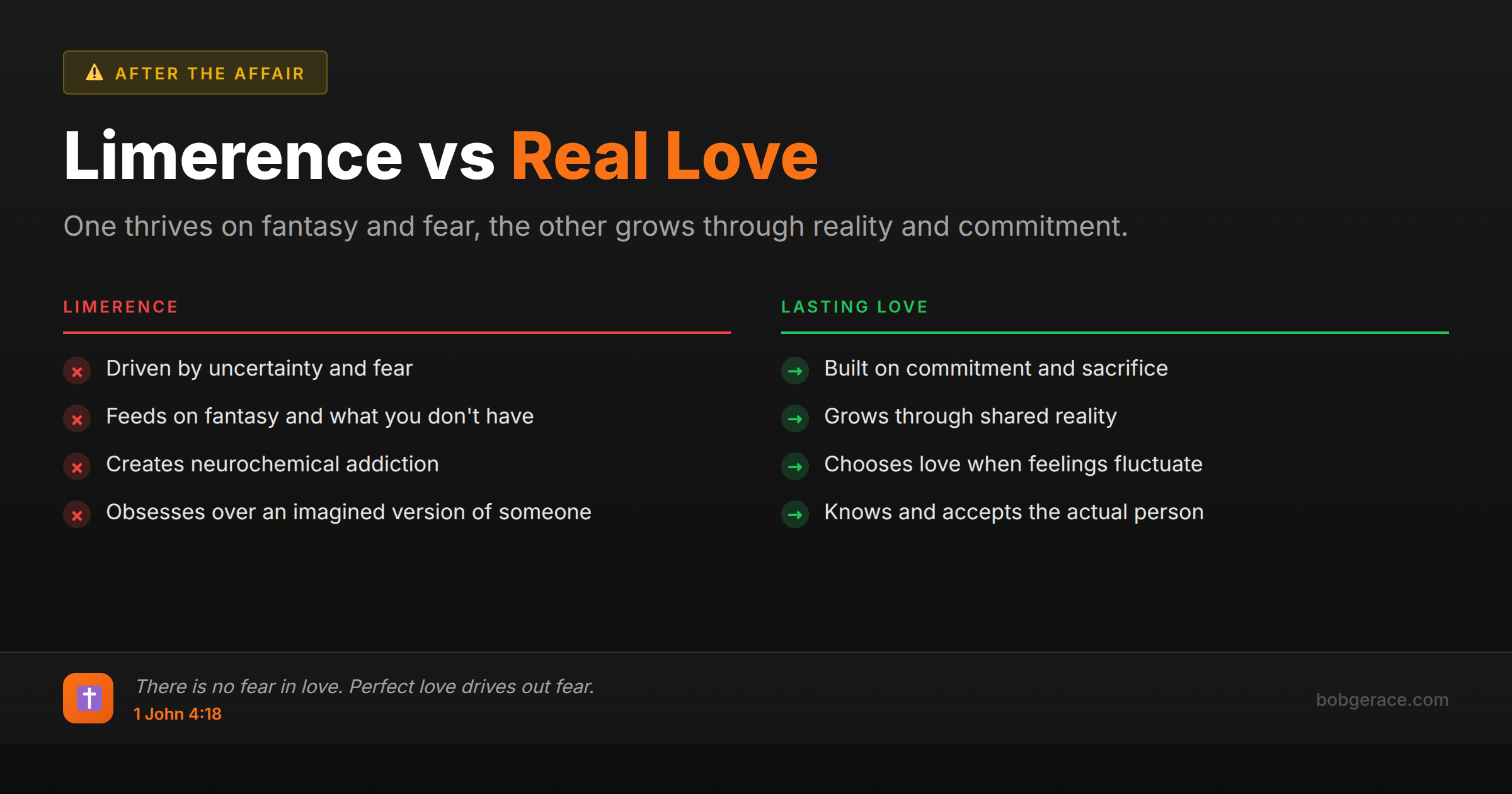
Limerence rarely becomes lasting love because they operate on fundamentally different principles. Limerence is driven by uncertainty, fantasy, and neurochemical addiction - it thrives on what you don't have. Lasting love is built on reality, commitment, and genuine intimacy with who someone actually is, not who you imagine them to be. While some couples do transition from limerent attraction to genuine love, this typically requires the limerence to fade first, allowing space for real relationship dynamics to develop. More commonly, when limerence burns out, people discover they barely know the actual person they were obsessing over. True love grows through shared experiences, mutual respect, and choosing commitment even when feelings fluctuate - the opposite of limerence's emotional rollercoaster.
The Full Picture
Let me be straight with you - limerence and lasting love are almost opposites, not stages of the same thing. I see this confusion destroy marriages every week.
Limerence feeds on uncertainty and fantasy. You obsess because you don't know if they want you. You create elaborate stories about who they are and what life would be like together. Your brain gets addicted to the dopamine hits from brief contacts and imagined scenarios.
Lasting love thrives on certainty and reality. You choose to love someone because you know who they actually are - including their flaws. You build a life together through daily choices, not fantasy scenarios. Your brain develops oxytocin bonds through shared experiences and genuine intimacy.
Here's what usually happens: People in limerence think they're experiencing the greatest love of their lives. The intensity feels profound and meaningful. But when they actually pursue the relationship, reality sets in. The mystery disappears. The fantasy person doesn't exist. What felt like destiny becomes disappointment.
Some relationships do survive this transition, but only if both people are willing to: - Let the fantasy die and meet the real person - Build actual compatibility beyond the initial attraction - Develop genuine friendship and shared values - Work through conflict instead of avoiding it to preserve the fantasy
The key insight? If your attraction depends on uncertainty, unavailability, or fantasy, it's not love - it's addiction. Real love can handle the mundane Tuesday morning reality of who someone actually is.
What's Really Happening
From a neurobiological perspective, limerence and lasting //blog.bobgerace.com/unconditional-love-christian-marriage/:love activate different brain systems entirely. Limerence triggers the dopamine reward pathway - the same system involved in gambling and substance addiction. This creates the obsessive thoughts, mood swings, and compulsive behaviors we see.
The uncertainty that defines limerence actually strengthens these neural pathways. When you don't know if someone reciprocates your feelings, your brain releases more dopamine than it would for a certain reward. This is called intermittent reinforcement, and it's incredibly addictive.
Lasting love, however, is associated with oxytocin and vasopressin - the bonding hormones. These develop through consistent, reliable interactions and shared experiences. They create feelings of safety, attachment, and deep connection rather than the highs and lows of dopamine addiction.
Can one transform into the other? Theoretically yes, but it requires the limerent person to literally rewire their brain. They must stop feeding the dopamine addiction through fantasy and obsessive thinking. They need to engage with the real person in real situations, building oxytocin bonds instead.
Most importantly, they need to develop emotional regulation skills. Limerence involves emotional dysregulation - your feelings about this person are chaotic and overwhelming. Healthy love requires emotional stability and the ability to maintain your sense of self within the relationship. This transformation is possible but requires intentional therapeutic work and genuine motivation to change.
What Scripture Says
Scripture draws clear distinctions between love driven by selfish desire and love rooted in commitment and sacrifice. The limerent experience aligns more with what the Bible warns against than what it celebrates.
1 John 4:18 tells us, "There is no fear in love. But perfect love drives out fear, because fear has to do with punishment. The one who fears is not made perfect in love." Limerence is defined by fear - fear of rejection, fear of loss, fear that they don't feel the same way. This anxiety-driven obsession is the opposite of biblical love.
1 Corinthians 13:4-7 describes love as "patient, kind... it does not envy, it does not boast, it is not proud. It does not dishonor others, it is not self-seeking, it is not easily angered, it keeps no record of wrongs." Compare this to limerence's impatience, jealousy, pride in being "chosen," and self-seeking fantasy fulfillment.
The Bible also warns against being "lovers of pleasure rather than lovers of God" (2 Timothy 3:4). Limerence is ultimately about the pleasure and validation you get from the experience, not genuine care for the other person's wellbeing.
Ephesians 5:25 commands husbands to "love your wives, just as Christ loved the church and gave himself up for her." This sacrificial, committed love is built on choice and action, not feeling and fantasy.
Philippians 2:3-4 instructs us to "do nothing out of selfish ambition or vain conceit. Rather, in humility value others above yourselves, not looking to your own interests but each of you to the interests of the others." True love seeks the other person's good, even when it conflicts with your desires - the antithesis of limerent obsession.
What To Do Right Now
-
1
Stop feeding the fantasy - Cut off unnecessary contact, remove their photos, stop checking their social media
-
2
Face reality about your marriage - List specific issues you need to address rather than escaping into limerent obsession
-
3
Identify what limerence gives you - Recognition? Excitement? Feeling special? Find healthy ways to meet these needs
-
4
Practice emotional regulation - When limerent thoughts arise, use grounding techniques instead of indulging them
-
5
Invest in actual relationships - Spend focused time with your spouse, children, and friends in the real world
-
6
Get professional help - Work with a therapist who understands both limerence and marriage restoration
Related Questions
- What is limerence?
- How long does limerence last?
- What is the typical limerence timeline?
- What interrupts limerence vs. what strengthens it?
- What percentage of affair relationships last?
- What's the 'affair bubble' and how does it pop?
- What does real transformation look like?
- How long does real change actually take?
- What does healthy hope look like vs. fantasy?
- How do I know if I'm in denial or in faith?
Also find Bob on
Subscribe for weekly videos on Christian marriage.
Bring This Situation to Bob
Limerence in an active marriage isn't theoretical—it's a crisis with a clock. A coach who knows your specific story can help you see what you can't see alone and act before the next 30 days decide everything.
Talk to Bob →