What does betrayal do to the brain?
6 min read
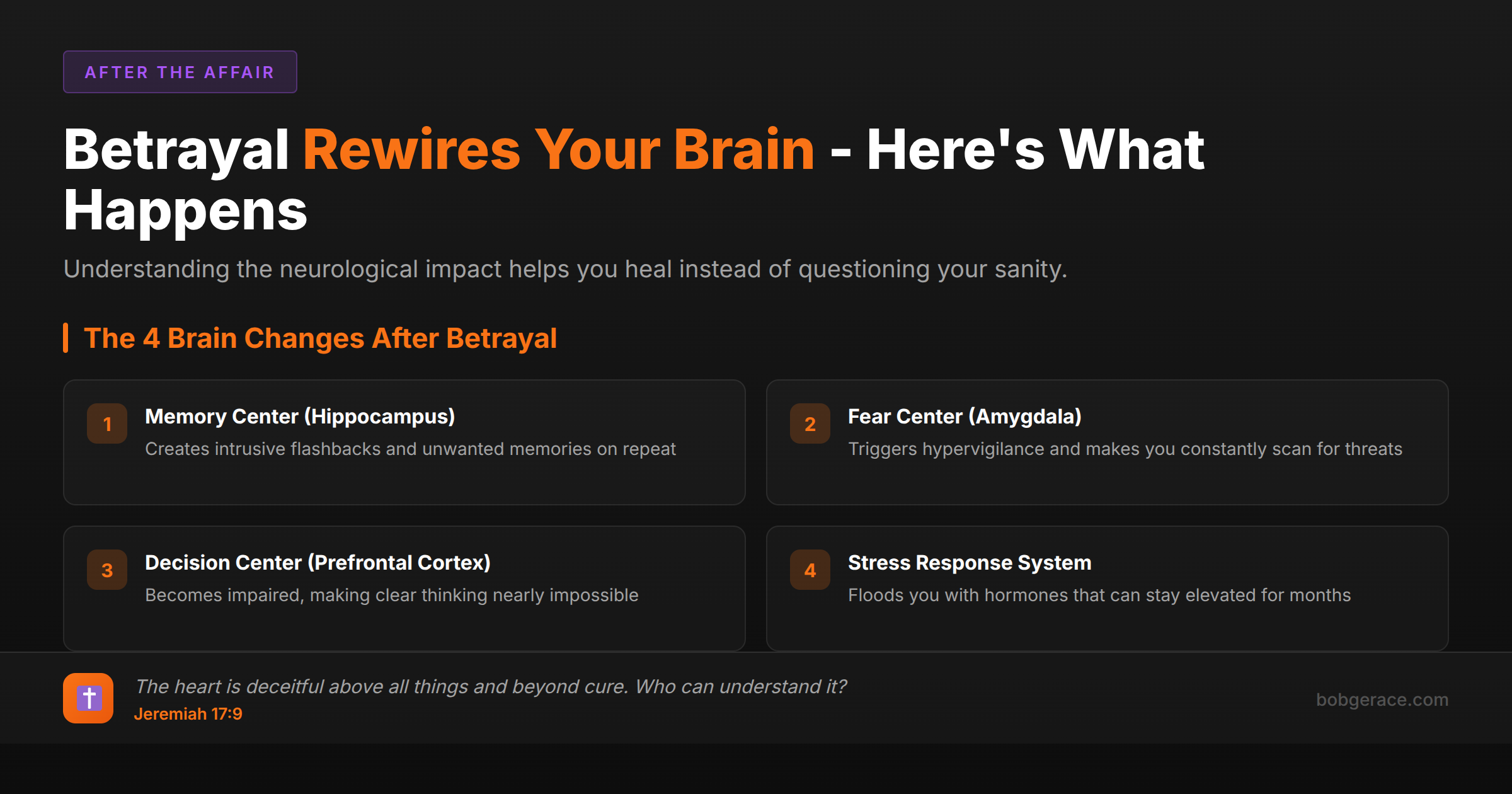
Betrayal literally rewires your brain, creating measurable neurological changes that affect how you think, feel, and respond to the world around you. When you discover infidelity or deep deception, your brain's alarm systems activate, flooding your system with stress hormones that can remain elevated for months or even years. This isn't weakness - it's your brain doing exactly what it's designed to do when faced with a life-threatening situation. The hippocampus (memory center) becomes hyperactive, creating intrusive memories and flashbacks. Your amygdala (fear center) goes into overdrive, making you hypervigilant and easily triggered. Meanwhile, the prefrontal cortex (decision-making center) becomes impaired, making it harder to think clearly or make rational choices. These changes explain why betrayed spouses often feel like they're 'going crazy' - your brain is literally operating differently than it did before.
The Full Picture
Understanding what betrayal does to your brain requires looking at the profound neurological storm that occurs when trust is shattered. The moment you discover infidelity, your brain interprets this as a survival threat - not just an emotional hurt, but a genuine danger to your wellbeing and security.
The Stress Response System Activation Your hypothalamic-pituitary-adrenal (HPA) axis immediately kicks into high gear, releasing cortisol and adrenaline. Unlike a car accident where this stress response resolves quickly, betrayal trauma keeps these systems activated chronically. This sustained stress literally shrinks the hippocampus while enlarging the amygdala, creating lasting changes in brain structure.
Memory Processing Goes Haywire Betrayal disrupts how your brain processes and stores memories. The hippocampus, responsible for organizing memories into coherent narratives, becomes overwhelmed. This is why betrayed spouses often experience: - Intrusive memories that feel like they're happening now - Inability to stop replaying events - Fragmented memories that don't make sense - Hypervigilant scanning for more signs of deception
The Attachment System Under Attack Your brain's attachment circuitry, developed in early childhood and refined through relationships, gets scrambled. The person who should be your safe haven becomes the source of danger. This creates what researchers call 'disorganized attachment' - simultaneously needing comfort from and feeling terrified of the same person.
Neuroplasticity: The Hope Factor Here's what's crucial to understand: while betrayal changes your brain, your brain can heal and rebuild. Neuroplasticity means new neural pathways can form, damaged areas can recover, and healthy functioning can be restored. But this requires intentional work, time, and often professional support.
What's Really Happening
In my practice, I see clients who feel like they're losing their minds after discovering betrayal. I want you to understand: you're not crazy, you're injured. The neurological changes from betrayal trauma are as real and measurable as a broken bone.
The most significant change occurs in what we call the 'fear circuitry.' Your amygdala becomes hyperactive, constantly scanning for threats. Simultaneously, the prefrontal cortex - your brain's CEO responsible for executive functioning - goes offline. This explains why you might find yourself unable to concentrate, make decisions, or think logically about situations that would normally be straightforward.
What's particularly devastating about betrayal trauma is how it affects the nervous system's ability to regulate. Your brain loses its capacity to distinguish between actual danger and perceived threats. A text notification, your spouse coming home late, or even moments of normalcy can trigger full-blown panic responses.
The good news is that understanding these neurological realities helps normalize your experience. When clients realize their symptoms have a biological basis, shame decreases and healing can begin. Through targeted interventions like EMDR, neurofeedback, and somatic therapies, we can literally rewire these trauma responses.
Recovery isn't just about 'getting over it' - it's about giving your brain the specific tools and time it needs to restore healthy functioning. This process typically takes 12-18 months minimum, and that's with //blog.bobgerace.com/marriage-consistency-christian-husband-stop-excuses/:consistent therapeutic support.
What Scripture Says
Scripture acknowledges the profound impact that betrayal has on our entire being - mind, body, and spirit. God doesn't minimize the neurological reality of trauma; instead, He provides pathways for healing and restoration.
The Reality of Deep Wounds *'The heart is deceitful above all things and beyond cure. Who can understand it?'* (Jeremiah 17:9). Scripture acknowledges that betrayal creates wounds that affect our ability to think clearly and trust accurately.
God's Understanding of Our Trauma *'He heals the brokenhearted and binds up their wounds'* (Psalm 147:3). The Hebrew word for 'wounds' here refers to physical injuries. God recognizes that emotional betrayal creates real, measurable damage that requires intentional healing.
The Renewal of Our Minds *'Do not conform to the pattern of this world, but be transformed by the renewing of your mind'* (Romans 12:2). This isn't just spiritual advice - it's neurological truth. Through God's grace and proper intervention, our minds can literally be renewed and restored.
Peace for Anxious Thoughts *'Do not be anxious about anything, but in every situation, by prayer and petition, with thanksgiving, present your requests to God. And the peace of God, which transcends all understanding, will guard your hearts and your minds in Christ Jesus'* (Philippians 4:6-7). God's peace isn't just emotional comfort - it's protection for our traumatized neural pathways.
Hope for Restoration *'And the God of all grace, who called you to his eternal glory in Christ, after you have suffered a little while, will himself restore you and make you strong, firm and steadfast'* (1 Peter 5:10). The Greek word for 'restore' means to mend what has been broken - including our neurological functioning.
What To Do Right Now
-
1
Recognize that your brain is injured, not broken - validate your symptoms as normal trauma responses, not personal weakness
-
2
Prioritize basic nervous system regulation through consistent sleep, nutrition, and gentle movement like walking
-
3
Find a trauma-informed therapist who understands betrayal's neurological impact and can provide specialized treatment
-
4
Practice grounding techniques when triggered - name 5 things you can see, 4 you can touch, 3 you can hear
-
5
Limit major decisions for the first 6-12 months while your brain heals - your decision-making capacity is temporarily impaired
-
6
Join a support group for betrayal trauma to normalize your experience and reduce isolation
Related Questions
Your Brain Can Heal From This
Don't navigate betrayal trauma alone. Get the specialized support you need to restore your neurological health and rebuild your life.
Get Help Now →