Why do I feel physically sick?
6 min read
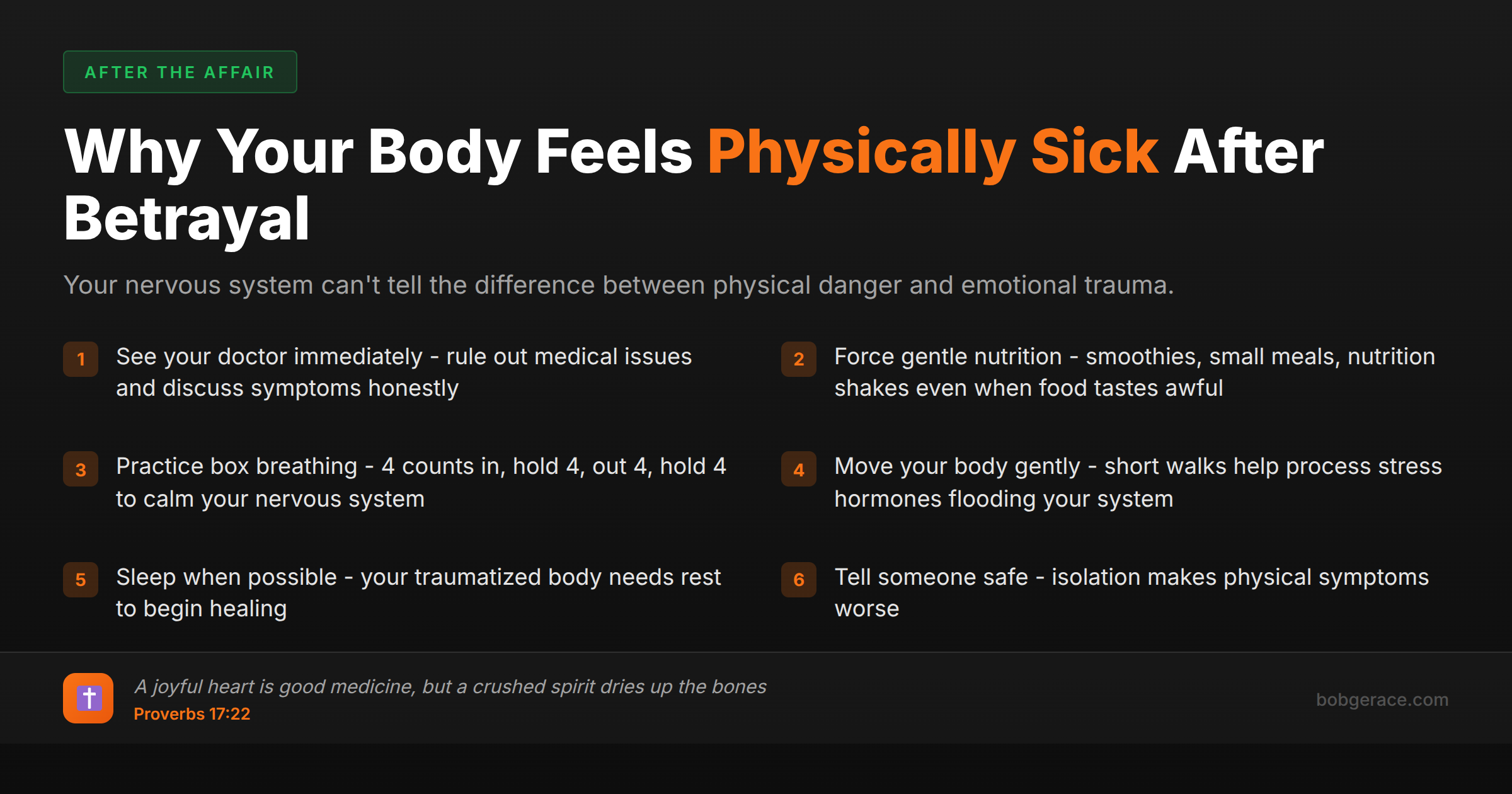
The physical sickness you're experiencing is real and completely normal. Betrayal trauma triggers your body's fight-or-flight response, flooding your system with stress hormones like cortisol and adrenaline. This creates genuine physical symptoms: nausea, loss of appetite, fatigue, headaches, chest tightness, and digestive issues. Your nervous system can't distinguish between physical danger and emotional trauma - both activate the same survival mechanisms. When you discovered the betrayal, your brain interpreted it as a life-threatening event, which in relational terms, it is. Your body is responding exactly as it's designed to when facing a crisis. This isn't weakness or overreaction; it's biology.
The Full Picture
Your body is telling the truth about what happened to you. The physical symptoms you're experiencing - whether it's nausea that won't quit, food that tastes like cardboard, exhaustion that sleep doesn't fix, or that constant knot in your stomach - these aren't signs of weakness. They're evidence of trauma.
Betrayal trauma specifically targets your attachment system, the neurological network responsible for bonding and safety. When the person who should be your safe harbor becomes the source of danger, your entire nervous system goes into overdrive. Your vagus nerve, which controls your body's rest-and-digest functions, essentially shuts down. This is why eating feels impossible and why your stomach churns constantly.
The stress hormone cocktail flooding your system - cortisol, adrenaline, and norepinephrine - creates a cascade of physical effects. Your heart races even when you're sitting still. Your muscles stay tense, ready to fight or flee. Your immune system takes a hit, making you more susceptible to illness. Sleep becomes elusive because your brain refuses to power down when it perceives ongoing threat.
This is compounded by hypervigilance - your nervous system scanning constantly for more betrayal, more lies, more evidence of danger. Every text notification, every late night, every unexplained absence sends fresh waves of stress hormones through your body. You're essentially living in a state of chronic activation, and your body is paying the price.
Understand this: your physical response validates the severity of what you've experienced. Betrayal isn't just an emotional wound - it's a full-system trauma that affects every aspect of your being.
What's Really Happening
From a neurobiological perspective, betrayal trauma creates what we call 'somatic symptoms' - physical manifestations of psychological distress. When you discovered the betrayal, your amygdala (the brain's alarm system) triggered an immediate threat response, releasing stress hormones that prepare your body for danger.
The polyvagal theory helps explain your physical symptoms. Your autonomic nervous system has three states: //blog.bobgerace.com/dorsal-vagal-shutdown-christian-marriage-disconnection/:social engagement-social-engagement) (calm and connected), fight-or-flight (mobilized for action), and freeze/collapse (shutdown for survival). Betrayal trauma often triggers rapid cycling between these states, creating physical chaos in your system.
Your enteric nervous system - the 'second brain' in your gut - is particularly affected. This explains the persistent nausea, digestive issues, and that 'gut-wrenching' feeling that's so literal it hurts. The gut-brain connection means emotional trauma directly impacts digestive function.
Chronic stress hormone elevation affects every body system. Cortisol disrupts sleep patterns, suppresses appetite, impairs immune function, and creates inflammation. This is why you might feel like you're getting sick more often or that minor injuries take longer to heal.
The body keeps score of trauma, and betrayal creates cellular memories that trigger physical responses even when you're trying to 'think your way through' the pain. Healing requires addressing both the psychological and somatic aspects of your trauma. Your body needs specific interventions - not just talk therapy - to restore nervous system regulation.
What Scripture Says
Scripture acknowledges the deep connection between emotional pain and physical suffering. 'A joyful heart is good medicine, but a crushed spirit dries up the bones' (Proverbs 17:22). Your crushed spirit is manifesting in your physical body, and God sees this connection.
David's psalms reveal the physical impact of betrayal and distress: 'My bones wasted away through my groaning all day long. For day and night your hand was heavy on me; my strength was sapped as in the heat of summer' (Psalm 32:3-4). Like David, your body is bearing the weight of trauma.
'Anxiety weighs down the heart, but a kind word cheers it up' (Proverbs 12:25). The anxiety of betrayal - the constant state of hypervigilance and fear - literally weighs on your physical being. God designed us as integrated beings where emotional wounds affect our entire system.
Jesus himself experienced physical symptoms of emotional distress. In Gethsemane, 'his sweat was like drops of blood falling to the ground' (Luke 22:44), demonstrating that even the Son of God experienced the physical manifestations of extreme emotional stress.
'Come to me, all you who are weary and burdened, and I will give you rest' (Matthew 11:28). Christ offers rest not just for your soul, but for your weary, trauma-affected body. 'He heals the brokenhearted and binds up their wounds' (Psalm 147:3) - wounds that are both emotional and physical.
God created you as a whole person - body, soul, and spirit intricately connected. Your physical symptoms aren't a sign of weak faith; they're evidence of the comprehensive nature of betrayal trauma and God's design for integrated healing.
What To Do Right Now
-
1
See your doctor immediately - rule out other medical issues and discuss your symptoms honestly. Consider asking about short-term medication if symptoms are severe.
-
2
Force gentle nutrition - even if food tastes awful, your traumatized body needs fuel. Try small, frequent meals, smoothies, or nutrition shakes.
-
3
Practice basic nervous system regulation - try box breathing (4 counts in, hold 4, out 4, hold 4) several times daily to activate your parasympathetic nervous system.
-
4
Move your body gently - trauma gets stored in muscles and tissues. Walk, stretch, or do light yoga to help process stress hormones naturally.
-
5
Prioritize sleep hygiene - create a calm bedtime routine, limit screens before bed, consider melatonin or other natural sleep aids after consulting your doctor.
-
6
Track symptoms in a journal - document patterns to validate your experience and identify triggers. This helps you and your healthcare providers understand your needs better.
Related Questions
Your Body Needs Professional Care
Betrayal trauma affects your entire system. You don't have to navigate this physical and emotional crisis alone.
Get Support Now →