What's happening with my cortisol/adrenaline?
6 min read
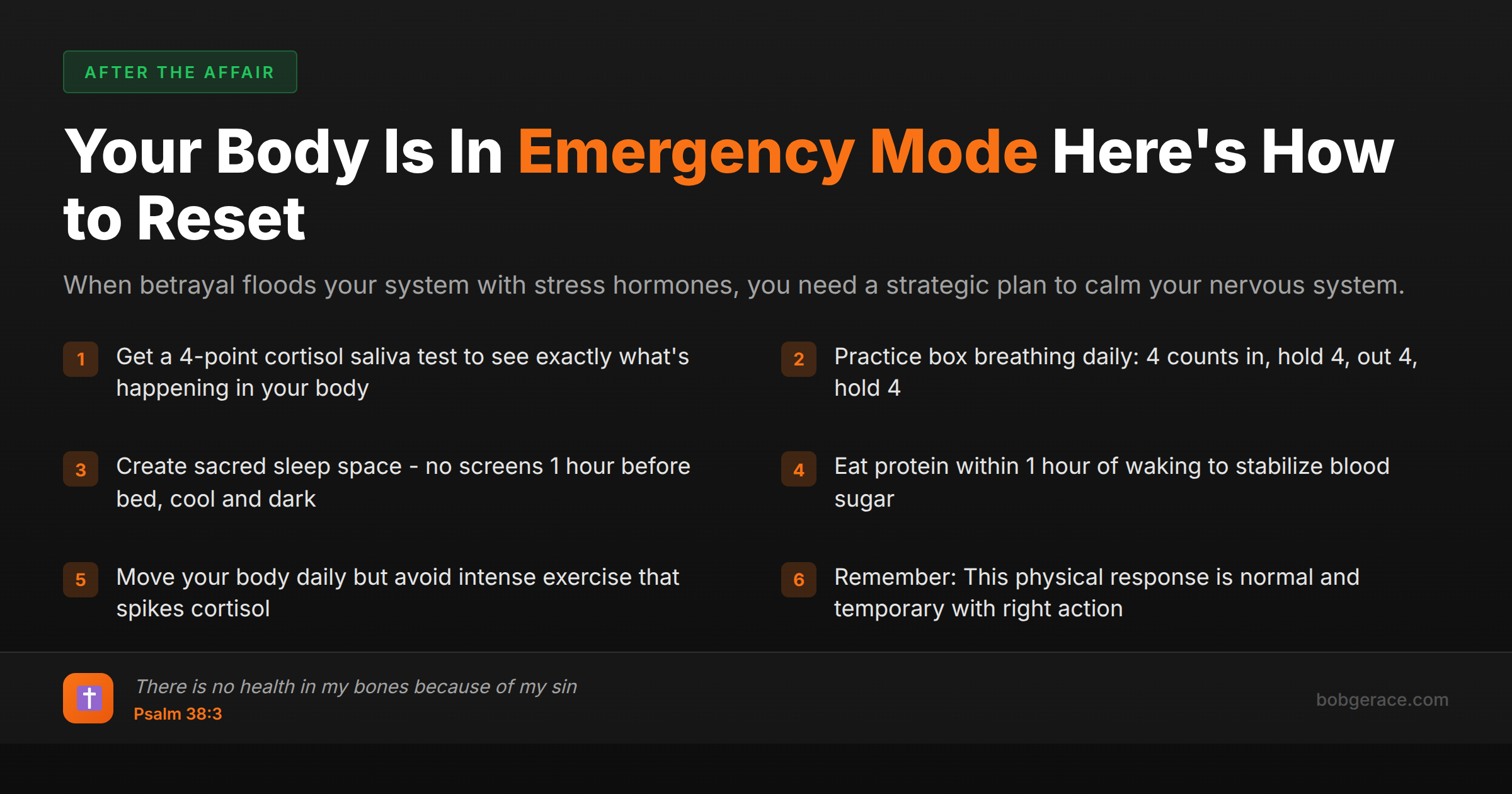
Your body is flooding with stress hormones because it's responding to betrayal as a life-threatening emergency. When you discovered the affair, your brain's alarm system triggered a massive release of cortisol and adrenaline - the same chemicals that would surge if you were facing a physical attack. This isn't weakness; it's your nervous system doing exactly what it's designed to do when it perceives mortal danger. These hormones are why you can't sleep, why your heart races at random moments, why you feel simultaneously wired and exhausted. Your body is stuck in fight-or-flight mode because the betrayal has shattered your sense of safety. The good news? This response is temporary and manageable with the right approach.
The Full Picture
Discovery of an affair triggers what researchers call betrayal trauma - a specific type of psychological injury that occurs when someone we depend on for survival violates our trust. Your spouse isn't just your romantic partner; they're your primary attachment figure, your safety net, your teammate in life. When they betray you, your brain interprets this as a threat to your very survival.
Here's what's happening in your body right now:
Cortisol - your primary stress hormone - is flooding your system at levels 2-3 times higher than normal. This hormone is designed to help you survive immediate danger by increasing blood sugar, suppressing non-essential functions like digestion and reproduction, and keeping you hypervigilant. But when cortisol stays elevated for weeks or months, it wreaks havoc on your sleep, appetite, immune system, and ability to think clearly.
Adrenaline is creating that feeling of being constantly "amped up." Your heart pounds, your hands shake, you feel like you need to DO something but don't know what. This hormone is meant to give you superhuman strength to fight or flee - but there's nowhere to run from betrayal.
Norepinephrine is flooding your brain, creating obsessive thoughts about the affair. You can't stop thinking about details, replaying conversations, checking phone records. This isn't you being "crazy" - it's your brain desperately trying to assess the threat level and regain control.
The cruel irony is that these same hormones that are meant to protect you are now making it harder to heal. High cortisol impairs memory formation and decision-making. Chronic adrenaline exhausts your adrenal glands. The hypervigilance that kept our ancestors alive now keeps you awake at 3 AM, mind racing with questions and fears.
What's Really Happening
From a neurobiological perspective, betrayal activates the same brain regions as physical pain - literally. The anterior cingulate cortex and right ventral prefrontal cortex light up on brain scans exactly as they would if you'd been physically injured. Your nervous system cannot distinguish between physical and emotional threats to survival.
What makes betrayal trauma unique is that it occurs within an attachment relationship. Your nervous system has been co-regulating with your spouse - meaning their presence helped keep your stress response system calm and balanced. When they become the source of threat, your entire regulatory system goes haywire.
The HPA axis (hypothalamic-pituitary-adrenal) gets stuck in overdrive. Normally, cortisol follows a healthy circadian rhythm - high in the morning to get you going, low at night to help you sleep. After betrayal, this rhythm is completely disrupted. Many clients have cortisol levels that are inverted - low when they should be high, high when they should be low.
The amygdala - your brain's smoke detector - becomes hyperactive, scanning constantly for new threats. Meanwhile, the prefrontal cortex - responsible for rational thinking and emotional regulation - goes offline. This is why you might feel like you're "losing your mind" or can't think straight.
//blog.bobgerace.com/gaslighting-recovery-christian-marriage-timeline/:Recovery requires intentionally resetting these systems through specific interventions: nervous system regulation techniques, sleep hygiene, nutrition support, and sometimes temporary pharmaceutical support while your natural systems recalibrate.
What Scripture Says
God understands that betrayal affects us physically, not just emotionally. Throughout Scripture, we see how trauma impacts the whole person - body, soul, and spirit.
Psalm 38:3-8 describes physical symptoms that mirror what you're experiencing: *"There is no soundness in my flesh because of your indignation; there is no health in my bones because of my sin... I am utterly spent and crushed; I groan because of the tumult of my heart."* David understood that emotional pain manifests physically.
Proverbs 14:30 tells us that *"A tranquil heart gives life to the flesh, but envy makes the bones rot."* Your body is designed to reflect what's happening in your heart and mind. The stress you're feeling isn't separate from your physical symptoms - they're interconnected.
Matthew 11:28-30 offers Jesus' invitation: *"Come to me, all who labor and are heavy laden, and I will give you rest. Take my yoke upon you, and learn from me, for I am gentle and lowly in heart, and you will find rest for your souls. For my yoke is easy, and my burden is light."* This isn't just spiritual rest - it's the kind of deep, nervous system rest your body desperately needs.
Psalm 147:3 promises that God *"heals the brokenhearted and binds up their wounds."* The word for "wounds" here refers to physical injuries. God sees your betrayal trauma as real wounds that need real healing.
Isaiah 26:3 gives us the pathway forward: *"You keep him in perfect peace whose mind is stayed on you, because he trusts in you."* Peace isn't just a feeling - it's a neurological state where your stress response system can finally rest.
God didn't design your body to carry this level of stress indefinitely. He built in mechanisms for healing and restoration, and He calls us to be wise stewards of our physical bodies as we walk through trauma recovery.
What To Do Right Now
-
1
Get your cortisol levels tested with a 4-point saliva test to understand your specific pattern and severity
-
2
Implement daily nervous system regulation through box breathing: 4 counts in, 4 hold, 4 out, 4 hold
-
3
Prioritize sleep hygiene - no screens 1 hour before bed, cool dark room, consistent bedtime even if you can't fall asleep
-
4
Support your adrenals with proper nutrition - eliminate caffeine, eat protein within 1 hour of waking, avoid blood sugar spikes
-
5
Move your body daily but avoid intense exercise which can spike cortisol further - gentle walking, yoga, or stretching
-
6
Consider working with a trauma-informed physician about temporary support while your system recalibrates
Related Questions
Your Body Needs Support Right Now
You don't have to navigate this neurological storm alone. Let's create a personalized plan to help your nervous system heal while you work on your marriage.
Get Help Now →