When do triggers decrease in intensity?
6 min read
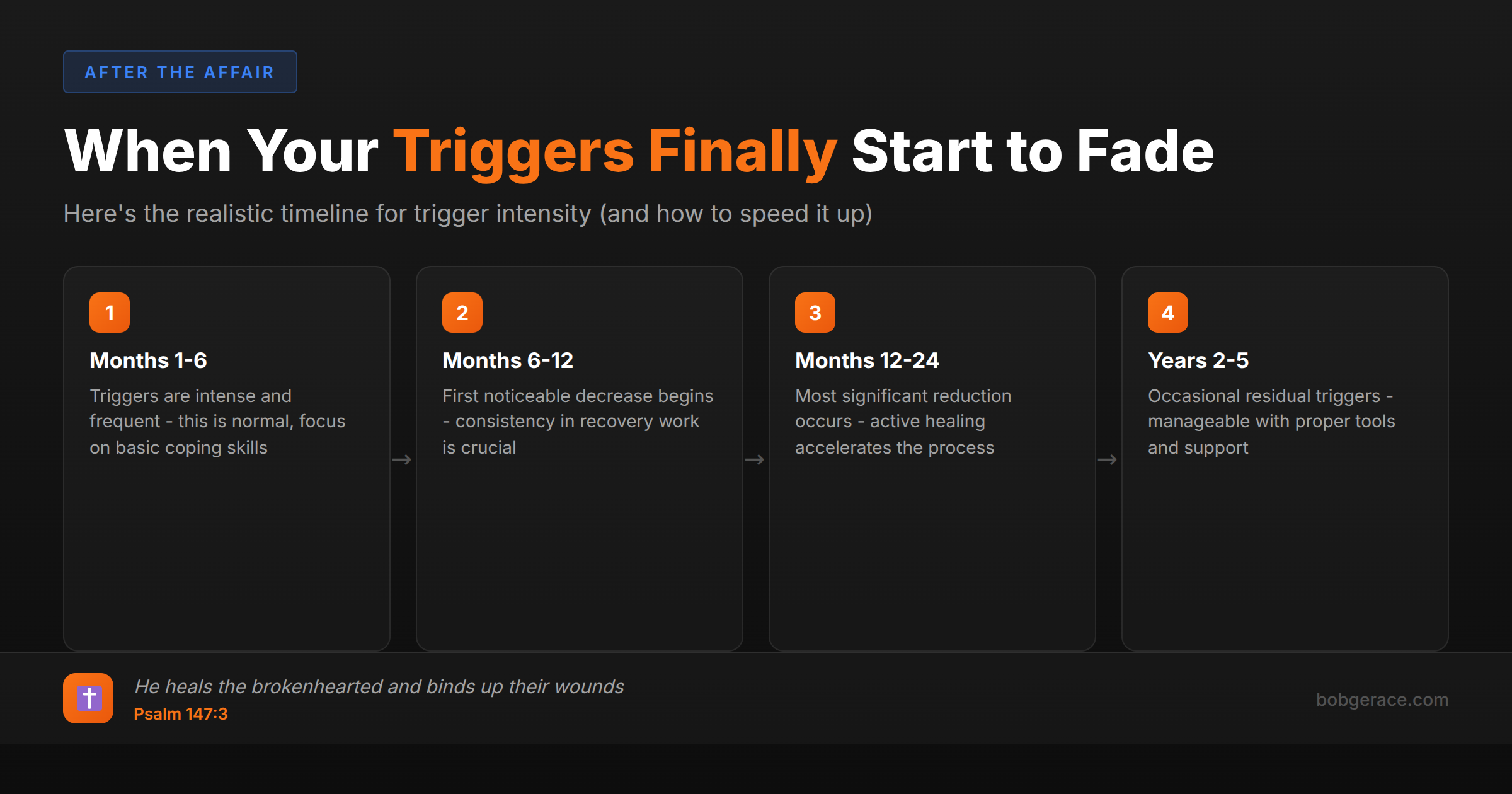
Triggers typically begin to decrease in intensity around 6-12 months after starting intentional recovery work, though everyone's timeline is different. The most significant reduction usually occurs between months 12-24, with some residual triggers potentially lasting 2-5 years. However, this isn't just about waiting - active healing work dramatically accelerates the process. The key factor isn't time alone, but the quality of recovery work being done. Couples who engage in consistent therapy, practice healthy communication, and address underlying issues see triggers diminish much faster than those who simply hope time will heal everything. Your triggers are telling you something important about what needs healing.
The Full Picture
Triggers don't follow a neat timeline, but there are predictable patterns. Most people experience the most intense triggers in the first 3-6 months after discovery. This is normal - your nervous system is in survival mode, trying to protect you from further harm.
The first major shift typically happens around 6-12 months when you start seeing consistent changes in your spouse's behavior and your own healing work begins taking root. You'll notice triggers are less frequent and less overwhelming. Instead of being completely derailed for days, you might recover in hours.
Months 12-24 bring the most significant improvements. This is when many couples report feeling like they're finally breathing again. Triggers still happen, but they're more manageable. You develop better coping strategies and your spouse learns how to respond helpfully rather than defensively.
Years 2-5 involve fine-tuning and occasional setbacks. Random triggers might still surface - anniversaries, similar situations, or unexpected reminders. But by now, you have tools to handle them. Many couples report that while triggers never completely disappear, they become opportunities for deeper connection rather than sources of division.
Here's what accelerates the process: Consistent therapy, regular check-ins with your spouse, trauma-informed approaches like EMDR, building new positive experiences together, and addressing your own attachment wounds. Couples who do intensive work see dramatic improvements in 6-12 months rather than years.
What's Really Happening
From a neurological standpoint, triggers are your brain's alarm system working overtime. When infidelity occurs, your amygdala becomes hypervigilant, scanning for threats even when you're safe. This creates a state of chronic activation that takes time and intentional work to calm.
The //blog.bobgerace.com/marriage-crisis-timeline-rushing-extends-recovery/:timeline for trigger reduction correlates directly with nervous system regulation. In the acute phase (0-6 months), your sympathetic nervous system is constantly activated. Simple reminders can flood your system with stress hormones, creating that familiar feeling of panic, rage, or despair.
Around 6-12 months, if proper healing work is happening, we see the beginning of nervous system regulation. Your parasympathetic system starts coming back online, allowing for moments of calm and clear thinking. This is when triggers begin losing their overwhelming intensity.
The 12-24 month period is crucial for neuroplasticity - your brain literally rewires itself based on new, safe experiences with your spouse. Triggers that once sent you into a tailspin begin to feel more manageable because your brain has evidence that you can survive and even thrive through difficult emotions.
What many don't realize is that triggers serve a purpose beyond just causing pain. They're highlighting areas that need attention - unresolved trauma, unmet needs, or ongoing trust deficits. Couples who view triggers as information rather than just obstacles heal much faster.
What Scripture Says
God's Word speaks directly to the healing process and His timeline for restoration. Isaiah 61:3 promises He will give us "beauty for ashes, the oil of joy for mourning, the garment of praise for the spirit of heaviness." This transformation doesn't happen overnight, but God is faithful to complete the work He starts.
Psalm 147:3 reminds us that "He heals the brokenhearted and binds up their wounds." Notice it says He heals - present tense, ongoing action. Your triggers are part of those wounds that God is actively working to heal. Trust His process even when progress feels slow.
Ecclesiastes 3:1-8 teaches us there's "a time to weep and a time to laugh, a time to mourn and a time to dance." Your season of intense triggering will not last forever. God has ordained times and seasons, and He will bring you through this difficult chapter.
Romans 8:28 assures us that "all things work together for good to those who love God." Even your triggers, as painful as they are, can become tools God uses to bring deeper healing and stronger intimacy to your marriage. Many couples report that working through triggers together actually strengthened their bond.
2 Corinthians 4:17 puts our temporary suffering in perspective: "For our light affliction, which is but for a moment, is working for us a far more exceeding and eternal weight of glory." Your triggers feel overwhelming now, but they're temporary. God is using this season to build something beautiful in your marriage.
What To Do Right Now
-
1
Track your triggers in a journal - note intensity (1-10), duration, and what helped you recover
-
2
Create a trigger response plan with your spouse - specific actions they can take to help you feel safe
-
3
Practice grounding techniques daily - deep breathing, progressive muscle relaxation, or mindfulness
-
4
Schedule weekly check-ins to discuss triggers without blame - focus on understanding and support
-
5
Work with a trauma-informed therapist who understands infidelity recovery and nervous system healing
-
6
Celebrate small improvements - notice when triggers are less intense or shorter in duration
Related Questions
- What is the typical betrayal trauma recovery timeline?
- What are the stages of betrayal trauma recovery?
- How do I stop the mental movies?
- What does full recovery actually look like?
- What is 'triggered' vs. 're-traumatized'?
- How long does recovery take?
- What does trauma recovery look like?
- What's happening in my nervous system right now?
- What does healing timeline look like?
Also find Bob on
Subscribe for weekly videos on Christian marriage.
Your Triggers Are Specific to Your Marriage
A coach who knows your story can help you identify what's actually driving them — and what work will make them fade faster in your specific situation.
Talk to Bob →