What is the typical betrayal trauma recovery timeline?
6 min read
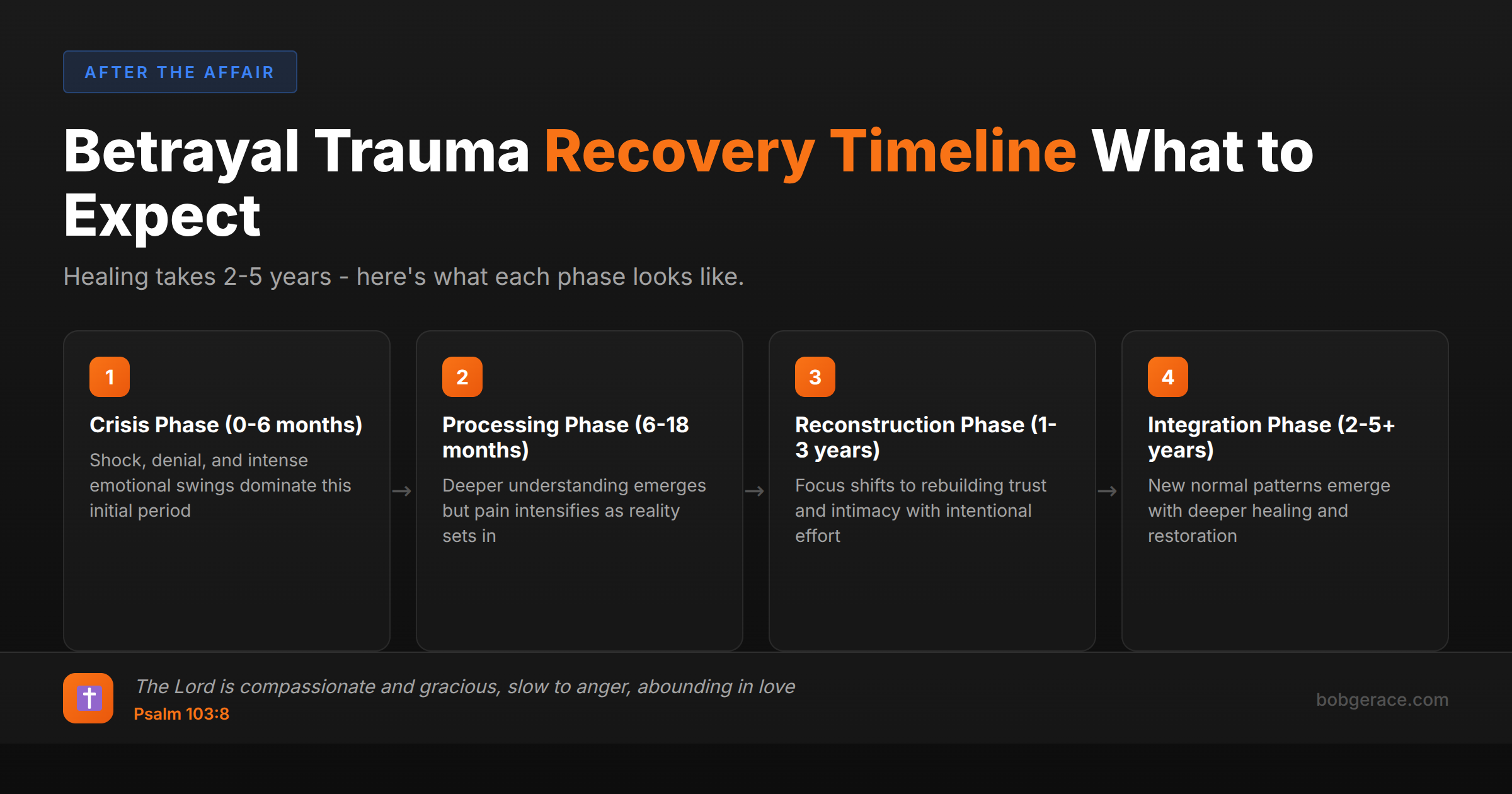
Betrayal trauma recovery typically follows a 2-5 year timeline with distinct phases, though everyone's journey is unique. The initial crisis phase (0-6 months) involves shock, denial, and intense emotional swings. The processing phase (6-18 months) brings deeper understanding but continued pain as reality sets in. The reconstruction phase (1-3 years) focuses on rebuilding trust and intimacy. Finally, the integration phase (2-5+ years) establishes new normal patterns and deeper healing. Recovery isn't linear - expect setbacks, triggers, and waves of emotion even years later. Factors like the betrayer's cooperation, professional help, support systems, and personal resilience significantly impact timing. Some couples see substantial progress within 18 months, while others need 3-5 years for full restoration.
The Full Picture
Betrayal trauma recovery is one of the most challenging journeys a person can face, and understanding the typical timeline helps set realistic expectations. The path isn't a straight line - it's more like a spiral staircase where you revisit similar emotions at different levels of healing.
Phase 1: Crisis and Shock (0-6 months) This initial phase feels like emotional whiplash. You're dealing with discovery shock, denial, bargaining, and intense rage or numbness. Physical symptoms are common - insomnia, loss of appetite, panic attacks. Your nervous system is in constant fight-or-flight mode. Many describe feeling like they're "going crazy" during this phase.
Phase 2: Processing and Reality (6-18 months) The fog begins to lift, but the pain often intensifies as reality sets in. You start asking deeper questions: "How did I miss the signs?" "What does this mean about our marriage?" Obsessive thoughts about details are normal. This phase involves grieving the marriage you thought you had.
Phase 3: Reconstruction (1-3 years) If your spouse is doing their work, this phase focuses on rebuilding. You're establishing new boundaries, learning new communication patterns, and slowly testing trust in small increments. Progress feels slow but steady. Bad days become less frequent.
Phase 4: Integration (2-5+ years) The trauma no longer defines your daily experience. You've developed new coping skills, rebuilt intimacy, and established a "new normal." Triggers may still occur but don't derail your progress. Many couples report their marriage is actually stronger than before the betrayal.
Factors That Affect Timeline: - Betrayer's willingness to do recovery work - Professional counseling and support - Additional traumas or betrayals - Personal history and resilience - Quality of support system - Spiritual foundation and community
What's Really Happening
From a clinical perspective, betrayal trauma creates genuine PTSD symptoms because it shatters our fundamental assumptions about safety and trust. The timeline I see in practice varies dramatically, but certain patterns are consistent.
Neurobiological Impact Betrayal trauma literally rewires the brain. The amygdala becomes hyperactive while the prefrontal cortex - responsible for rational thinking - goes offline. This explains why betrayed partners often feel "crazy" or unable to think clearly. Healing requires rewiring these neural pathways, which takes time and consistent effort.
The Myth of Linear Progress Many couples expect steady upward progress, but recovery follows what we call a "spiral pattern." You'll revisit similar emotions and challenges, but each time with greater wisdom and strength. A trigger that devastated you at month 6 might only create a minor setback at month 18.
Critical Success Factors In my practice, couples who heal faster share common elements: the unfaithful partner takes full responsibility without defensiveness, both partners engage in individual therapy, they have strong support systems, and they're willing to do the hard work even when it's uncomfortable.
Red Flags That Extend Timeline Recovery stalls when the unfaithful partner minimizes, blames, or continues deceptive behaviors. Additional discoveries of //blog.bobgerace.com/biblical-headship-marriage-feminist-lies/:lies or betrayals essentially restart the clock. Isolation and lack of professional support also significantly extend the healing process.
Realistic Expectations While every situation is unique, I typically tell couples to expect 2-3 years for substantial healing and 3-5 years for complete integration. This isn't pessimistic - it's realistic and helps prevent the discouragement that comes from unrealistic expectations.
What Scripture Says
Scripture doesn't promise quick fixes, but it does promise that God walks with us through suffering and brings beauty from ashes. The biblical timeline for healing often spans years, not months, and God's people repeatedly needed extended seasons to process pain and rebuild.
God's Patience with Our Process "The Lord is compassionate and gracious, slow to anger, abounding in love. He will not always accuse, nor will he harbor his anger forever" (Psalm 103:8-9). Just as God is patient with our healing, we must be patient with ourselves. Healing happens on His timeline, not ours.
Seasons of Pain Have Purpose "There is a time for everything, and a season for every activity under the heavens... a time to weep and a time to laugh, a time to mourn and a time to dance" (Ecclesiastes 3:1,4). Your season of mourning isn't wasted time - it's necessary for complete healing.
God Uses Extended Wilderness Seasons The Israelites wandered 40 years in the wilderness before entering the Promised Land. David spent years fleeing Saul before becoming king. Jesus waited 30 years before beginning His ministry. Extended seasons of preparation and healing are God's pattern, not the exception.
Hope for Complete Restoration "And the God of all grace, who called you to his eternal glory in Christ, after you have suffered a little while, will himself restore you and make you strong, firm and steadfast" (1 Peter 5:10). Notice it says "after you have suffered a little while" - healing comes after the process, not instead of it.
Beauty from Ashes Takes Time "To bestow on them a crown of beauty instead of ashes, the oil of joy instead of mourning, and a garment of praise instead of a spirit of despair" (Isaiah 61:3). This transformation doesn't happen overnight. Like a garden growing after a fire, restoration takes seasons to fully bloom.
What To Do Right Now
-
1
Accept that healing is a 2-5 year process and adjust your expectations accordingly - this reduces frustration with the pace
-
2
Track your progress weekly in a journal, noting small improvements to combat the feeling that "nothing's changing"
-
3
Establish a support team including a trauma-informed therapist, trusted friends, and support group members
-
4
Create safety plans for triggered moments including grounding techniques, breathing exercises, and people to call
-
5
Set realistic monthly goals rather than expecting dramatic changes - celebrate small victories
-
6
Educate your spouse and close supporters about trauma recovery so they understand your process and can help appropriately
Related Questions
Don't Walk This Journey Alone
Betrayal trauma recovery is too difficult to navigate without expert guidance and support. Get the professional help you need to heal completely.
Get Support Now →