What does PTSD recovery look like in marriage context?
6 min read
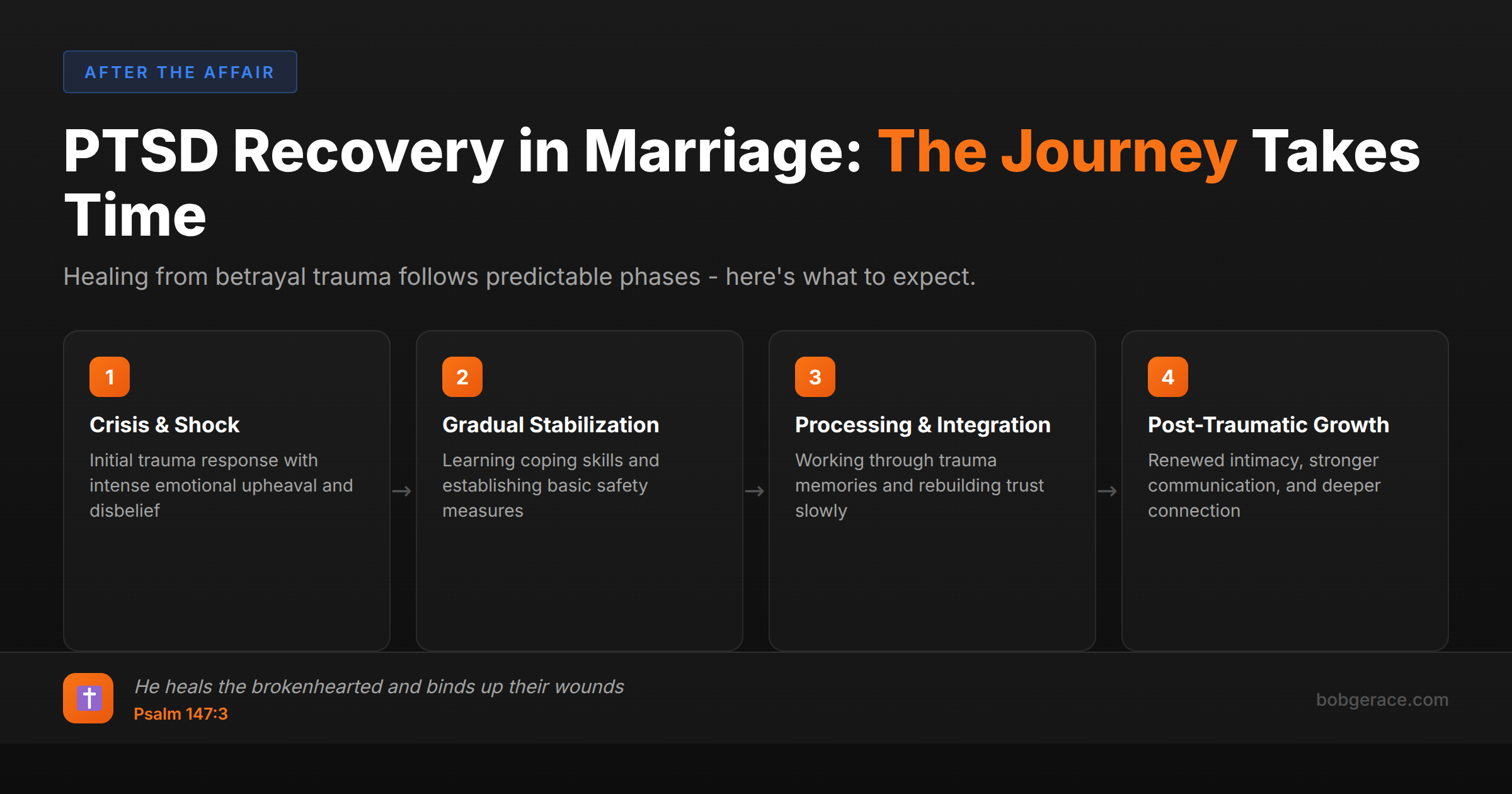
PTSD recovery in marriage is a non-linear journey that typically takes 2-5 years for significant healing from betrayal trauma. It involves distinct phases: initial crisis and shock, gradual stabilization, processing and integration, and eventual post-traumatic growth. The betrayed spouse experiences flashbacks, hypervigilance, and intrusive thoughts while the unfaithful partner must provide consistent safety and transparency. Recovery looks like gradually decreasing trigger intensity, improved emotional regulation, restored intimacy, and renewed trust. Both spouses need individual therapy alongside couples work. The betrayed partner learns trauma coping skills while the unfaithful spouse addresses their issues that led to the affair. Progress includes longer periods between trauma responses, increased communication, and moments of genuine connection returning to the relationship.
The Full Picture
PTSD recovery in marriage after betrayal trauma is one of the most challenging yet transformative journeys a couple can undertake. Unlike other forms of trauma, betrayal trauma occurs within the relationship that should be the safest place, creating a unique set of recovery challenges.
The trauma response is real and valid. When a spouse discovers an affair, their nervous system responds as if facing a life-threatening situation. This isn't dramatic or weak—it's a normal biological response to having your fundamental sense of safety shattered. The betrayed spouse may experience flashbacks when seeing certain locations, hypervigilance about their partner's activities, intrusive thoughts about the affair, and physical symptoms like insomnia or panic attacks.
Recovery happens in phases, not a straight line. The initial crisis phase can last 3-6 months, characterized by intense emotions and reactive behaviors. The stabilization phase focuses on creating safety and basic functioning. The processing phase involves making meaning of the trauma and working through deeper emotions. Finally, the integration phase allows for post-traumatic growth and renewed relationship connection.
Both spouses have work to do. The betrayed spouse must learn trauma recovery skills, practice self-care, and gradually rebuild their sense of safety. The unfaithful spouse must provide radical transparency, consistent reliability, and patience with their partner's healing process. They also need to address whatever led to their betrayal in the first place.
Progress isn't always visible. Some days will feel like major setbacks. Anniversaries, triggers, or new discoveries can temporarily reset the healing process. This is normal and doesn't mean you're not making progress. Healing trauma requires time, professional support, and tremendous courage from both partners.
What's Really Happening
From a clinical perspective, betrayal trauma creates specific neurobiological changes that must be addressed for genuine healing. The betrayed spouse's amygdala becomes hyperactive while their prefrontal cortex—responsible for rational thinking—goes offline during triggers. This explains why logical conversations become impossible during trauma responses.
The attachment system suffers severe disruption. Humans are wired to seek comfort from their primary attachment figure during distress, but in betrayal trauma, that same person is the source of danger. This creates an impossible bind that manifests as the push-pull dynamic many couples experience—desperately wanting closeness while simultaneously needing distance for safety.
Trauma //blog.bobgerace.com/marriage-intelligence-network-data-driven-recovery/:recovery requires three essential elements: safety, connection, and meaning-making. Safety must be established first through the unfaithful spouse's complete transparency and consistent actions over time. Connection can only be rebuilt after safety exists, starting with small moments of vulnerability and gradually increasing intimacy. Meaning-making involves both spouses understanding how the affair happened and creating new narratives about their relationship and future.
Neuroplasticity research shows that brains can rewire, but it requires approximately 300-500 positive interactions to outweigh one negative betrayal memory. This explains why recovery takes years, not months. The good news is that couples who successfully navigate betrayal trauma often report stronger relationships than before the crisis, having developed deeper emotional intimacy and communication skills through the recovery process.
What Scripture Says
Scripture provides profound wisdom for understanding trauma recovery within marriage. Psalm 147:3 reminds us that "He heals the brokenhearted and binds up their wounds." God sees your pain and is actively involved in your healing process. This isn't just spiritual comfort—it's a promise that healing is possible.
Isaiah 61:1-3 speaks of God's heart for the wounded: "to bind up the brokenhearted, to proclaim freedom for the captives and release from darkness for the prisoners... to comfort all who mourn, and provide for those who grieve... to bestow on them a crown of beauty instead of ashes, the oil of joy instead of mourning." Betrayal trauma feels like mourning—mourning the marriage you thought you had, the spouse you trusted completely. God promises beauty from these ashes.
Romans 8:28 doesn't minimize your pain but offers hope: "And we know that in all things God works for the good of those who love him." This doesn't mean the affair was good or God's will, but that God can bring redemption even from devastating betrayal. Many couples find their recovered marriage stronger than their original one.
Ephesians 4:15-16 speaks to the rebuilding process: "speaking the truth in love, we will grow to become in every respect the mature body of him who is the head, that is, Christ. From him the whole body, joined and held together by every supporting ligament, grows and builds itself up in love." Recovery requires truth-telling and love working together—exactly what trauma recovery demands.
2 Corinthians 1:3-4 reveals God's purpose in our suffering: "who comforts us in all our troubles, so that we can comfort those in any trouble with the comfort we ourselves receive from God." Your healing journey, though painful, can become a source of hope for others walking similar paths.
What To Do Right Now
-
1
Find a trauma-informed therapist immediately - both individual and couples counseling are essential for recovery
-
2
Create physical and emotional safety - full disclosure, complete transparency, and removal of all contact with affair partner
-
3
Establish daily grounding practices - deep breathing, prayer, physical exercise, and consistent sleep schedules
-
4
Build a support system - trusted friends, support groups, or pastoral care who understand betrayal trauma
-
5
Practice radical self-care - proper nutrition, medical checkups, and activities that bring comfort and stability
-
6
Document your healing journey - journal progress, celebrate small wins, and track patterns in your recovery process
Related Questions
Don't Navigate Trauma Recovery Alone
PTSD recovery in marriage requires expert guidance and proven strategies. Get the professional support you need to heal and rebuild your relationship.
Get Help Now →