How do I know if I need EMDR or trauma therapy?
6 min read
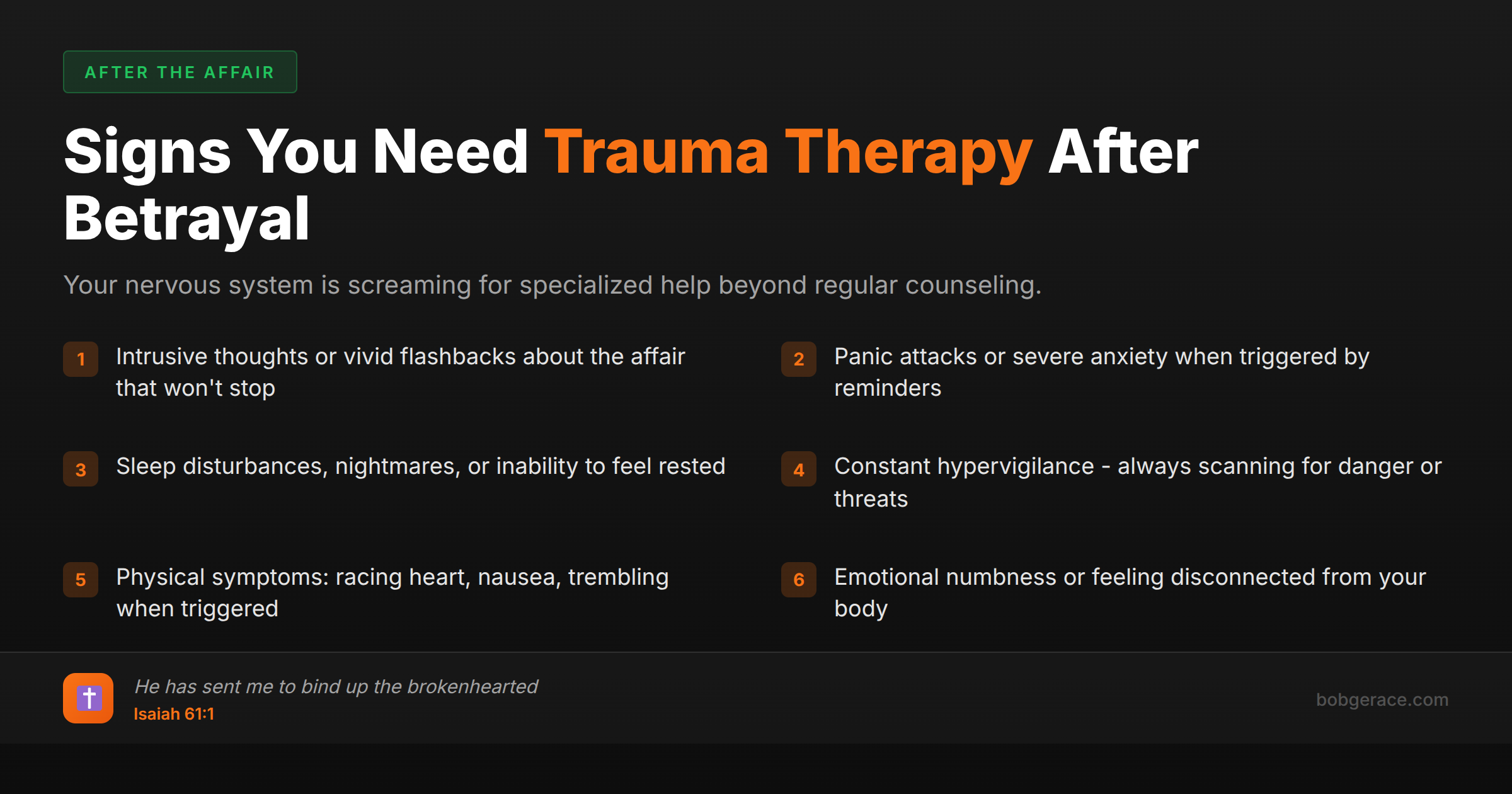
You likely need EMDR or trauma therapy if you're experiencing persistent intrusive thoughts about the affair, vivid flashbacks, severe anxiety or panic attacks when triggered, sleep disturbances, or emotional numbness. These are classic signs of betrayal trauma that require specialized treatment beyond traditional counseling. Trauma therapy becomes essential when your nervous system remains stuck in fight-or-flight mode weeks or months after discovery. If you find yourself constantly hypervigilant, unable to feel safe, or experiencing physical symptoms like racing heart, nausea, or trembling when reminded of the betrayal, these indicate your brain needs help processing the traumatic experience. Standard talk therapy may not be enough to address these deep neurological responses.
The Full Picture
Understanding the difference between regular counseling and trauma therapy is crucial for your recovery. While marriage counseling focuses on relationship dynamics and communication, trauma therapy specifically addresses how your nervous system has been impacted by the betrayal.
Betrayal trauma creates specific symptoms that require specialized treatment approaches. Your brain may have encoded the discovery of the affair as a life-threatening event, triggering survival responses that persist long after the initial shock. This isn't weakness or overreaction – it's a normal neurobiological response to profound betrayal by someone you trusted completely.
EMDR (Eye Movement Desensitization and Reprocessing) is particularly effective for processing traumatic memories. Unlike traditional talk therapy, EMDR helps your brain reprocess traumatic memories so they lose their emotional charge. Many betrayed spouses find that memories of discovery day or other traumatic moments become less vivid and triggering after EMDR treatment.
Other trauma therapies like somatic experiencing, neurofeedback, or trauma-focused CBT may also be beneficial. The key is finding a therapist who understands betrayal trauma specifically, not just general relationship issues. Many therapists lack training in trauma responses and may inadvertently minimize your experience or push you toward premature forgiveness.
The decision to pursue trauma therapy often comes down to functionality. If trauma symptoms are interfering with your daily life, work, parenting, or basic functioning, specialized treatment isn't just helpful – it's necessary for your wellbeing and recovery.
What's Really Happening
From a clinical perspective, betrayal trauma activates the same neurobiological responses as other forms of trauma. The betrayed partner's nervous system perceives the infidelity as a threat to survival – which, evolutionarily speaking, it is. This triggers the release of stress hormones like cortisol and adrenaline, creating the hypervigilance, intrusive thoughts, and emotional dysregulation we see in trauma responses.
What makes betrayal trauma particularly complex is the ongoing nature of the trigger. Unlike a single traumatic event, infidelity creates ongoing uncertainty about safety and reality. The person who was supposed to be your protector has become the source of danger. This creates what we call 'complex trauma' – layers of traumatic experience that compound over time.
EMDR and other trauma therapies work by helping the brain reprocess these traumatic memories in a way that reduces their emotional intensity. During EMDR, bilateral stimulation (usually eye movements) activates both hemispheres of the brain, allowing traumatic memories to be integrated more effectively. This process helps move memories from the emotional, reactive parts of the brain to areas associated with rational processing.
I recommend trauma therapy when clients report intrusive thoughts occurring multiple times //blog.bobgerace.com/marriage-balance-account-christian-daily-deposits/:daily, sleep disturbances lasting beyond the initial shock period, panic attacks, or feeling emotionally numb. These symptoms indicate the nervous system needs specialized intervention to return to baseline functioning.
What Scripture Says
God cares deeply about our emotional and psychological healing, not just our spiritual well-being. Jesus consistently addressed people's whole-person needs, including their trauma and pain. In Isaiah 61:1, we see His mission: "He has sent me to bind up the brokenhearted, to proclaim freedom for the captives and release from darkness for the prisoners."
The Bible acknowledges that severe emotional pain requires intentional healing. Psalm 34:18 reminds us that "The Lord is close to the brokenhearted and saves those who are crushed in spirit." This crushing of spirit that betrayal creates is real and significant, deserving of proper care and attention.
God has given us wisdom and tools for healing, including professional therapy. Proverbs 27:6 tells us "Wounds from a friend can be trusted," and sometimes the "friend" God provides is a trained therapist who can help us process our wounds properly. We're called to be good stewards of our mental health just as we are of our physical health.
Scripture supports seeking help when we're overwhelmed. Galatians 6:2 instructs us to "Carry each other's burdens, and in this way you will fulfill the law of Christ." Professional therapists can be part of God's provision for carrying our burdens when they're too heavy to bear alone.
Healing often requires going through the pain, not around it. As we see in Psalm 23:4, "Even though I walk through the valley of the shadow of death, I will fear no evil, for you are with me." Sometimes trauma therapy is part of walking through that valley with God's presence and professional guidance.
What To Do Right Now
-
1
Honestly assess your symptoms - are you experiencing intrusive thoughts, flashbacks, panic attacks, or sleep disturbances more than 4-6 weeks after discovery?
-
2
Research trauma therapists in your area who specifically mention betrayal trauma or infidelity in their specialties - general counselors may not have adequate training
-
3
Call your insurance company to understand coverage for trauma therapy and ask potential therapists about sliding scale fees if needed
-
4
Schedule a consultation with a trauma-informed therapist to discuss whether EMDR or other trauma therapies might be appropriate for your situation
-
5
Continue any current marriage counseling while adding individual trauma therapy - these serve different but complementary purposes in your healing
-
6
Be patient with the process - trauma therapy often takes 6-12 sessions or more to see significant improvement, but the investment in your mental health is crucial
Related Questions
- What is 'betrayal trauma' and do I have it?
- Is this PTSD?
- What is the typical betrayal trauma recovery timeline?
- What does PTSD recovery look like in marriage context?
- What are the stages of betrayal trauma recovery?
- How do I stop the mental movies?
- What is 'complex trauma' and do I have it?
- What therapies actually work for anger?
- What does trauma recovery look like?
- What therapies help with this kind of trauma?
Also find Bob on
Subscribe for weekly videos on Christian marriage.
Bring Your Specific Symptoms to a Coach
EMDR works. So does IFS. But which trauma approach fits your marriage, your triggers, your timeline? A coach who knows your story can help you navigate treatment—and stay grounded while you do it.
Talk to Bob →