What is 'triggered' vs. 're-traumatized'?
6 min read
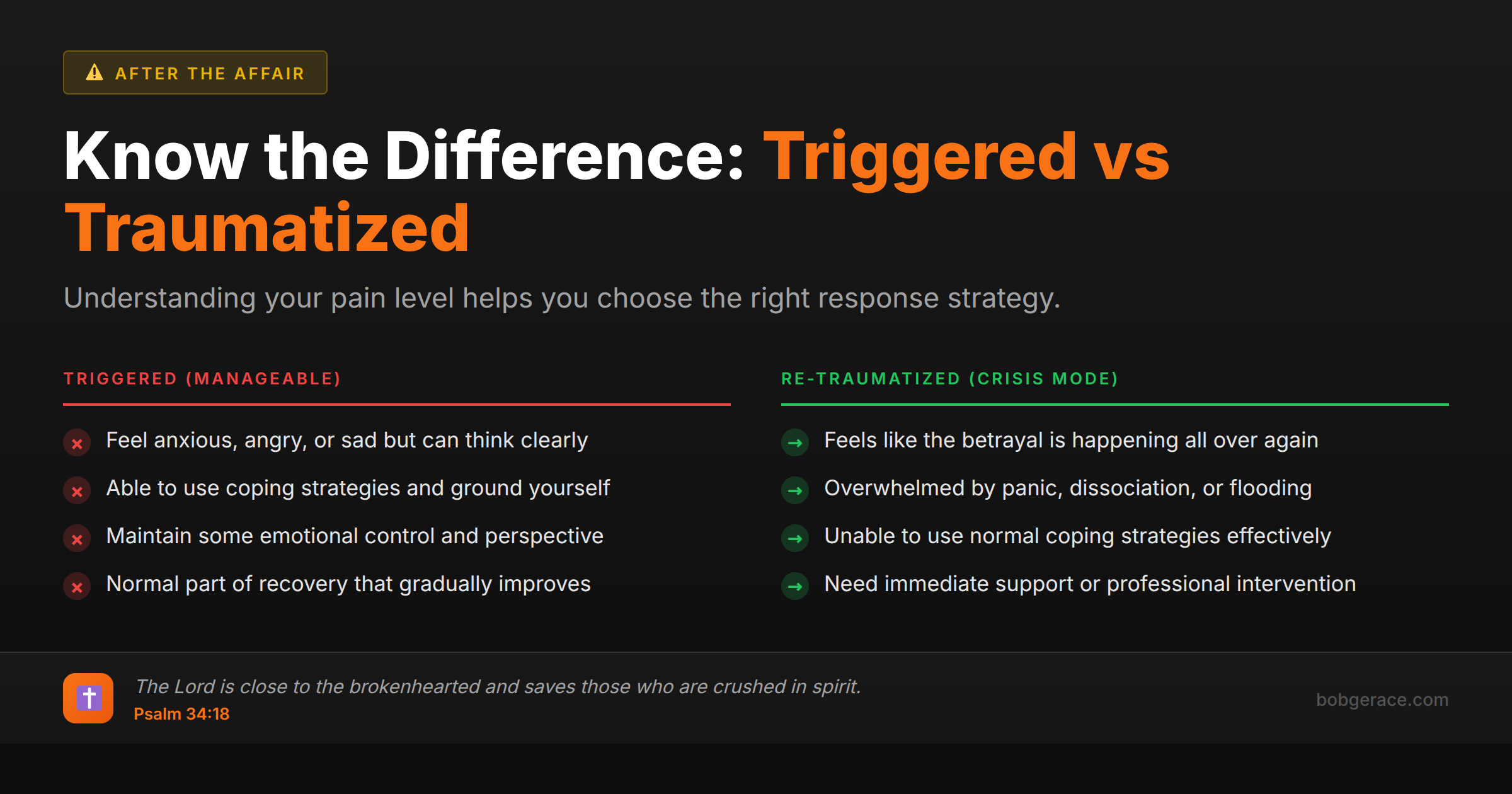
Being 'triggered' means experiencing an emotional or physical response to a reminder of the affair, but you maintain some ability to cope and ground yourself. You might feel anxious, angry, or sad, but you can usually work through it with healthy strategies. 'Re-traumatized' is more severe - it's when you're overwhelmed to the point where you feel like the betrayal is happening all over again, often accompanied by panic, dissociation, or complete emotional flooding. The key difference is your capacity to manage the response. Triggers are normal parts of recovery that gradually decrease with proper healing work. Re-traumatization indicates you're being overwhelmed beyond your current coping abilities and need immediate support or intervention.
The Full Picture
Understanding the difference between being triggered and re-traumatized can literally save your recovery. I've seen too many couples miss this distinction and end up making their healing journey much harder than it needs to be.
Being triggered is like touching a hot stove - you pull back quickly, you feel the pain, but you know what happened and can respond appropriately. When you're triggered by something related to the affair, you might feel: - Sudden anxiety or anger - Physical tension or racing heart - Intrusive thoughts about the betrayal - Emotional flooding that feels intense but manageable
The crucial element? You still have access to your thinking brain. You can use coping strategies, you recognize what's happening, and while it's uncomfortable, you maintain some control.
Re-traumatization is completely different. This is when your nervous system goes into full crisis mode, as if the original betrayal is happening right now. You might experience: - Complete emotional overwhelm or numbness - Dissociation or feeling "outside" your body - Panic attacks or inability to breathe normally - Loss of time awareness or feeling stuck in the past - Complete inability to think clearly or use coping skills
Re-traumatization often happens when we're exposed to new betrayals, forced to relive details before we're ready, or pushed to "get over it" too quickly. Your system essentially says "I can't handle this" and shuts down or goes into complete overdrive.
The good news? Both are treatable, but they require different approaches. Recognizing which one you're experiencing helps you respond appropriately and get the right kind of help.
What's Really Happening
From a clinical standpoint, we're looking at two different levels of nervous system activation. When someone is triggered, their sympathetic nervous system activates, but they retain some prefrontal cortex function - meaning they can still think, reason, and implement coping strategies, even if it takes effort.
Re-traumatization involves what we call 'flooding' - the emotional centers of the brain become so overwhelmed that the prefrontal cortex essentially goes offline. The person literally cannot access their thinking brain or coping skills in that moment. This is why telling someone who's re-traumatized to "just calm down" or "use your breathing techniques" often //blog.bobgerace.com/christian-marriage-coaching-investment-why-free-fails/:fails - they physiologically cannot access those resources.
What's particularly important in affair recovery is understanding that re-traumatization can be triggered not just by reminders of the original betrayal, but by feeling unsafe in the present moment. This might happen during difficult conversations, when new information is revealed, or when the unfaithful partner becomes defensive or dismissive.
The healing approach differs significantly. Triggered individuals benefit from grounding techniques, emotional regulation skills, and gradual exposure to difficult topics. Those experiencing re-traumatization need immediate safety, nervous system stabilization, and often professional intervention before any processing work can begin.
Recognizing these differences helps couples avoid the common mistake of pushing through when stepping back would be more therapeutic. Recovery isn't about powering through overwhelming experiences - it's about building capacity to handle difficult emotions at a manageable pace.
What Scripture Says
Scripture acknowledges that we experience different levels of emotional and spiritual distress, and God's response varies accordingly. Understanding this helps us respond appropriately to our own healing process.
Psalm 34:18 reminds us, *"The Lord is close to the brokenhearted and saves those who are crushed in spirit."* Notice it mentions both the "brokenhearted" and those "crushed in spirit" - different levels of pain requiring different expressions of God's care.
Isaiah 42:3 speaks of God's gentle approach: *"A bruised reed he will not break, and a smoldering wick he will not snuff out."* This suggests that when we're at our most vulnerable (re-traumatized), God doesn't push us harder but treats us with extra gentleness.
For moments when we're triggered but managing, Philippians 4:6-7 offers practical guidance: *"Do not be anxious about anything, but in every situation, by prayer and petition, with thanksgiving, present your requests to God. And the peace of God, which transcends all understanding, will guard your hearts and your minds."* This assumes we can actively engage in prayer and thanksgiving.
But when we're overwhelmed beyond our capacity, Psalm 46:10 calls us to *"Be still, and know that I am God."* Sometimes the most spiritual thing we can do is stop trying to manage and simply rest in God's presence.
Romans 8:26 provides hope for those moments when we can't even pray: *"The Spirit helps us in our weakness. We do not know what we ought to pray for, but the Spirit himself intercedes for us through wordless groans."*
Matthew 11:28-29 offers Jesus' invitation: *"Come to me, all you who are weary and burdened, and I will give you rest. Take my yoke upon you and learn from me, for I am gentle and humble in heart, and you will find rest for your souls."* Whether triggered or re-traumatized, we're invited to come to Him exactly as we are.
What To Do Right Now
-
1
Create a safety assessment tool - Write down the physical and emotional signs that indicate you're triggered vs. re-traumatized, so you can recognize which you're experiencing in the moment
-
2
Develop trigger response strategies - Practice grounding techniques like 5-4-3-2-1 sensory awareness, deep breathing, or prayer when you're triggered but still able to think
-
3
Establish re-traumatization protocols - Have a plan for overwhelming moments: remove yourself from the situation, contact your support person, use basic safety measures like wrapping in a blanket
-
4
Communicate your needs - Teach your spouse the difference and what kind of support you need in each situation (space vs. comfort, talking vs. silence)
-
5
Build your window of tolerance - Work with a counselor to gradually increase your capacity to handle difficult emotions without becoming overwhelmed
-
6
Know when to get help - If you're frequently re-traumatized or can't seem to manage triggers, reach out to a trauma-informed therapist immediately
Related Questions
- What is 'betrayal trauma' and do I have it?
- What are the stages of betrayal trauma recovery?
- What is the typical betrayal trauma recovery timeline?
- How do I deal with intrusive images?
- When do triggers decrease in intensity?
- What does PTSD recovery look like in marriage context?
- What does trauma recovery look like?
- What is triggered vs. legitimately upset?
- What's happening in my nervous system right now?
- What does nervous system regulation look like?
Also find Bob on
Subscribe for weekly videos on Christian marriage.
You Don't Have to Navigate This Alone
If you're getting re-traumatized or triggers are controlling your days, a coach who knows your specific marriage can help you build capacity without retraumatizing yourself further.
Talk to Bob →