What are the stages of betrayal trauma recovery?
6 min read
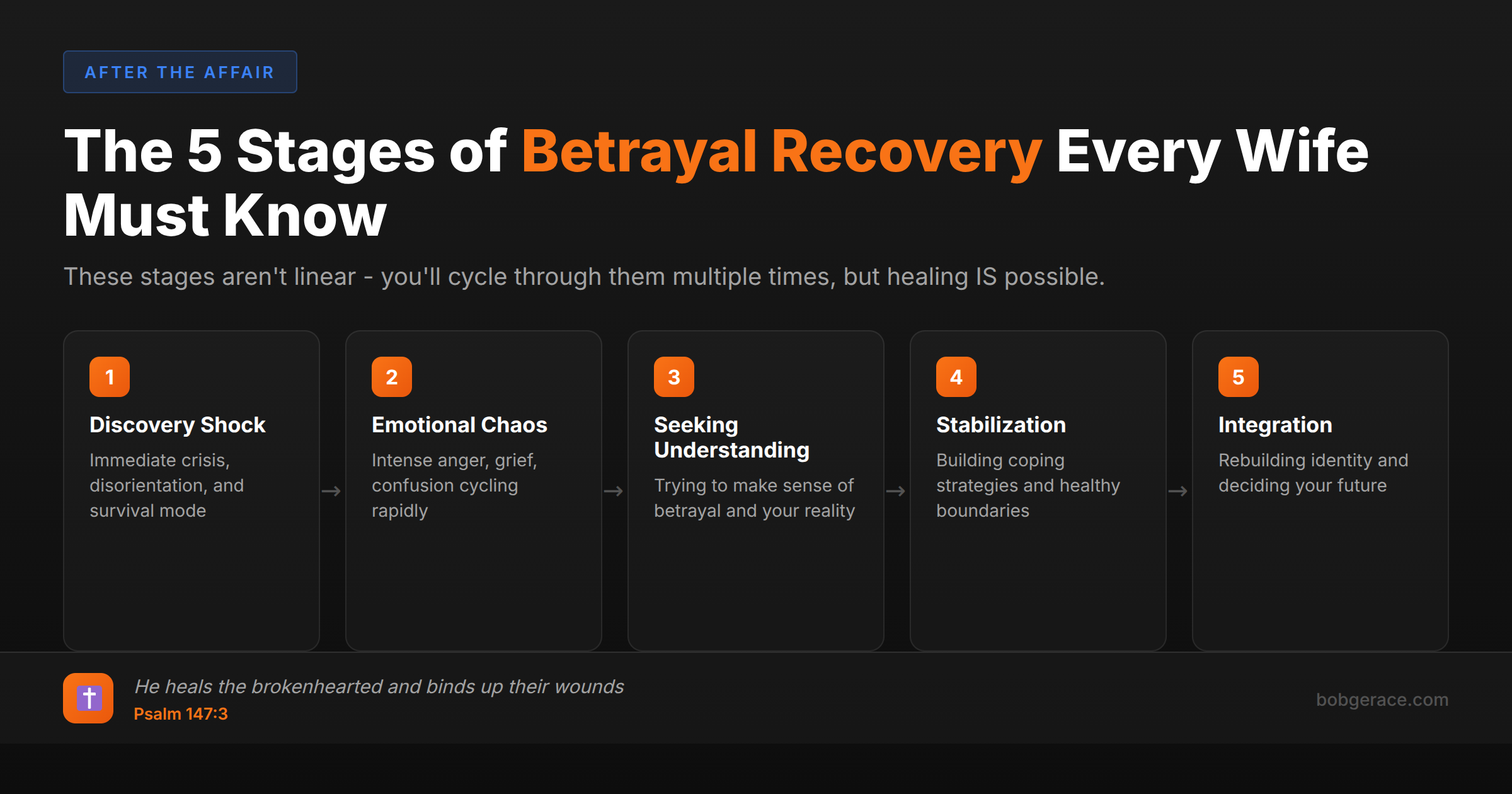
Betrayal trauma recovery typically follows five key stages: Discovery Shock (immediate crisis and disorientation), Emotional Chaos (intense feelings of anger, grief, and confusion), Seeking Understanding (trying to make sense of what happened), Stabilization (developing coping strategies and boundaries), and Integration (rebuilding identity and deciding the marriage's future). These stages aren't linear - you'll cycle through them multiple times, sometimes experiencing several in one day. Recovery takes 18-24 months minimum, and that's with proper support and professional help. The intensity gradually decreases, but healing requires intentional work, not just time.
The Full Picture
Discovery Shock hits like a freight train. Your world shatters in an instant, and nothing makes sense anymore. You might feel numb, hyper-vigilant, or completely overwhelmed. Physical symptoms are common - nausea, insomnia, panic attacks. This stage can last days to weeks.
Emotional Chaos follows as the numbness wears off. Rage, devastating sadness, obsessive thoughts about details, and swinging between wanting to save your marriage and wanting to burn it all down. You're not crazy - you're traumatized. This is your nervous system trying to process the unthinkable.
Seeking Understanding drives you to become a detective. You need to know everything - when, where, how long, who knew. You'll analyze every conversation, every late night at work, every time something felt off. This need for information is normal but can become consuming.
Stabilization begins when you start developing coping strategies. You're still hurting, but you're learning to regulate your emotions. You might start therapy, establish boundaries, or begin making practical decisions about your life and marriage.
Integration is where you rebuild your sense of self and decide your marriage's future. You're no longer defined by what happened to you. Whether you stay married or not, you've reclaimed your power and identity.
Remember: these stages overlap and repeat. Don't rush the process.
What's Really Happening
From a clinical perspective, betrayal trauma creates the same neurological impact as combat trauma or natural disasters. Your brain's threat detection system goes into overdrive, flooding your system with stress hormones that make thinking clearly nearly impossible.
The stages I see in practice often include what I call 'false recoveries' - periods where clients feel better, then crash again when triggered. This isn't failure; it's how trauma healing works. Your nervous system is learning to feel safe again, and that takes time.
What's particularly challenging about betrayal trauma is that your safe person became your source of danger. This creates attachment trauma that affects not just your marriage, but your fundamental ability to trust. You're not just healing from infidelity - you're rebuilding your entire sense of safety in relationships.
The good news is that trauma //blog.bobgerace.com/marriage-theater-4-recovery-crisis-climb/:recovery follows predictable patterns. With proper treatment including trauma-informed therapy, EMDR, or somatic approaches, clients do heal. The key is understanding that your intense reactions are normal responses to abnormal circumstances. Your healing isn't dependent on your spouse's actions - though their response certainly affects the timeline and whether the marriage survives.
Recovery requires professional support. This isn't something you can think your way through or pray away without doing the actual work of trauma processing.
What Scripture Says
God's Word acknowledges that deep wounds take time to heal and that trauma affects us completely - body, soul, and spirit. 'He heals the brokenhearted and binds up their wounds' (Psalm 147:3). Notice it says He *heals* - present tense, ongoing action - not that He instantly fixes.
'Weeping may endure for a night, but joy comes in the morning' (Psalm 30:5). Your stages of grief and trauma are not a sign of weak faith. They're the natural process God built into us for processing deep pain. The 'night' of betrayal trauma can feel endless, but morning will come.
God understands betrayal intimately. 'Even my close friend, someone I trusted, one who shared my bread, has turned against me' (Psalm 41:9). Jesus himself experienced the crushing pain of betrayal by someone close to him. He knows exactly what you're going through.
'The Lord is close to the brokenhearted and saves those who are crushed in spirit' (Psalm 34:18). In your darkest moments of this recovery process, God is not distant or disappointed in your struggle. He draws near to you in your brokenness.
'And we know that in all things God works for the good of those who love him' (Romans 8:28). This doesn't mean the betrayal was good or part of God's plan. It means God can work even in the aftermath of devastating sin to bring healing, strength, and ultimately good into your life.
'Come to me, all you who are weary and burdened, and I will give you rest' (Matthew 11:28). Your recovery journey is exhausting. God invites you to find rest in Him throughout this process.
What To Do Right Now
-
1
Get immediate support - contact a betrayal trauma therapist or certified coach today, not next week
-
2
Establish basic self-care routines - sleep, eat, move your body, even when you don't feel like it
-
3
Create physical and emotional safety - remove access to accounts, get STD testing, secure legal consultation
-
4
Join a betrayal trauma support group - isolation makes everything worse, connection accelerates healing
-
5
Document your experience through journaling - this helps process emotions and track your progress
-
6
Set clear boundaries about disclosure and recovery expectations with your spouse if they're in the picture
Related Questions
- What is the typical betrayal trauma recovery timeline?
- What does PTSD recovery look like in marriage context?
- What is 'triggered' vs. 're-traumatized'?
- When do triggers decrease in intensity?
- What does full recovery actually look like?
- What does 'integration' of the affair into our story look like?
- What does trauma recovery look like?
- What is 'post-traumatic growth'?
- How do I grow regardless of outcome?
- What does healing timeline look like?
Also find Bob on
Subscribe for weekly videos on Christian marriage.
Your Recovery Won't Look Like Anyone Else's
A coach who knows your specific story can see what stage you're actually in and what's keeping you stuck there. You don't have to keep guessing alone.
Talk to Bob →