What does full recovery actually look like?
6 min read
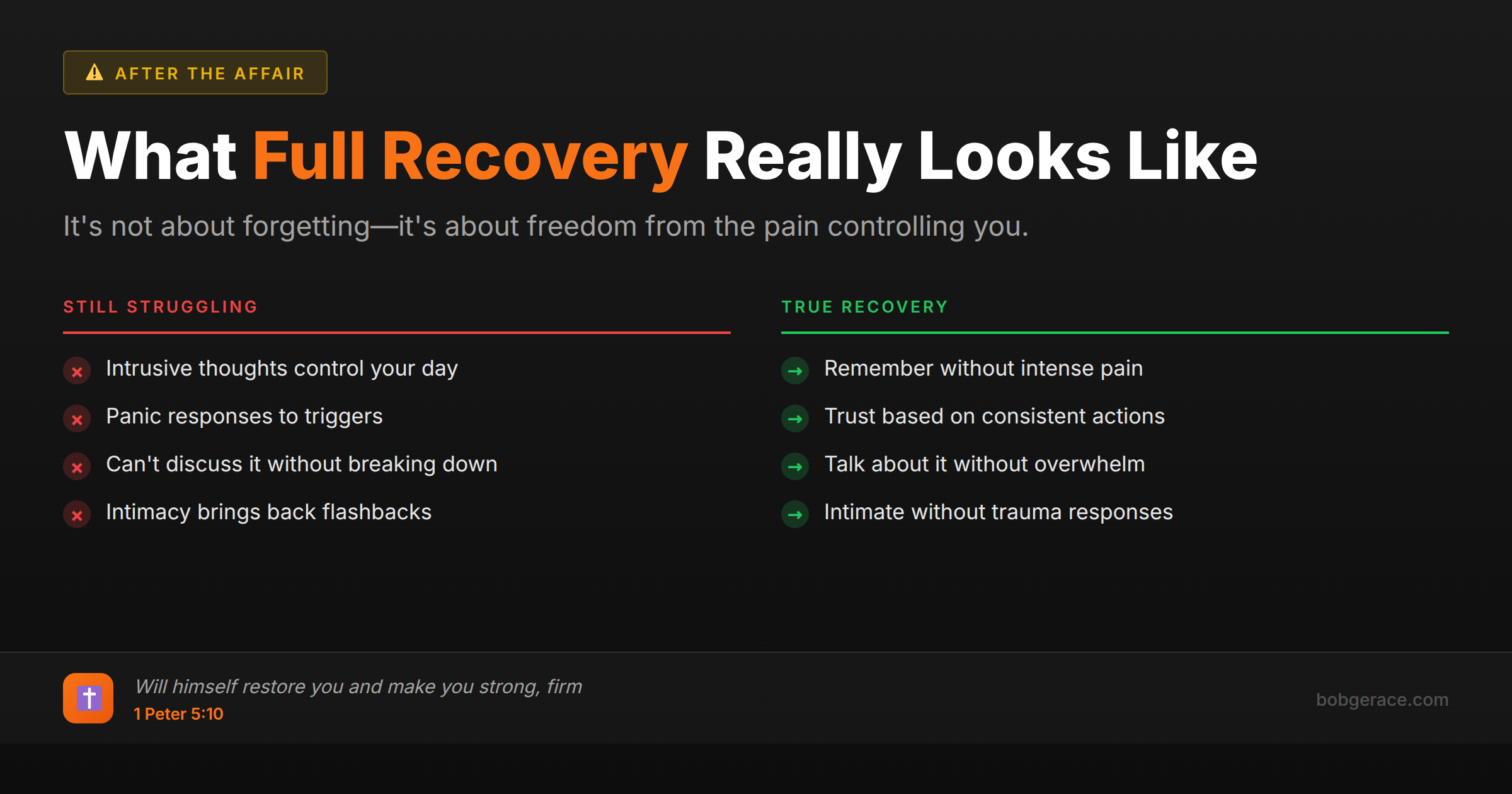
Full recovery from affair trauma doesn't mean forgetting what happened or returning to exactly how things were before. True recovery looks like reaching a place where the trauma no longer controls your daily thoughts, emotions, or reactions. You'll still remember the betrayal, but it won't trigger the same intense pain or panic responses. Recovery means you can talk about what happened without being overwhelmed, you can trust your partner again based on their consistent actions, and you feel secure in your relationship. The intrusive thoughts fade, sleep patterns normalize, and you can be intimate again without flashbacks. Most importantly, you've both grown into better versions of yourselves through the healing process.
The Full Picture
Recovery from affair trauma is not about erasing the past or pretending it never happened. It's about transforming your relationship with the trauma so it no longer dominates your life or marriage.
Physical Recovery Signs: - Sleep patterns return to normal without nightmares or insomnia - Appetite and eating habits stabilize - Physical symptoms like headaches, stomach issues, or muscle tension disappear - Energy levels return to pre-trauma states - You can be physically intimate without triggering memories
Emotional Recovery Indicators: - Intense emotional swings level out into normal ranges - You can discuss the affair without panic attacks or overwhelming rage - Trust begins rebuilding based on observable actions, not just words - You feel hopeful about your marriage's future - Other relationships and friendships feel normal again
Mental Recovery Milestones: - Intrusive thoughts about the affair become infrequent - You can focus on work, parenting, and daily tasks without constant distraction - Obsessive checking behaviors (phone, emails, whereabouts) decrease significantly - You can think about your spouse without immediate suspicion - Decision-making abilities return to normal
Relational Recovery Markers: - Genuine laughter and joy return to your interactions - You can disagree about normal things without it feeling like another betrayal - Physical affection feels natural again - You create new positive memories together - Communication becomes solution-focused rather than trauma-focused
True recovery typically takes 12-24 months with consistent effort, though everyone's timeline differs based on the severity of betrayal and commitment to healing.
What's Really Happening
From a clinical perspective, full recovery represents the successful integration of a traumatic experience into your life narrative without it continuing to dysregulate your nervous system. When someone experiences betrayal trauma, their brain essentially gets stuck in survival mode - hypervigilant, reactive, and unable to distinguish between past and present threats.
Recovery occurs when the traumatic memories move from the emotional, reactive parts of the brain into the prefrontal cortex where they can be processed logically. This neurological shift is measurable and real. You'll know it's happening when you can recall the betrayal without your //blog.bobgerace.com/holy-spirit-conviction-marriage-transform-heart/:heart rate spiking or your breathing becoming shallow.
What many people don't understand is that recovery isn't linear. You'll have setbacks - what we call 'trauma anniversaries' or triggered episodes - but these become less frequent and less intense over time. Full recovery means these setbacks don't derail your progress or send you back to square one.
The betrayed partner achieves recovery when they can trust their own perceptions again, when their attachment system feels secure, and when they're no longer scanning for threats constantly. The unfaithful partner achieves recovery when they've addressed the underlying issues that led to betrayal, developed genuine empathy for their spouse's pain, and proven through consistent actions over time that they're trustworthy.
Crucially, both partners must do their individual healing work. The betrayed spouse must process their trauma, and the unfaithful spouse must understand and change the mindset and behaviors that enabled betrayal.
What Scripture Says
Scripture provides a clear framework for understanding true healing and restoration after betrayal. God's design for recovery goes beyond just managing symptoms - it's about complete transformation and renewal.
Complete Restoration: *"And the God of all grace, who called you to his eternal glory in Christ, after you have suffered a little while, will himself restore you and make you strong, firm and steadfast."* - 1 Peter 5:10. God's promise isn't partial healing but complete restoration that leaves you stronger than before.
Renewed Mind and Heart: *"Therefore, if anyone is in Christ, the new creation has come: The old has gone, the new is here!"* - 2 Corinthians 5:17. Recovery involves becoming new people through Christ, not just returning to who you were before the trauma.
Peace That Surpasses Understanding: *"And the peace of God, which transcends all understanding, will guard your hearts and your minds in Christ Jesus."* - Philippians 4:7. True recovery includes a supernatural peace that doesn't depend on perfect circumstances but on God's presence in your life.
Beauty from Ashes: *"...to bestow on them a crown of beauty instead of ashes, the oil of joy instead of mourning, and a garment of praise instead of a spirit of despair."* - Isaiah 61:3. God specializes in transforming the devastation of betrayal into something beautiful and meaningful.
Trust Rebuilt on Truth: *"Instead, speaking the truth in love, we will grow to become in every respect the mature body of him who is the head, that is, Christ."* - Ephesians 4:15. Recovery requires both truth-telling and love, creating a foundation stronger than what existed before.
Biblical recovery means both spouses become more Christ-like through the process - more humble, more dependent on God, more compassionate, and more committed to walking in integrity.
What To Do Right Now
-
1
Assess where you are honestly - track your symptoms and triggers in a journal for one week to establish a baseline
-
2
Set realistic recovery goals with specific, measurable milestones rather than vague hopes for 'feeling better'
-
3
Create safety protocols with your spouse - clear agreements about communication, transparency, and boundaries
-
4
Establish trauma-informed professional support through a qualified therapist who understands betrayal recovery
-
5
Build your recovery community with trusted friends, support groups, or mentors who can provide encouragement
-
6
Develop daily practices for emotional regulation - prayer, exercise, proper sleep, and stress management techniques
Related Questions
- What is the typical betrayal trauma recovery timeline?
- What are the stages of betrayal trauma recovery?
- When do triggers decrease in intensity?
- What does 'integration' of the affair into our story look like?
- Will I ever get over this?
- Can a marriage survive infidelity?
- What does real transformation look like?
- How long does real change actually take?
- What can I learn from this crisis?
Also find Bob on
Subscribe for weekly videos on Christian marriage.
You Don't Have to Map This Alone
Recovery looks different in your marriage than anyone else's. A coach who knows your specific story can help you see what's actually working and what still needs attention.
Talk to Bob →