Do I need therapy, coaching, or both?
6 min read
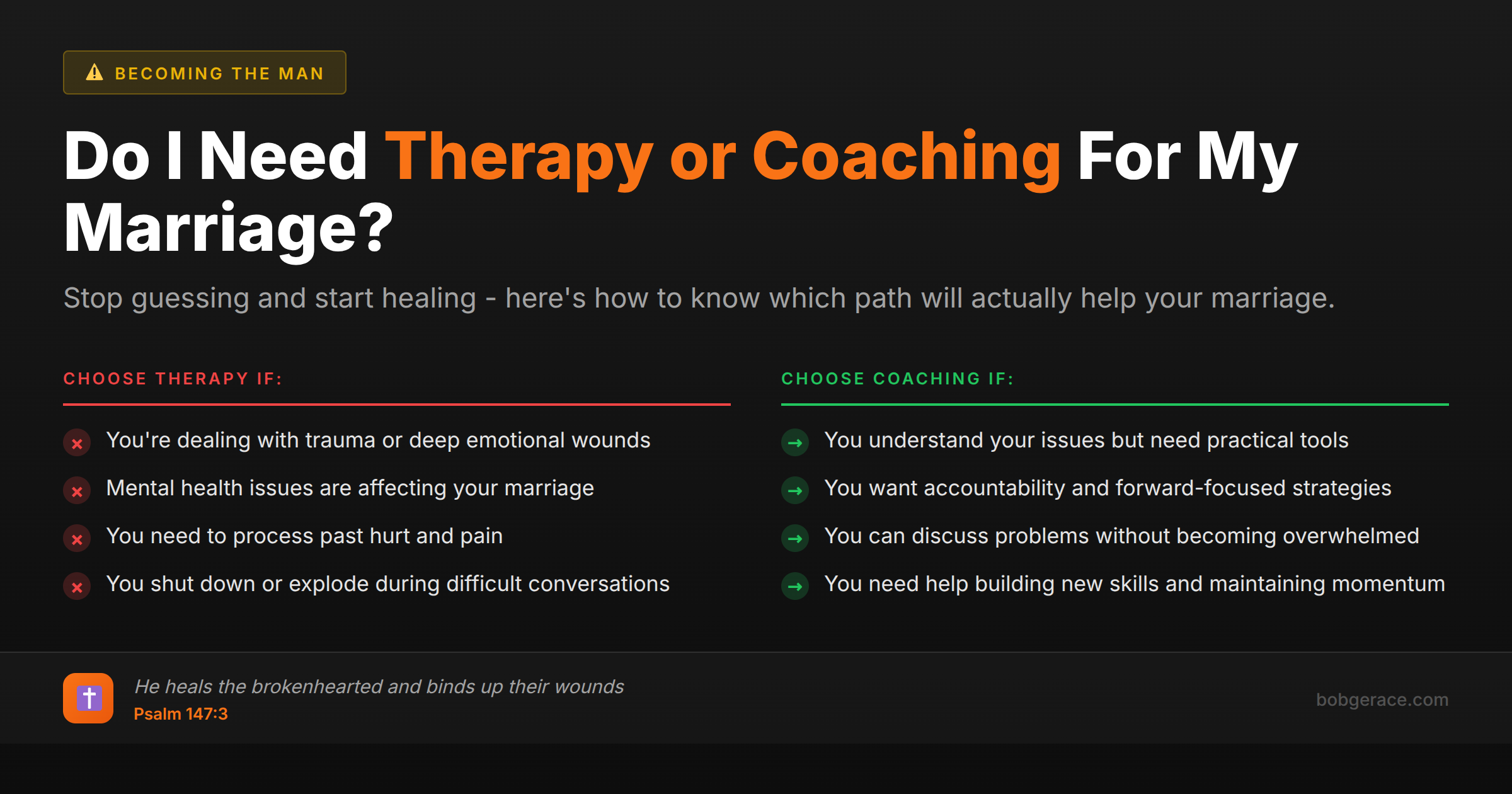
The decision between therapy and coaching depends on what's driving your destructive patterns. If you're dealing with trauma, deep emotional wounds, mental health issues, or need to process past hurt, therapy is essential. If you understand your issues but need practical tools, accountability, and forward-focused strategies to change your behavior, coaching is the answer. Many people benefit from both - therapy to heal the wounds that created the patterns, and coaching to build new skills and maintain momentum. Don't let analysis paralysis keep you stuck - start with whichever feels more accessible and adjust as you go.
The Full Picture
Here's the reality: therapy and coaching serve different purposes, and understanding this distinction will save you time, money, and frustration.
Therapy focuses on healing. It's designed to help you process trauma, understand deep emotional patterns, work through grief, and address mental health concerns like depression or anxiety. A good therapist helps you understand *why* you developed certain coping mechanisms and provides a safe space to work through painful experiences that shaped you.
Coaching focuses on changing. It's forward-looking and action-oriented. Coaching assumes you have the capacity for change and focuses on building new skills, creating accountability systems, and developing practical strategies to get different results in your marriage.
Some people need therapy first. If you're carrying unresolved trauma, struggling with severe depression or anxiety, or dealing with addiction, these issues need professional therapeutic intervention before coaching can be effective.
Others need coaching. If you understand your patterns, know what you need to change, but struggle with implementation and consistency, coaching provides the structure and accountability to create lasting change.
Many people benefit from both. Therapy can heal the wounds that created destructive patterns, while coaching builds the skills to create new ones. There's no shame in needing both - it often leads to the most comprehensive transformation.
The key is being honest about where you are. Are you wounded and need healing? Are you ready for change but need practical help? Or do you need both healing and new skills? Your answer determines your next step.
What's Really Happening
From a clinical perspective, the therapy versus coaching question reveals an important truth about human change: healing and skill-building are both necessary, but they happen in different ways.
Therapy addresses what we call 'process issues' - the underlying emotional and psychological patterns that drive behavior. When someone repeatedly 'blows it' in their marriage, there's often unresolved attachment trauma, learned coping mechanisms from childhood, or mental health factors creating those patterns. These require therapeutic intervention because they involve processing emotions, grieving losses, and rewiring deep neural pathways through a safe therapeutic relationship.
Coaching addresses 'content issues' - the practical skills and behavioral strategies needed for change. Even after therapy helps someone understand their patterns, they still need to learn new communication skills, develop emotional regulation techniques, and build accountability systems. This is where coaching excels.
The timing matters. If someone is in active crisis, dealing with severe depression, or triggered by unresolved trauma, they need therapeutic stabilization first. Coaching someone who isn't emotionally regulated often backfires because they don't have the internal resources to implement new strategies consistently.
However, therapy alone isn't always sufficient. Many people understand their issues deeply but still struggle to create lasting change because they lack practical tools and accountability. This is where the combination approach is powerful - therapy provides the emotional foundation, and coaching builds the practical skills.
The key indicator is this: Can you engage with new information without becoming overwhelmed or emotionally dysregulated? If yes, you're ready for coaching. If no, therapy should come first.
What Scripture Says
Scripture gives us a beautiful framework for understanding both healing and growth in our lives and marriages.
God is both healer and teacher. Psalm 147:3 tells us, *'He heals the brokenhearted and binds up their wounds,'* while Psalm 32:8 promises, *'I will instruct you and teach you in the way you should go; I will counsel you with my loving eye on you.'* Both healing and instruction are part of God's work in our lives.
We need both comfort and challenge. Isaiah 40:1-2 begins with *'Comfort, comfort my people, says your God,'* acknowledging our need for healing. But Ephesians 4:22-24 calls us to action: *'Put off your old self... and put on the new self, created to be like God in true righteousness and holiness.'* Sometimes we need comfort first, sometimes we need challenge - often we need both.
Community plays different roles in our healing. Galatians 6:2 says to *'carry each other's burdens,'* which speaks to the therapeutic need for support in our pain. But Proverbs 27:17 reminds us that *'iron sharpens iron,'* pointing to the coaching dynamic of being challenged to grow.
Wisdom seeks multiple counselors. Proverbs 15:22 teaches, *'Plans fail for lack of counsel, but with many advisers they succeed.'* This isn't about getting conflicting advice, but recognizing that different people bring different gifts to our growth process.
The goal is transformation. Romans 12:2 calls us to *'be transformed by the renewing of your mind.'* This transformation often requires both healing from what wounded us and learning what will help us thrive.
God uses both healing relationships and growth-oriented guidance to shape us. Don't limit Him by thinking you can only choose one approach.
What To Do Right Now
-
1
Assess your emotional capacity. Can you discuss your marriage issues without becoming overwhelmed, shutting down, or exploding? If not, consider therapy first.
-
2
Identify your primary need. Write down whether you need more understanding of 'why' you do what you do, or more tools for 'how' to change what you do.
-
3
Check for underlying issues. Are you dealing with depression, anxiety, trauma, or addiction? These typically require therapeutic intervention alongside any coaching.
-
4
Consider your learning style. Do you need a safe space to process emotions (therapy) or structured accountability to implement changes (coaching)?
-
5
Ask about integration. Many therapists incorporate coaching elements, and many coaches recognize when therapy is needed. Ask potential providers about their approach.
-
6
Start somewhere. Don't let the decision paralyze you. Choose the option that feels most accessible right now - you can always add the other later.
Related Questions
- Where does this come from?
- Is there something wrong with me?
- Should I be on medication?
- What is 'complex trauma' and do I have it?
- What assessments would help me understand myself?
- What are markers that I need more than coaching?
- What is EMDR and could it help?
- What therapies actually work for anger?
- What does quality coaching/therapy include?
Also find Bob on
Subscribe for weekly videos on Christian marriage.
Bring Your Situation to Bob
You know your marriage better than a framework can. A coach who hears your specific story can tell you what actually applies to you and what doesn't.
Talk to Bob →