Is this about my childhood?
6 min read
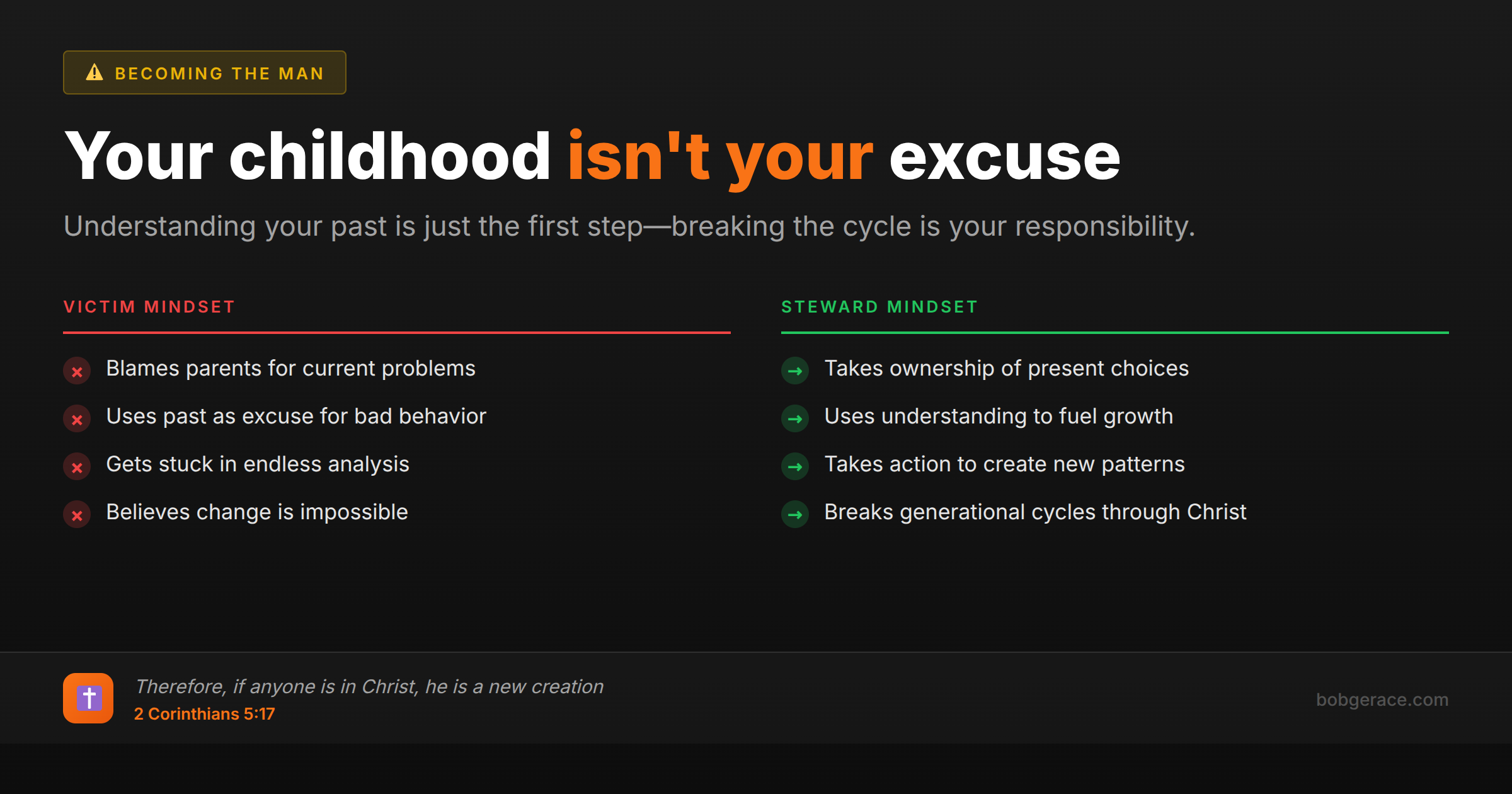
Your childhood absolutely influences your marriage patterns, but it's not an excuse or a life sentence. The family dynamics you witnessed, the attachment style you developed, and the wounds you experienced all create templates for how you approach relationships. However, understanding your past is just the first step – the real work is choosing to break unhealthy cycles and create new patterns. Many people get stuck in endless analysis of their childhood without taking action to change. Yes, your family of origin matters. Yes, those early experiences shaped neural pathways and emotional responses. But you're not a victim of your past – you're a steward of your future. The goal isn't to blame your parents or excuse your behavior, but to understand the roots so you can address them and grow.
The Full Picture
Your childhood creates what psychologists call your "attachment style" – essentially your blueprint for relationships. If your parents modeled healthy conflict resolution, emotional attunement, and secure love, you likely approach marriage with confidence and healthy expectations. If you witnessed constant fighting, emotional neglect, or unpredictable love, you might struggle with trust, communication, or emotional regulation in your own marriage.
Common childhood patterns that affect marriage:
- Conflict avoidance from homes with explosive anger - People-pleasing from homes requiring you to earn love - Control issues from chaotic or unpredictable environments - Emotional walls from homes lacking emotional safety - Criticism patterns from homes with conditional acceptance
But here's what's crucial: awareness without action is just sophisticated excuse-making. I've seen too many people use their childhood as a permanent get-out-of-jail-free card. "I can't help being defensive – my dad was critical." "I can't be vulnerable – my mom was emotionally absent."
Your past explains your patterns, but it doesn't excuse destructive behavior toward your spouse. The brain's neuroplasticity means you can literally rewire these patterns through intentional practice. Every time you choose a different response, you're building new neural pathways.
The most important question isn't "What happened to me?" but "What am I going to do about it?" Your spouse didn't marry your childhood trauma – they married you. And you owe it to them and yourself to do the hard work of growth and healing.
What's Really Happening
From a clinical perspective, childhood experiences create what we call "implicit memory" – unconscious patterns that influence behavior without conscious awareness. These aren't just psychological concepts; they're actual neural pathways formed during critical developmental periods.
Attachment theory shows us that children develop internal working models of relationships based on their primary caregivers. Secure attachment creates expectations of safety and consistency. Insecure attachment – whether anxious, avoidant, or disorganized – creates defensive strategies that often persist into adult relationships.
However, attachment styles aren't fixed. Research on "earned security" demonstrates that adults can develop secure attachment patterns through healing relationships, therapy, or spiritual growth. The key is recognizing your triggers and developing what we call "emotional regulation skills."
I often see clients who get trapped in what I call "origin story paralysis" – endlessly analyzing their childhood without implementing change. While understanding your past is valuable, the real transformation happens through present-moment choices and practices.
The most effective approach combines insight with action: understanding your patterns, recognizing your triggers, and then practicing new responses consistently. This isn't about positive thinking – it's about literally rewiring your brain through repetitive healthy choices.
What Scripture Says
Scripture acknowledges that our past influences us while calling us to transformation and renewal. The Bible doesn't minimize the impact of family patterns – it actually warns about generational sins being passed down. But it also promises the power to break these cycles through Christ.
Exodus 34:7 speaks of God "visiting the iniquity of the fathers on the children and the children's children, to the third and fourth generation." This isn't about punishment – it's about the reality that unhealthy patterns get passed down through families.
Yet 2 Corinthians 5:17 declares: "Therefore, if anyone is in Christ, he is a new creation. The old has passed away; behold, the new has come." Your identity isn't defined by your past but by your relationship with Christ.
Romans 12:2 calls us to "be transformed by the renewal of your mind" – literally rewiring our thought patterns through God's truth. This process requires both divine grace and human effort.
Ephesians 4:22-24 instructs us to "put off your old self, which belongs to your former manner of life" and "put on the new self, created after the likeness of God." This is active language – you have a role in this transformation.
Philippians 3:13-14 shows Paul's approach: "Forgetting what lies behind and straining forward to what lies ahead, I press on toward the goal." Acknowledge the past, learn from it, but don't let it control your future.
God doesn't want you stuck in victim mode – He wants you free, whole, and able to love your spouse well.
What To Do Right Now
-
1
Identify your top three reactive patterns in marriage and trace them to childhood experiences
-
2
Share these insights with your spouse, taking full ownership without making excuses
-
3
Choose one specific behavior to change and practice a new response daily for 30 days
-
4
Find a counselor or mentor who can help you process childhood wounds constructively
-
5
Establish a daily practice of prayer or meditation to develop emotional regulation skills
-
6
Create accountability with someone who will call out excuse-making and celebrate progress
Related Questions
Ready to Break the Cycles?
Don't let your past control your marriage's future. Get the support you need to heal, grow, and create new patterns.
Start Healing →