What does a non-defensive response sound like?
6 min read
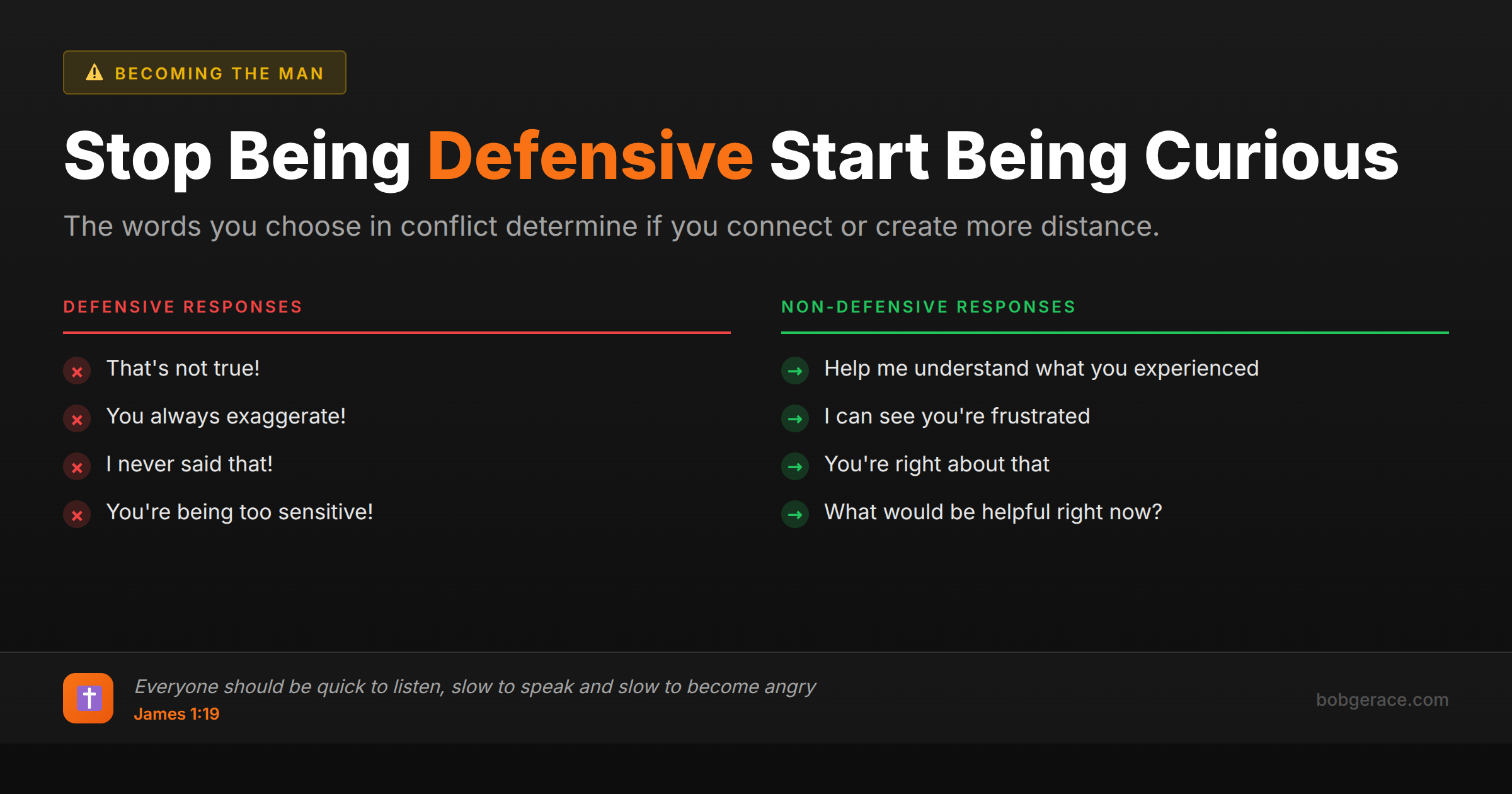
A non-defensive response sounds curious instead of combative. Instead of "That's not true!" try "Help me understand what you experienced." Replace "You always..." with "I can see you're frustrated." The difference is profound - you're acknowledging your spouse's experience rather than immediately protecting yourself. Non-defensive responses include phrases like "You're right about that," "I hadn't thought of it that way," or "What would be helpful right now?" These responses create safety instead of escalation. They communicate that you value the relationship more than being right, and that your spouse's feelings matter to you.
The Full Picture
Non-defensive responses fundamentally shift the trajectory of conflict. When your spouse brings up an issue, your first instinct might be to explain, justify, or counter-attack. But non-defensive responses do something revolutionary - they create space for understanding instead of warfare.
Here's what non-defensive actually sounds like in real conversations:
- Instead of: "I do help around the house!" Try: "It sounds like you're feeling overwhelmed. What would be most helpful?" - Instead of: "You're being too sensitive." Try: "I can see this really hurt you. Tell me more." - Instead of: "That's not what I meant." Try: "Regardless of what I meant, I can see how it came across. I'm sorry."
The key is shifting from self-protection to curiosity. Defensive responses are designed to shield you from blame or criticism. Non-defensive responses are designed to understand and connect. This doesn't mean becoming a doormat or accepting false accusations - it means creating enough emotional safety for both of you to get to the real issues.
Non-defensive responses often include validation, curiosity, and ownership. You validate their experience ("I can see you're frustrated"), get curious about their perspective ("Help me understand"), and own your part ("You're right, I did say that"). This creates a completely different emotional climate than the typical defend-attack cycle most couples get trapped in.
What's Really Happening
Defensiveness is actually a trauma response disguised as protection. When we feel attacked or criticized, our nervous system activates fight-or-flight mode. The defensive response is our attempt to restore safety, but it actually creates more danger by escalating conflict and eroding trust.
Non-defensive responses require emotional regulation first. Before you can respond instead of react, you need to calm your activated nervous system. This might mean taking a breath, softening your body, or even asking for a brief pause. The goal is responding from your prefrontal cortex (thinking brain) rather than your amygdala (survival brain).
Research shows that non-defensive responses literally change your spouse's brain chemistry. When they feel heard and validated rather than fought against, their nervous system begins to calm. This creates what we call 'co-regulation' - you're helping regulate each other's emotional states rather than escalating them.
The clinical term for this is 'emotional attunement.' You're tuning into your spouse's emotional frequency rather than broadcasting your own defensive frequency. This doesn't mean you don't get to have feelings or perspectives - it means you create safety first, then share your experience. This sequence is crucial for healthy conflict resolution and deeper intimacy.
What Scripture Says
Scripture consistently calls us toward humility and quick listening rather than quick defending. James 1:19 instructs us: "My dear brothers and sisters, take note of this: Everyone should be quick to listen, slow to speak and slow to become angry." Non-defensive responses embody this wisdom perfectly.
Proverbs 15:1 shows us the power of gentle responses: "A gentle answer turns away wrath, but a harsh word stirs up anger." When we respond defensively, we're essentially giving a harsh word that stirs up more anger. Non-defensive responses are the gentle answers that actually turn away wrath.
Philippians 2:3-4 challenges our self-protective instincts: "Do nothing out of selfish ambition or vain conceit. Rather, in humility value others above yourselves, not looking to your own interests but each of you to the interests of the others." Defensive responses are all about protecting our own interests. Non-defensive responses demonstrate that we value our spouse's interests too.
Proverbs 27:5-6 reminds us that faithful wounds are better than hidden love: "Better is open rebuke than hidden love. Wounds from a friend can be trusted, but an enemy multiplies kisses." Sometimes our spouse's complaints are actually faithful wounds - attempts to help us grow. Non-defensive responses allow us to receive these gifts rather than reject them.
First Peter 3:8-9 calls us to bless rather than retaliate: "Finally, all of you, be like-minded, be sympathetic, love one another, be compassionate and humble. Do not repay evil with evil or insult with insult. On the contrary, repay evil with blessing." This is the heart of non-defensive responding.
What To Do Right Now
-
1
Practice the pause. When you feel the urge to defend, take three deep breaths and ask yourself: 'What does my spouse need right now?'
-
2
Use the validation formula: 'I can see that...' or 'It makes sense that you would feel...' before sharing your perspective.
-
3
Get genuinely curious. Ask questions like 'Help me understand' or 'What would be most helpful right now?' with sincere interest.
-
4
Own what's yours. Look for the grain of truth in their complaint and acknowledge it: 'You're right, I did...' or 'I can see how that came across as...'
-
5
Soften your body language. Uncross your arms, make gentle eye contact, and lean in slightly. Your body should communicate openness, not defensiveness.
-
6
Practice with small issues first. Don't wait for the big conflicts. Start using non-defensive responses with minor disagreements to build this muscle.
Related Questions
- Why do I get defensive every time?
- I can't take criticism without exploding
- How do I hear her without defending myself?
- What's the antidote to defensiveness?
- How do I receive feedback without counter-attacking?
- What does 'taking responsibility' actually look like?
- What are markers of genuine remorse vs. guilt?
- What does genuine repair look like for old wounds?
- What does humility in process look like?
- How do I not let lawyers poison what's left?
Also find Bob on
Subscribe for weekly videos on Christian marriage.
Saying it right in your marriage
Non-defensive responses work when they're calibrated to your specific dynamic. A coach who knows your story helps you find the words that land with your wife.
Talk to Bob →