How do I find men I can be real with?
6 min read
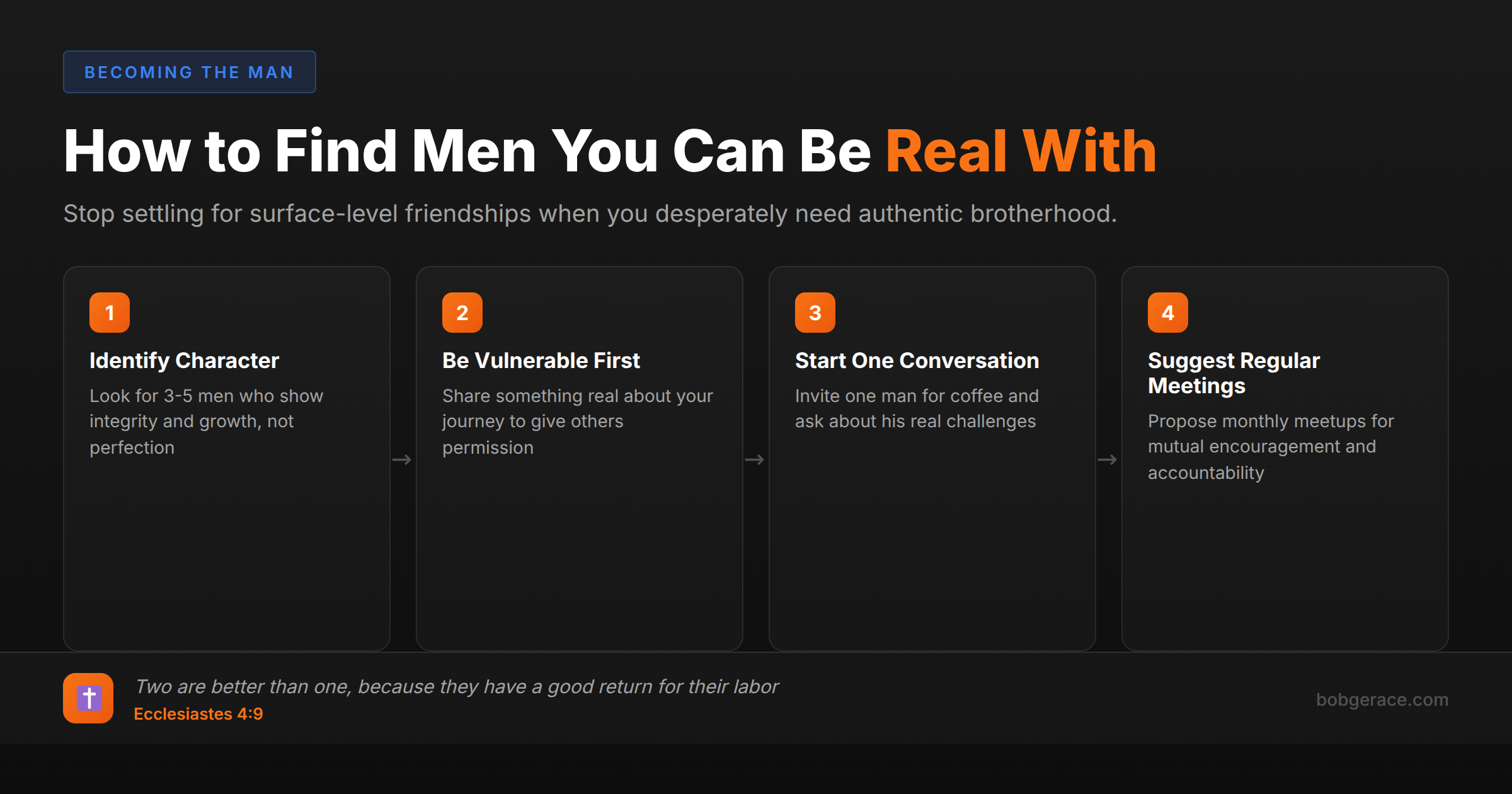
Finding men you can be real with starts with being intentional about where you invest your time and being willing to be vulnerable first. Look for men who demonstrate character, integrity, and a commitment to growth - whether in your church, workplace, or community. The key isn't finding perfect men, but finding men who are honest about their struggles and committed to becoming better husbands and fathers. Start by identifying one or two men you respect and suggest meeting regularly for coffee or a meal. Share something real about your own journey first - this gives others permission to be authentic too. Many men are desperately looking for the same thing you are: genuine connection and accountability. The man who responds positively to your vulnerability is likely someone you can build a real friendship with.
The Full Picture
Most men are walking through life isolated, pretending they have it all together while secretly struggling with the same issues: marriage challenges, work stress, anger, lust, fear, and feeling like they're failing as husbands and fathers. The isolation is killing us - and it's destroying our marriages.
Here's what I've learned after working with hundreds of men: every man needs other men who know the real story. Not your drinking buddies who help you escape reality. Not the guys you only talk sports with. You need men who will ask the hard questions, speak truth into your life, and challenge you to be the man God called you to be.
The problem is most men don't know how to build these relationships. We've been conditioned to compete rather than connect, to appear strong rather than admit weakness. We think vulnerability is weakness, when it's actually the foundation of every strong relationship.
Finding authentic male relationships requires three things: intentionality, vulnerability, and time. You can't accidentally stumble into deep friendships. You have to pursue them the same way you pursued your wife when you were dating.
Start by changing how you think about male friendship. These aren't just social connections - they're spiritual partnerships. Iron sharpens iron, but only when there's friction. The men who will help you grow are the ones willing to speak uncomfortable truths in love, and vice versa.
The best accountability relationships happen naturally within existing relationships. Look around your current circles - church, work, neighborhood, kids' activities. The man you need might already be in your life; you just haven't had a real conversation with him yet.
What's Really Happening
From a clinical perspective, male isolation is reaching crisis levels and directly impacts marital satisfaction. Research consistently shows that men with close male friendships report higher levels of life satisfaction and better marriages. However, studies indicate that men's friendships tend to be more activity-based and less emotionally intimate than women's friendships.
The psychological barrier to authentic male connection often stems from socialized masculinity norms that discourage emotional vulnerability. Men learn early that showing weakness or admitting struggles threatens their masculine identity. This creates what psychologists call 'normative male alexithymia' - difficulty identifying and expressing emotions.
Attachment theory explains why some men struggle more than others with intimate friendships. Men with insecure attachment styles, particularly avoidant attachment, often fear the vulnerability required for deep connection. They may have learned that emotional needs are burdens or that relationships are unreliable.
The therapeutic value of male accountability relationships cannot be overstated. These relationships provide what psychologists call 'corrective emotional experiences' - opportunities to practice vulnerability in a safe environment. When men experience acceptance despite their flaws, it rewrites internal narratives about worthiness and connection.
Successful male accountability relationships share common characteristics: regular contact, mutual vulnerability, shared values, and a commitment to growth rather than just problem-solving. The most effective relationships balance support with challenge, creating what researchers call 'optimal stress' for personal development.
What Scripture Says
God designed men for brotherhood, not isolation. From the beginning, He said it wasn't good for man to be alone - and that applies to more than just marriage. Scripture is filled with examples of men in authentic relationship with each other, supporting and challenging one another in their faith journey.
Ecclesiastes 4:9-12 gives us the foundation: *'Two are better than one, because they have a good return for their labor: If either of them falls down, one can help the other up. But pity anyone who falls and has no one to help them up. Also, if two lie down together, they will keep warm. But how can one keep warm alone? Though one may be overpowered, two can defend themselves. A cord of three strands is not quickly broken.'* This isn't just about marriage - it's about the power of authentic relationships.
Proverbs 17:17 reminds us: *'A friend loves at all times, and a brother is born for a time of adversity.'* Real friendship isn't just about good times - it's about having men who will stand with you when life gets hard, when your marriage is struggling, when you're facing temptation.
Iron sharpens iron - Proverbs 27:17 - *'As iron sharpens iron, so one person sharpens another.'* This isn't comfortable. Real sharpening involves friction, heat, and pressure. The men who will help you grow are the ones willing to speak hard truths in love.
Galatians 6:2 calls us to *'carry each other's burdens, and in this way you will fulfill the law of Christ.'* This requires vulnerability - admitting you have burdens that need carrying, and being willing to carry others' burdens too.
Even Jesus had His inner circle - Peter, James, and John. If the Son of God needed close male friendship, how much more do we?
What To Do Right Now
-
1
Identify 3-5 men you respect - Look for character, not perfection. Men who love their families, show integrity, and demonstrate a desire to grow spiritually.
-
2
Start with one conversation - Choose one man from your list and invite him for coffee. Ask him about his marriage, his challenges, his goals. Share something real about your own journey.
-
3
Suggest meeting regularly - If the conversation goes well, propose meeting monthly or bi-weekly. Frame it as mutual encouragement and accountability, not therapy.
-
4
Be vulnerable first - Share a real struggle you're facing in your marriage or as a man. This gives the other person permission to be authentic too.
-
5
Join or start a men's group - Look for existing men's groups at your church, or start your own small group focused on marriage, parenting, or spiritual growth.
-
6
Commit to consistency - Real relationships take time. Commit to showing up regularly, being honest about your struggles, and investing in these friendships long-term.
Related Questions
- Why do I need other men?
- What should I look for in a brotherhood?
- I've never had close male friends
- What is accountability and what isn't it?
- What do I share with what level of relationship?
- What role does group play vs. one-on-one?
- How do I open up without falling apart?
- What support do I need?
- Should I tell anyone right now?
- How do I not lose my mind right now?
Also find Bob on
Subscribe for weekly videos on Christian marriage.
Your Marriage Needs More Than Brotherhood
Good men around you matter. But they don't know your wife, your history, or what's actually happening in your house. A coach does.
Talk to Bob →