How do I recover my identity?
6 min read
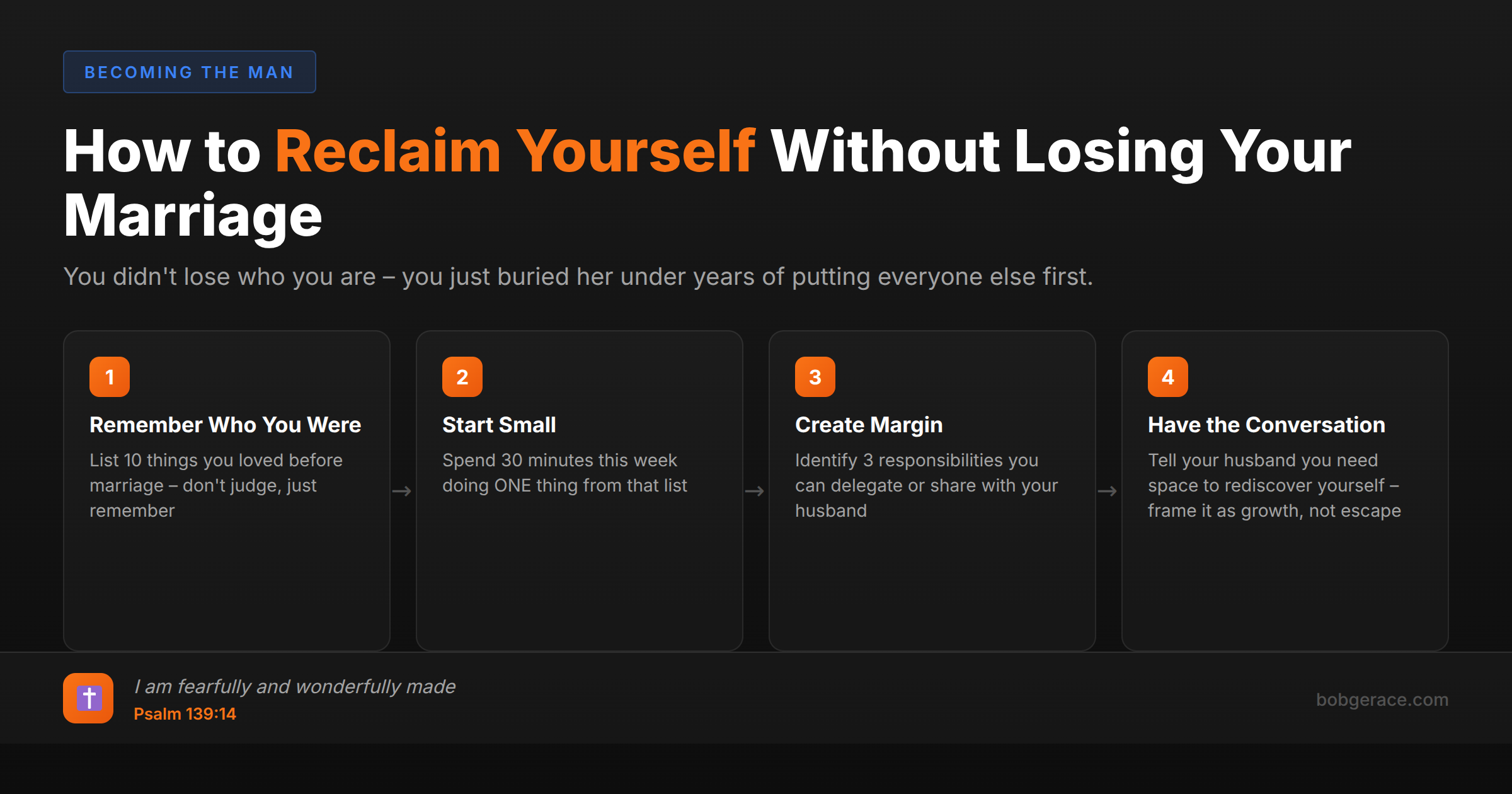
Recovering your identity starts with understanding that you haven't lost who you are – you've simply buried parts of yourself under roles, expectations, and years of putting others first. Identity recovery isn't about becoming someone new; it's about rediscovering who God created you to be beneath all the layers. The process begins with honest self-reflection: What brought you joy before marriage? What dreams did you set aside? What values and passions defined you? Then comes the practical work of gradually reintegrating these aspects into your current life. This doesn't mean abandoning your commitments or responsibilities, but rather finding healthy ways to honor both your individual identity and your relational roles.
The Full Picture
Identity loss in marriage is more common than you might think, especially for women who naturally tend to be nurturers and caregivers. Over time, the constant focus on your husband's needs, your children's schedules, and household responsibilities can create a sense that you've disappeared into your roles.
This happens gradually and often unconsciously. You start making decisions based solely on what others need. You stop pursuing interests that don't directly benefit your family. You begin defining yourself entirely through your relationships – wife, mother, caregiver – rather than as an individual with unique gifts, dreams, and purposes.
The result isn't just personal emptiness; it actually weakens your marriage. When you lose touch with who you are, you bring less creativity, passion, and authenticity to your relationship. Your husband married a whole person, not just a role-player.
Recovery requires intentional action. It means setting boundaries around your time and energy. It means having conversations about redistributing responsibilities so you have space for personal growth. It means reconnecting with interests, friendships, and activities that feed your soul.
This isn't selfish – it's essential. A marriage thrives when both partners are growing, contributing their unique strengths, and maintaining their individual connection with God. Your identity recovery benefits everyone in your family, even when the initial changes feel uncomfortable or require adjustment from others.
What's Really Happening
Identity diffusion in marriage often stems from what we call 'enmeshment' – when personal boundaries become so blurred that individual identity gets absorbed into the relationship system. This is particularly common when someone has a history of people-pleasing, codependency, or grew up in families where individual needs weren't honored.
Neurologically, when we consistently suppress our authentic responses and desires, we actually weaken the neural pathways associated with self-awareness and personal preference. The brain becomes conditioned to default to others' needs first, making it genuinely difficult to even identify what we want or need.
The recovery process involves 'differentiation' – learning to maintain emotional connection while preserving individual identity. This requires developing what I call 'healthy selfishness' – the ability to honor your own needs and growth without guilt or the need for permission from others.
Many women struggle with this because they've been socialized to believe that good wives and mothers are entirely self-sacrificing. But research consistently shows that individuals with strong personal identity contribute more authentically to their relationships and model healthy boundaries for their children. The goal isn't independence from your marriage, but rather interdependence – where two whole people choose to share their lives together.
What Scripture Says
God created you as a unique individual with specific gifts, purposes, and callings that extend beyond your marital role. Psalm 139:14 reminds us, "I praise you because I am fearfully and wonderfully made; your works are wonderful, I know that full well." Your individual identity isn't separate from God's design – it's central to it.
Ephesians 2:10 tells us, "For we are God's handiwork, created in Christ Jesus to do good works, which God prepared in advance for us to do." Notice this is personal – *you* have works prepared specifically for *you*. These aren't limited to your roles as wife or mother, but encompass the full scope of how God wants to use your unique gifts.
Even in marriage, Scripture maintains the importance of individual identity. Genesis 2:24 says we become "one flesh," but this is unity, not uniformity. 1 Corinthians 12:4-6 celebrates diversity: "There are different kinds of gifts, but the same Spirit distributes them... different kinds of service, but the same Lord... different kinds of working, but in all of them and in everyone it is the same God at work."
Matthew 22:39 commands us to "love your neighbor as yourself." This assumes healthy self-love and self-knowledge. You can't give what you don't possess. When you neglect your own identity and growth, you're actually limiting what you can contribute to your marriage and family.
What To Do Right Now
-
1
Write down 10 things you enjoyed or were passionate about before marriage – don't edit yourself
-
2
Schedule 30 minutes this week to engage in one of those activities, no matter how small
-
3
Identify three responsibilities you can delegate or share with your husband to create margin in your life
-
4
Have an honest conversation with your husband about your need for personal growth and identity recovery
-
5
Connect with one friend who knew you before marriage and ask them what they remember about your dreams and interests
-
6
Begin saying 'no' to one request per week that doesn't align with your values or drain your energy unnecessarily
Related Questions
- What does finding myself look like?
- What do I want regardless of what he does?
- What is my vision for my life?
- What might I discover through this pain?
- What is 'post-traumatic growth'?
- How do I grow regardless of outcome?
- What is my responsibility if she forces separation?
- How do I remain married in my heart when we live apart?
- What does self-care look like in this season?
- How do I grieve while also fighting?
Also find Bob on
Subscribe for weekly videos on Christian marriage.
Your Marriage Needs You Whole
Rebuilding your identity while staying married is specific work. A coach who knows your story helps you find what you buried without blowing up what you're trying to save.
Talk to Bob →