How do I trust a God who let this happen?
6 min read
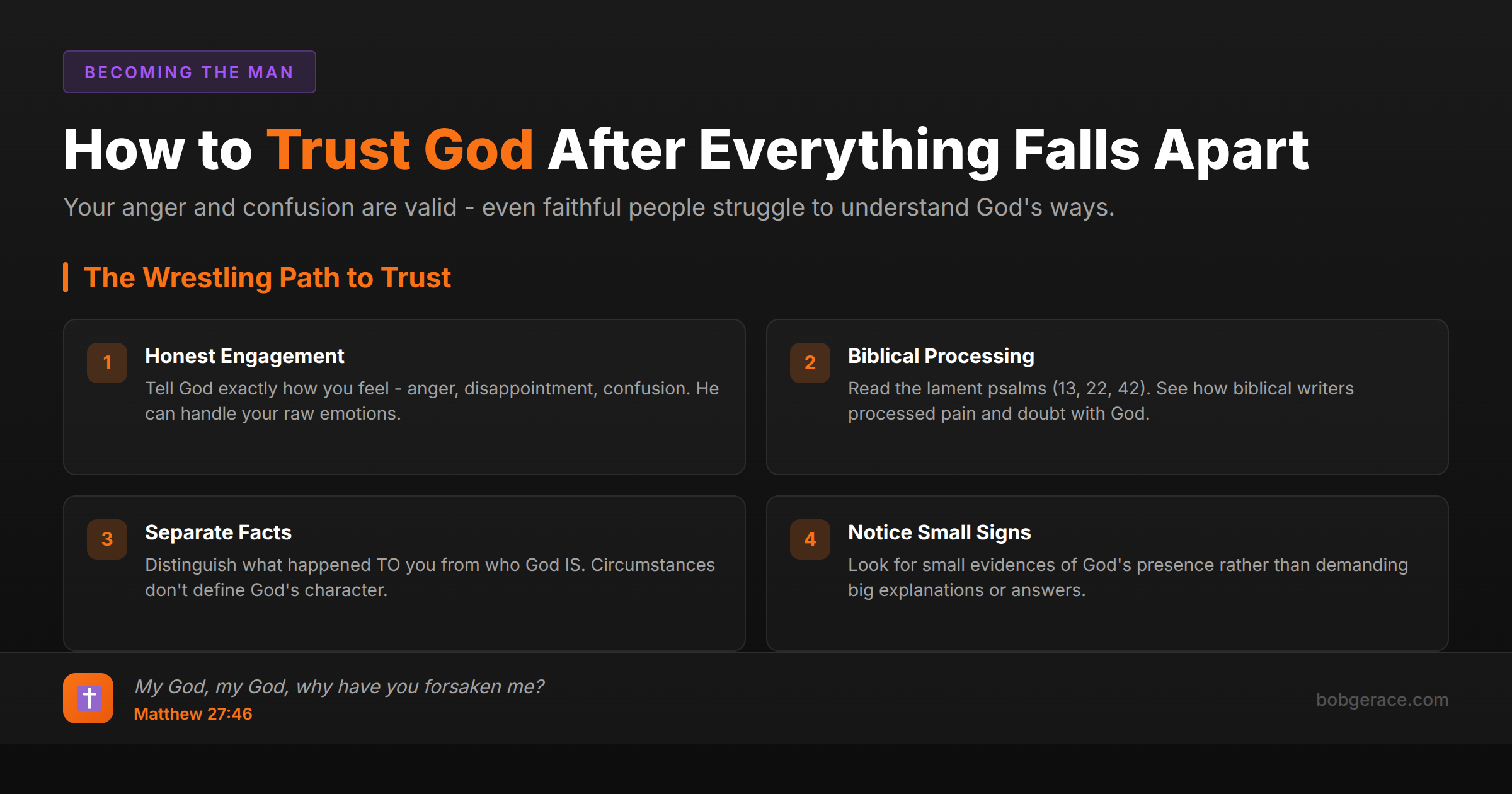
Your anger and confusion are valid - even faithful people struggle to understand God's ways when life falls apart. Trusting God after crisis isn't about pretending everything's okay or having all the answers. It's about choosing to engage with Him honestly, even in your doubt and pain. Trust rebuilds slowly through relationship, not explanations. God can handle your questions, anger, and confusion. He's not threatened by your struggle - He's present in it. The path forward involves wrestling with God like Jacob did, bringing your raw emotions to Him while slowly learning to separate what happened to you from who God is.
The Full Picture
When devastating things happen in marriage - betrayal, addiction, abuse, loss - it's natural to question God's character. Where was He? Why didn't He stop it? How can I trust someone who allowed this pain?
These aren't faithless questions - they're human ones. Even biblical heroes struggled with God's apparent silence during their darkest moments. David cried out repeatedly about feeling abandoned. Job demanded answers from God. Habakkuk questioned why God allowed injustice to flourish.
Here's what I've learned after decades of walking with couples through crisis: Your pain is real, your questions are valid, and God is big enough to handle both. The issue isn't whether God is trustworthy - it's whether we can rebuild relationship with Him while our hearts are shattered.
Trust after trauma works differently than trust before it. Before crisis, we might trust God based on blessings, smooth circumstances, or theological concepts. After crisis, trust becomes grittier - it's built on God's character revealed through struggle, His presence in pain, and His faithfulness even when we can't see the bigger picture.
This isn't about getting quick answers or pretending to feel faith you don't have. It's about staying in relationship with God while you process the hardest questions of your life. Many people discover their faith becomes more authentic, not less, after walking through seasons of doubt and wrestling.
What's Really Happening
From a clinical perspective, struggling to trust God after trauma represents a normal crisis of meaning and attachment. When core beliefs about safety, justice, and divine protection are shattered, the mind works to reconcile these contradictions.
This process often mirrors attachment injuries in human relationships. Just as rebuilding trust with a spouse requires time, transparency, and new experiences of safety, rebuilding trust with God involves similar elements - honest communication, gradual re-engagement, and new experiences of His faithfulness.
What many people don't realize is that faith crises can actually strengthen long-term spiritual resilience. Research shows that individuals who wrestle honestly with doubt and emerge with reconstructed faith often demonstrate greater psychological flexibility and spiritual maturity than those who've never questioned.
The key therapeutic principle here is not rushing the process. Pressuring yourself to 'get over it' or 'just have faith' often backfires, creating additional shame and spiritual bypassing. Instead, allowing space for the full range of emotions - anger, confusion, disappointment, even rage at God - creates room for authentic healing and eventual restoration of trust.
What Scripture Says
Scripture doesn't shy away from the reality that faithful people struggle with God's ways. Psalm 13:1-2 captures this honestly: *"How long, Lord? Will you forget me forever? How long will you hide your face from me? How long must I wrestle with my thoughts and day after day have sorrow in my heart?"*
Jesus Himself experienced this struggle. Matthew 27:46 records His cry from the cross: *"My God, my God, why have you forsaken me?"* If the Son of God could feel abandoned and question the Father's presence, our struggles with trust are not failures of faith.
Job 13:15 shows us a model for faith in crisis: *"Though he slay me, yet will I hope in him; I will surely defend my ways to his face."* This isn't blind acceptance - it's determined engagement, choosing relationship even while demanding answers.
God's response to our questions reveals His character. In Job 38-42, God doesn't explain why Job suffered, but He shows up. His presence becomes the answer to Job's crisis of trust. Isaiah 55:8-9 reminds us: *"For my thoughts are not your thoughts, neither are your ways my ways," declares the Lord.*
Ultimately, Romans 8:28 offers hope without minimizing pain: *"And we know that in all things God works for the good of those who love him."* This doesn't mean everything that happens is good - it means God can work redemptively even in the worst circumstances.
What To Do Right Now
-
1
Tell God exactly how you feel - anger, disappointment, confusion, betrayal. He can handle your honest emotions.
-
2
Read the Psalms, especially the lament psalms (3, 13, 22, 42). See how biblical writers processed pain and doubt.
-
3
Separate what happened TO you from who God IS. Circumstances don't define God's character - Scripture does.
-
4
Look for small evidences of God's presence rather than demanding big explanations. Notice moments of comfort, provision, or peace.
-
5
Connect with others who've walked through similar struggles. Isolation makes doubt grow stronger.
-
6
Give yourself permission to take time rebuilding trust. This is a process, not a switch you flip.
Related Questions
- Why does God allow marital suffering?
- Is God punishing me?
- How do I pray when I'm angry at God?
- What is biblical lament?
- Does God care about my marriage?
- Is my suffering redemptive?
- Is God present in this chaos?
- How do I pray through this?
- How do I discern God's will for my marriage?
- What does 'all things work together for good' mean?
Also find Bob on
Subscribe for weekly videos on Christian marriage.
Bring Your Doubt to a Coach
Wrestling with God and your marriage at the same time is brutal. A coach who knows your specific story can help you process both without platitudes.
Talk to Bob →