How do I trust my own judgment?
6 min read
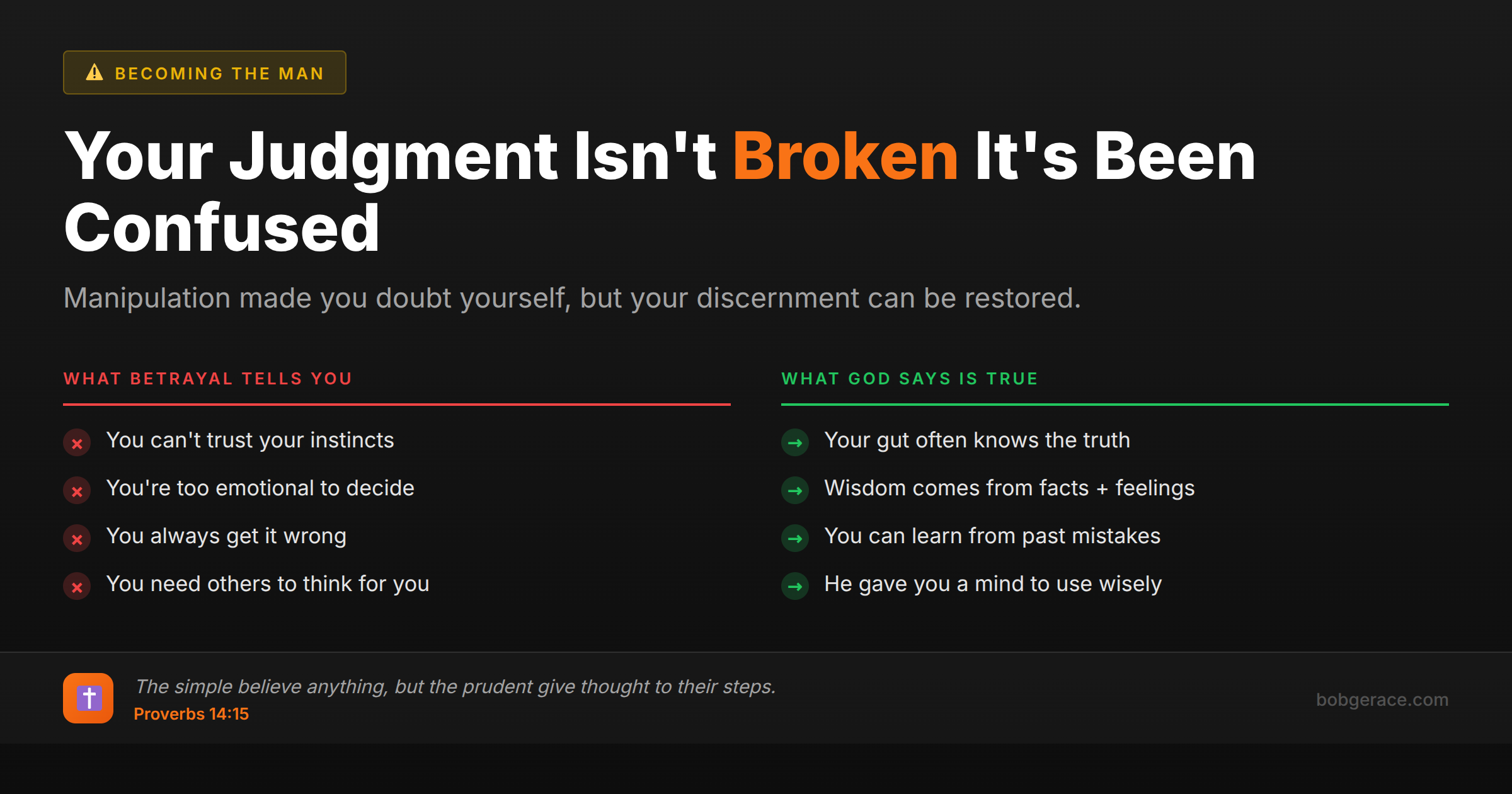
Trusting your judgment after betrayal feels impossible because manipulation has made you question your own perceptions. But here's the truth: your judgment isn't broken - it's been deliberately confused by someone who benefited from your self-doubt. Start by recognizing that healthy judgment comes from both wisdom and discernment, not just feelings. Your gut instincts are often right, but they need to be balanced with observable facts, patterns over time, and godly counsel. The goal isn't perfect judgment - it's developing confidence in your ability to assess situations clearly and make decisions that honor both truth and your well-being.
The Full Picture
When you've been lied to, gaslit, or manipulated, your confidence in your own judgment gets shattered. You start second-guessing everything - your perceptions, your memory, even your sanity. This isn't weakness; it's a normal response to psychological manipulation.
The manipulation playbook is predictable: minimize your concerns ("you're overreacting"), distort reality ("that never happened"), and shift blame ("if you weren't so suspicious, I wouldn't have to lie"). Over time, you learn to doubt yourself more than you doubt him.
But here's what I want you to understand: your judgment isn't fundamentally flawed. It's been systematically undermined by someone who needed you confused to maintain their deception. There's a difference.
Healthy judgment combines multiple sources of information: your intuition (which is often surprisingly accurate), observable behaviors and patterns, feedback from trusted people, and biblical wisdom. When these align, you can trust your assessment.
The problem isn't that you can't judge situations correctly - it's that you've been trained to dismiss your accurate perceptions. You've been taught to explain away red flags instead of heeding them. You've learned to give the benefit of the doubt even when the evidence is overwhelming.
Rebuilding trust in your judgment isn't about becoming cynical or suspicious of everything. It's about learning to value truth over peace, patterns over promises, and your God-given discernment over someone else's version of reality.
Start with small decisions where the stakes are lower. Notice when your instincts prove right about everyday situations. This helps rebuild confidence in your ability to assess accurately. Your judgment muscle needs exercise after being deliberately weakened.
What's Really Happening
When someone has been systematically manipulated, they experience what we call 'epistemic injustice' - their ability to know and understand their own reality has been compromised. This creates a trauma response where the person's natural judgment mechanisms become hypersensitive or shut down entirely.
Neurologically, chronic stress and gaslighting actually impact the areas of the brain responsible for decision-making and memory consolidation. This isn't imagination - it's measurable brain chemistry changes that make trusting your own perceptions genuinely more difficult.
The recovery process involves rebuilding neural pathways that support healthy discernment. This happens through consistent validation of accurate perceptions, practicing decision-making in safe environments, and learning to distinguish between anxiety-based fears and intuition-based concerns.
Healthy judgment relies on what we call 'integrated processing' - combining emotional awareness, logical analysis, past experience, and external feedback. Trauma tends to fragment this process, making people either hyper-rational (dismissing all feelings) or hyper-emotional (dismissing all logic).
The goal is integration, not perfection. You're learning to trust a process of discernment rather than demanding certainty from yourself about every situation. This involves developing tolerance for the discomfort of not knowing while still being able to make necessary decisions based on available information.
What Scripture Says
God has given you a mind capable of discernment, and He expects you to use it wisely. Scripture doesn't call us to naive trust, but to wise judgment guided by His truth.
"The simple believe anything, but the prudent give thought to their steps." - Proverbs 14:15. God calls us to be prudent - careful and thoughtful in our assessments, not gullible or easily deceived.
"By their fruit you will recognize them. Do people pick grapes from thornbushes, or figs from thistles?" - Matthew 7:16. Jesus taught us to judge people by their consistent patterns of behavior, not their words or promises.
"Dear friends, do not believe every spirit, but test the spirits to see whether they are from God." - 1 John 4:1. We're commanded to test and evaluate, not to accept everything at face value.
"I am sending you out like sheep among wolves. Therefore be as shrewd as serpents and as innocent as doves." - Matthew 10:16. Jesus combines wisdom with innocence - we can be discerning without becoming cynical.
"The heart of the discerning acquires knowledge, for the ears of the wise seek it out." - Proverbs 18:15. Discernment is a gift from God that grows through practice and seeking wisdom.
"Plans fail for lack of counsel, but with many advisers they succeed." - Proverbs 15:22. Healthy judgment often involves seeking counsel from wise, godly people who can help us see clearly when our vision is clouded.
God hasn't left you defenseless or without resources for making good judgments. He's given you His Spirit, His Word, and wise counselors to help you navigate complex situations with clarity and confidence.
What To Do Right Now
-
1
Start a 'judgment journal' - write down your instincts about situations, then track whether you were right over time
-
2
Practice the 24-48 hour rule for major decisions - your initial gut reaction plus time for reflection often reveals the right path
-
3
Identify 2-3 people whose judgment you respect and ask them to help you process important decisions
-
4
Learn the difference between anxiety and intuition - anxiety spirals and creates stories, intuition feels calm and certain
-
5
Stop explaining away red flags - if something feels off, investigate rather than rationalize
-
6
Pray specifically for discernment and wisdom, then trust that God will guide your judgment when you seek His will
Related Questions
- Is he manipulating me or actually different?
- How do I tell performance from genuine change?
- What are the markers of genuine behavior change?
- How do I separate fear from wisdom?
- How do I separate hope from denial?
- What does discernment require?
- How do I know if he's really changing?
- How do I assess how far gone she is?
- What if I make the wrong choice?
- How do I discern God's will for my marriage?
Also find Bob on
Subscribe for weekly videos on Christian marriage.
Your Marriage Needs Your Judgment Sharp
A coach who knows your story can help you separate manipulation from reality and build the discernment your specific situation demands.
Talk to Bob →