How do I widen the gap between stimulus and response?
6 min read
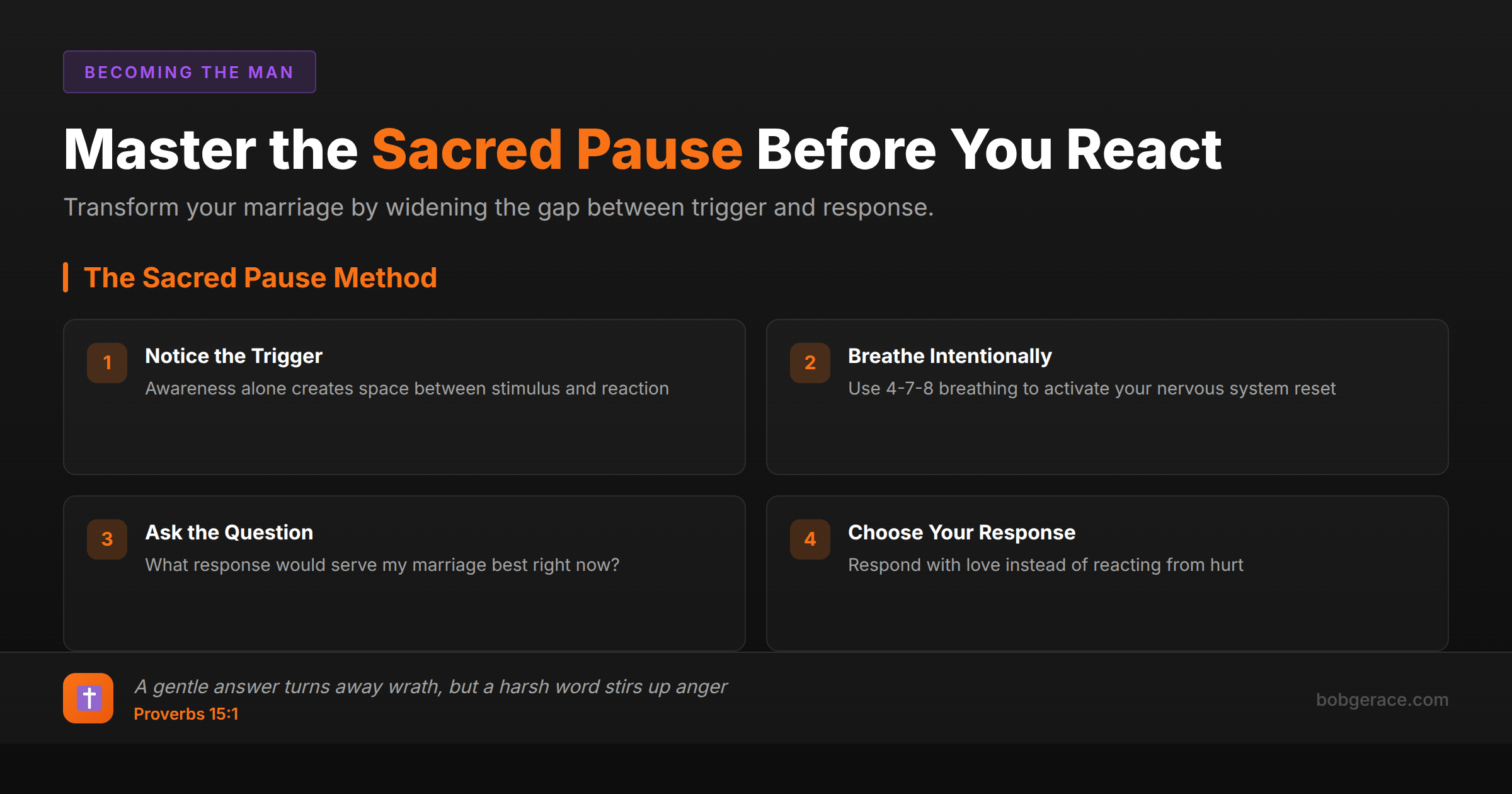
The gap between stimulus and response is where your power to choose lives. When your spouse triggers you, that split second before you react is where transformation happens. You widen this gap through intentional practices: breath work, mindfulness, and what I call 'the sacred pause.' Start by simply noticing when you're triggered - that awareness alone creates space. Then breathe deeply, count to three, or ask yourself 'What response would serve my marriage best?' This isn't about suppressing emotions; it's about choosing your response rather than being hijacked by automatic reactions. The more you practice this, the wider that gap becomes, giving you increasing power to respond with love instead of reacting from hurt.
The Full Picture
Between every stimulus and response lies a gap - and in that gap lies your freedom to choose. This concept, popularized by Viktor Frankl, is absolutely critical for marriage success. Most couples live in reactive mode, where one person's words or actions automatically trigger defensive responses, creating destructive cycles that damage intimacy.
Here's what's really happening: When your spouse says or does something that bothers you, your brain's amygdala (the alarm system) fires first, flooding your system with stress hormones before your rational mind can engage. This is why you find yourself saying things you later regret or responding in ways that escalate conflict.
The good news? You can literally rewire your brain to create more space in this gap. Neuroplasticity - your brain's ability to form new neural pathways - means you're not stuck with automatic reactions. Every time you pause instead of react, you're strengthening new pathways and weakening old, destructive ones.
This isn't just psychology - it's transformation at the cellular level. Studies show that mindfulness practices actually change brain structure, increasing gray matter in areas responsible for emotional regulation while decreasing activity in the amygdala. When you widen this gap, you're not just improving your marriage; you're literally becoming a different person - one who responds from wisdom rather than wounds.
What's Really Happening
From a neuroscience perspective, the stimulus-response gap is governed by the interplay between your brain's emotional and rational systems. When triggered, the amygdala activates your sympathetic nervous system faster than information can reach your prefrontal cortex - the area responsible for executive decision-making.
This creates what we call 'amygdala hijack' - a state where emotional reactivity overrides rational thought. In marriage, this shows up as defensive responses, criticism, stonewalling, or emotional flooding. The key is understanding that this gap isn't just psychological - it's neurobiological.
The solution involves three neural pathways: First, the vagus nerve, which when activated through deep breathing, signals safety to your nervous system. Second, the anterior cingulate cortex, which grows stronger with mindfulness practice and helps you notice thoughts without being controlled by them. Third, the prefrontal cortex, which develops better emotional regulation through consistent pause practices.
What's fascinating is that couples who practice these techniques together actually begin to co-regulate each other's nervous systems. One partner's calm presence can literally help regulate the other's emotional state. This is why I recommend couples practice these skills together - you're not just changing individual brain patterns, but creating new relational neural networks that support connection rather than conflict.
What Scripture Says
God's Word is remarkably clear about the power and necessity of controlling our responses. Scripture consistently teaches that wisdom lies not in the absence of challenging circumstances, but in how we choose to respond to them.
Proverbs 15:1 reminds us that 'A gentle answer turns away wrath, but a harsh word stirs up anger.' This isn't just good advice - it's neuroscience thousands of years before we understood brain function. A gentle response literally changes the neurochemical environment of both people in the conversation.
James 1:19-20 provides a perfect framework: 'Everyone should be quick to listen, slow to speak and slow to become angry, because human anger does not produce the righteousness that God desires.' Notice the progression - listen first, speak slowly, manage anger. This is exactly what widening the stimulus-response gap accomplishes.
Proverbs 27:14 warns us about responding too quickly: 'Like a city whose walls are broken through is a person who lacks self-control.' When we react without pause, we leave ourselves defenseless against destructive patterns.
Ephesians 4:26-27 acknowledges that anger happens but commands us not to let it control us: 'In your anger do not sin. Do not let the sun go down while you are still angry.' The gap between stimulus and response is where we choose whether anger becomes sin or motivation for positive change.
God designed us with the capacity to choose our responses. When we widen this gap, we're actually exercising the dominion He gave us - not over others, but over ourselves.
What To Do Right Now
-
1
Practice the 4-7-8 breath: Inhale for 4 counts, hold for 7, exhale for 8. This activates your vagus nerve and creates instant space.
-
2
Develop trigger awareness by identifying your top 3 emotional triggers with your spouse and sharing them openly.
-
3
Create a physical pause ritual - count to 10, step back, or place your hand on your heart before responding.
-
4
Use the 'sacred pause' question: Ask yourself 'How can I respond in a way that moves us closer together?'
-
5
Practice mindfulness for 10 minutes daily to strengthen your prefrontal cortex and improve emotional regulation over time.
-
6
Establish a couple's code word that either person can use to request a brief pause during heated moments.
Related Questions
Ready to Transform Your Reactions?
Stop the destructive cycles and start responding from wisdom instead of wounds. Let's work together to create lasting change in your marriage.
Get Help Now →