She shuts down when I try to connect
6 min read
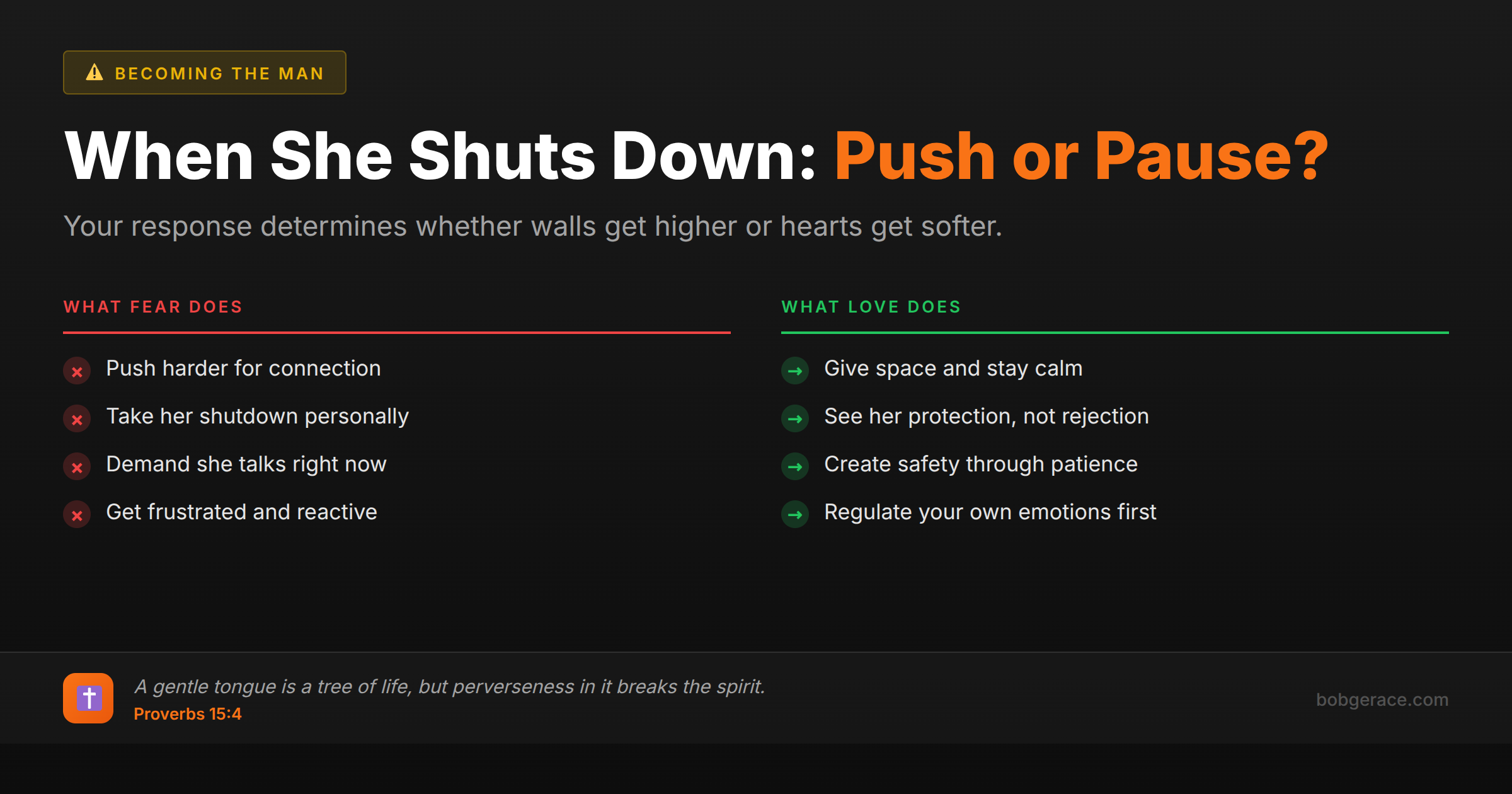
When your wife shuts down during connection attempts, she's not rejecting you - she's protecting herself. This emotional shutdown typically happens because she feels unsafe, unheard, or overwhelmed. Her nervous system has learned that withdrawing is safer than engaging, often due to repeated experiences where vulnerability led to hurt or disappointment. The key isn't to push harder or demand connection, but to create genuine safety first. This means slowing down, listening without defending, and proving through consistent actions that emotional intimacy won't result in criticism, dismissal, or conflict. True breakthrough happens when she experiences you as a safe harbor rather than another storm to weather.
The Full Picture
Her shutdown isn't about you - it's about safety. When a woman emotionally withdraws, her nervous system has shifted into protection mode. She's not trying to punish you; she's trying to survive what feels like an emotionally unsafe situation.
This pattern often develops over months or years of interactions where vulnerability was met with defensiveness, criticism, or emotional reactivity. Maybe she tried to share her heart and felt dismissed. Perhaps she expressed needs and was told she was "too sensitive." Over time, her brain learned a simple equation: *emotional openness = potential pain*.
The shutdown serves a purpose. It's her way of regulating overwhelming emotions and protecting her heart from further hurt. When you approach with intensity or urgency to "talk things through," it can feel like pressure rather than invitation. Her system reads this as: *Here comes another situation where I might get hurt.*
Your timing and approach matter immensely. Most men try to connect when emotions are already high or when they're feeling disconnected themselves. But a woman who's built emotional walls needs to feel genuinely safe before she can be vulnerable. This means approaching when you're calm, regulated, and truly curious about her inner world rather than focused on your own need for connection.
She's watching your consistency. Before she'll risk opening up, she needs evidence that this time will be different. She's observing whether you can stay calm when she shares difficult emotions, whether you'll really listen without immediately trying to fix or defend, and whether you'll follow through on the changes you promise to make.
The breakthrough comes when she experiences you as someone who makes her emotional world safer, not more chaotic.
What's Really Happening
From a neurobiological perspective, emotional shutdown is your wife's nervous system activating protective mechanisms. When she perceives threat - whether real or perceived - her brain shifts into what we call a "dorsal vagal state," essentially going offline to avoid further emotional injury.
This isn't conscious or manipulative; it's automatic. Her nervous system has learned that emotional engagement in your relationship equals danger. This often stems from a pattern called "emotional whiplash" - where vulnerability is met with criticism, defensiveness, or dismissal, creating a trauma response around intimacy.
The key insight here is that you cannot think or talk your way out of a nervous system response. Logic won't work when her brain is in protection mode. Instead, she needs consistent experiences of safety - what we call "earned security." This means predictable calmness from you, genuine curiosity without agenda, and following through on behavioral changes.
When men push harder for connection during these moments, they're actually confirming her nervous system's assessment that emotional engagement isn't safe. The antidote is becoming what trauma therapists call a "co-regulating presence" - someone whose calm, consistent energy helps her nervous system settle rather than spike.
Recovery happens gradually as her brain begins to remap the relationship from "threat" to "safety." This requires patience and understanding that her protective response developed for good reasons, and healing happens through experience, not explanation.
What Scripture Says
Scripture calls us to understand that emotional walls often form from deep wounds, and our response should mirror Christ's patient, gentle approach to hurting hearts.
"A gentle tongue is a tree of life, but perverseness in it breaks the spirit." - Proverbs 15:4. When your wife shuts down, your gentleness becomes medicine for her wounded spirit. Harshness or pressure will only reinforce the walls she's built for protection.
"Husbands, live with your wives in an understanding way, showing honor to the woman as the weaker vessel, since they are heirs with you of the grace of life." - 1 Peter 3:7. "Understanding way" means recognizing that her emotional shutdown isn't defiance - it's self-protection. Honor means treating her heart as precious, not demanding immediate access to it.
"Be completely humble and gentle; be patient, bearing with one another in love." - Ephesians 4:2. Patience is crucial when dealing with emotional walls. These barriers didn't form overnight, and they won't dissolve immediately when you change your approach.
"Above all else, guard your heart, for everything you do flows from it." - Proverbs 4:23. She's actually following biblical wisdom by protecting her heart. Your role isn't to tear down her defenses, but to prove you're trustworthy enough to be let inside.
"The simple believe anything, but the prudent give thought to their steps." - Proverbs 14:15. She's being prudent by guarding her heart based on past experience. Show through consistent actions that you're a safe place for her vulnerability.
God's approach to our own defensive hearts is patient, consistent love that gradually wins our trust. Follow His model in pursuing your wife's guarded heart.
What To Do Right Now
-
1
Stop pushing for immediate connection. When she shuts down, give her space and focus on regulating your own emotions first. Your calm presence is more powerful than urgent words.
-
2
Acknowledge her protection without taking it personally. Say something like: "I can see you're feeling overwhelmed. I'm going to give you some space, and I'm here when you're ready."
-
3
Examine your own emotional regulation. If you approach her with anxiety, frustration, or neediness, her nervous system will detect threat. Work on your own triggers first.
-
4
Create safety through consistent small actions. Follow through on promises, stay calm during difficult conversations, and show genuine interest in her thoughts without immediately offering solutions.
-
5
Listen for understanding, not for rebuttal. When she does share, resist the urge to defend, correct, or fix. Simply reflect back what you hear her saying and validate her feelings.
-
6
Prove your changes through time and consistency. One good conversation won't heal years of emotional injury. Commit to showing up differently day after day, regardless of her immediate response.
Related Questions
- She won't talk about our problems
- She says she's 'fine' but she's not
- She shares her feelings with everyone but me
- She stopped fighting — is that worse?
- She's indifferent — not angry, just empty
- Nothing I do seems to matter to her
- What is 'stonewalling' and why does she do it?
- What is 'emotional disengagement'?
- Why does she seem numb/flat/dead inside?
- What does 'dorsal vagal shutdown' look like in marriage?
Also find Bob on
Subscribe for weekly videos on Christian marriage.
Your Marriage Isn't a Textbook Case
A coach who knows your specific story can see what's actually driving her shutdown — and calibrate the next 30 days to where you two are right now.
Talk to Bob →