What did I not receive from my father that I need?
6 min read
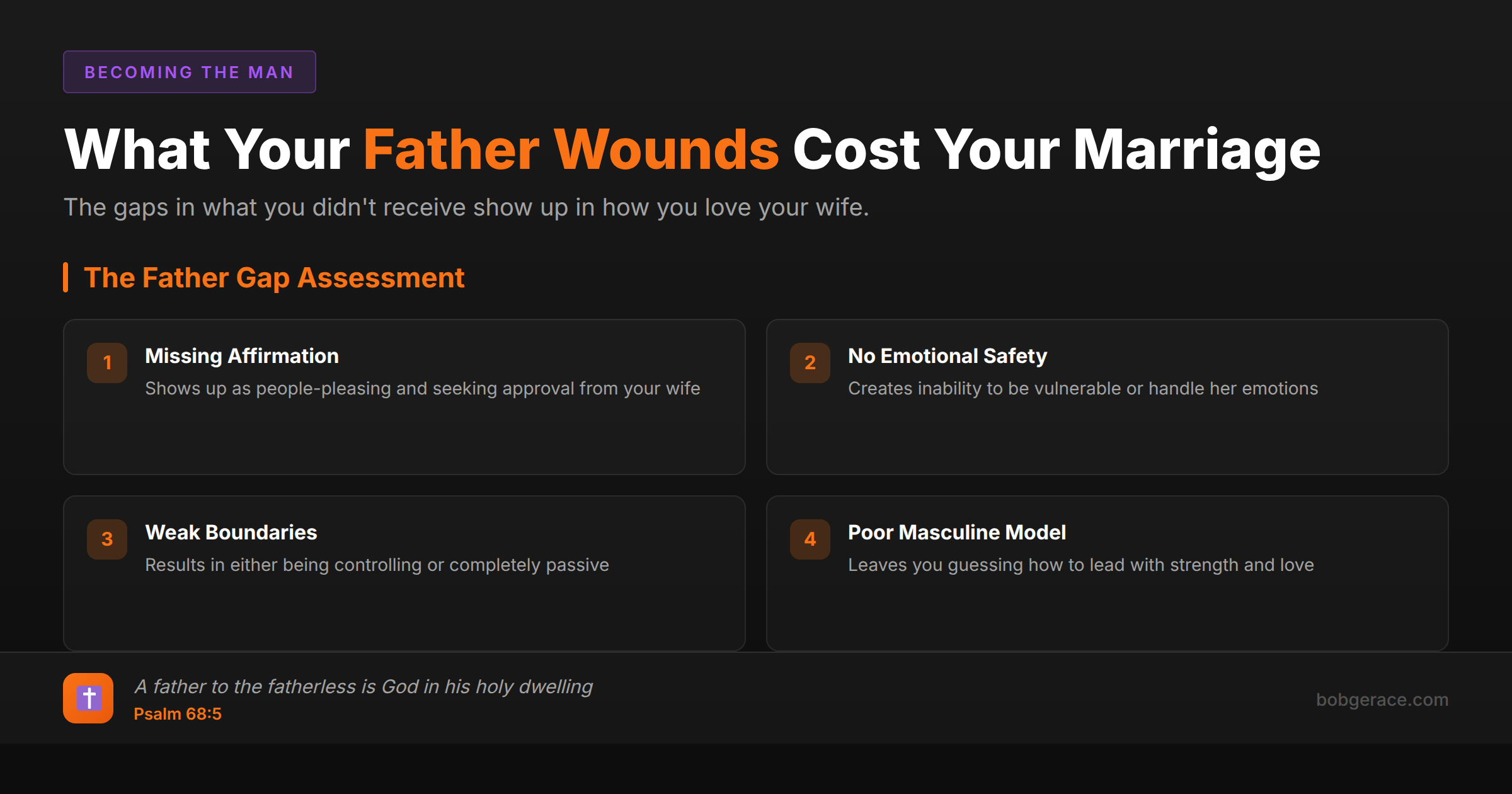
Most men didn't receive the affirmation, guidance, or emotional presence they needed from their fathers. This creates gaps in masculine development that show up in marriage through people-pleasing, anger issues, or inability to lead confidently. The most common missing pieces include unconditional approval, emotional safety to be vulnerable, clear boundaries and expectations, and modeling of healthy masculinity. These father wounds don't excuse poor behavior in marriage, but understanding them helps you take ownership of your growth. You can't change what you didn't receive, but you can choose to develop what's missing. This requires honest self-assessment, intentional healing work, and often connecting with other mature men who can provide what your father couldn't.
The Full Picture
Your father wounds are affecting your marriage more than you realize. Whether your dad was absent, critical, passive, or emotionally unavailable, those gaps in your development create patterns that show up in how you relate to your wife.
Most men missed these crucial elements from their fathers:
Unconditional approval and affirmation. Many men grew up feeling like they had to perform to earn dad's love. This creates adults who are either people-pleasers desperate for approval or rebels who reject all authority.
Emotional safety and vulnerability modeling. If your father couldn't handle emotions - his own or yours - you likely struggle with emotional intimacy in marriage. You either shut down or explode because you never learned healthy emotional regulation.
Clear boundaries and consistent discipline. Without proper structure, men often become either overly rigid control freaks or passive doormats who can't make decisions or lead their families.
Practical life skills and wisdom. Many fathers were physically present but emotionally absent, failing to teach their sons how to handle money, relationships, conflict, or responsibility.
Here's what's crucial to understand: Your father did the best he could with what he had. Most likely, he was operating from his own father wounds. This isn't about blame or making excuses - it's about taking responsibility for your own healing and growth.
The good news? You're not stuck with what you didn't receive. God can heal these wounds and develop in you the mature masculinity your marriage needs. But it requires intentional work, not just hoping things will get better on their own.
What's Really Happening
From a clinical perspective, father wounds create specific attachment patterns that directly impact marriage relationships. Men who experienced critical or absent fathers often develop either anxious attachment (constantly seeking approval from their wives) or avoidant attachment (shutting down emotionally to protect themselves).
The most common presentations I see in therapy include:
Performance-based identity. These men believe their worth depends on what they accomplish rather than who they are. In marriage, this creates workaholics who neglect relationships or men who become paralyzed by fear of failure.
Emotional dysregulation. Without a father who modeled healthy emotional expression, these men either suppress all emotions until they explode, or they're overwhelmed by feelings they don't understand.
Authority and leadership confusion. Men from passive fathers often struggle to make decisions or provide direction in marriage. Those from authoritarian fathers may become controlling or, conversely, completely abdicate leadership to avoid being like dad.
Intimacy avoidance. If vulnerability wasn't safe with father, it won't feel safe with anyone, including their wives. This creates emotional distance that wives interpret as rejection or lack of love.
The healing process involves grieving what you didn't receive, forgiving your father (which doesn't mean excusing harmful behavior), and intentionally developing the missing pieces through mentorship, therapy, and spiritual growth. This work is essential because unhealed father wounds don't just affect you - they get passed down to your children and create ongoing conflict in your marriage.
What Scripture Says
Scripture acknowledges the impact of generational patterns while calling us to break unhealthy cycles. God understands father wounds because He's the perfect Father who can heal what earthly fathers couldn't provide.
Psalm 68:5 says, 'A father to the fatherless, a defender of widows, is God in his holy dwelling.' Whether your father was physically absent or emotionally unavailable, God positions Himself as the Father who provides what you missed.
Ephesians 6:4 gives fathers clear instruction: 'Fathers, do not exasperate your children; instead, bring them up in the training and instruction of the Lord.' If your father exasperated you through criticism, neglect, or inconsistency, this wasn't God's design for fatherhood.
Ezekiel 18:20 declares, 'The child will not share the guilt of the parent, nor will the parent share the guilt of the child.' You're not condemned to repeat your father's failures. God gives you the power to choose a different path.
1 Corinthians 13:11 challenges us: 'When I became a man, I put the ways of childhood behind me.' Part of biblical manhood is taking responsibility for your own growth rather than remaining stuck in childhood wounds.
Romans 8:15 promises, 'The Spirit you received does not make you slaves, so that you live in fear again; rather, the Spirit you received brought about your adoption to sonship.' Through Christ, you have a perfect Father who provides the security, love, and guidance your earthly father may have failed to give.
The goal isn't to dishonor your father, but to receive from God what you need to become the man and husband He's called you to be.
What To Do Right Now
-
1
Inventory your father relationship honestly. Write down what you received from him and what was missing - without blame, just facts.
-
2
Identify how these gaps show up in your marriage. Do you people-please, shut down emotionally, struggle with leadership, or have anger issues?
-
3
Grieve what you didn't receive. Allow yourself to feel the sadness of missed opportunities and unmet needs - this isn't self-pity, it's healthy processing.
-
4
Forgive your father for what he couldn't give. This doesn't excuse harmful behavior, but it frees you from carrying bitterness that poisons your marriage.
-
5
Seek out mature male mentorship. Find older men who can model healthy masculinity and provide wisdom your father couldn't give.
-
6
Begin developing the missing pieces intentionally. If you lack emotional skills, learn them. If you struggle with leadership, practice it. Take ownership of your growth.
Related Questions
- What is 'family of origin' work?
- What attachment style did I develop in childhood?
- What role did my childhood play in my anger patterns?
- What did I learn about emotions from my father?
- What is the path from boy to man?
- How do I honor my parents while breaking from their patterns?
- What role did our relationship problems play?
- How does attachment style relate to affair risk?
- What attachment injuries did I experience?
- What does 'sins of the fathers' mean?
Also find Bob on
Subscribe for weekly videos on Christian marriage.
You Don't Have to Figure This Out Alone
A coach who knows your specific story can help you identify what's missing and build what wasn't modeled. This work goes faster when someone's in your corner.
Talk to Bob →