What does forgiveness require regarding consequences?
6 min read
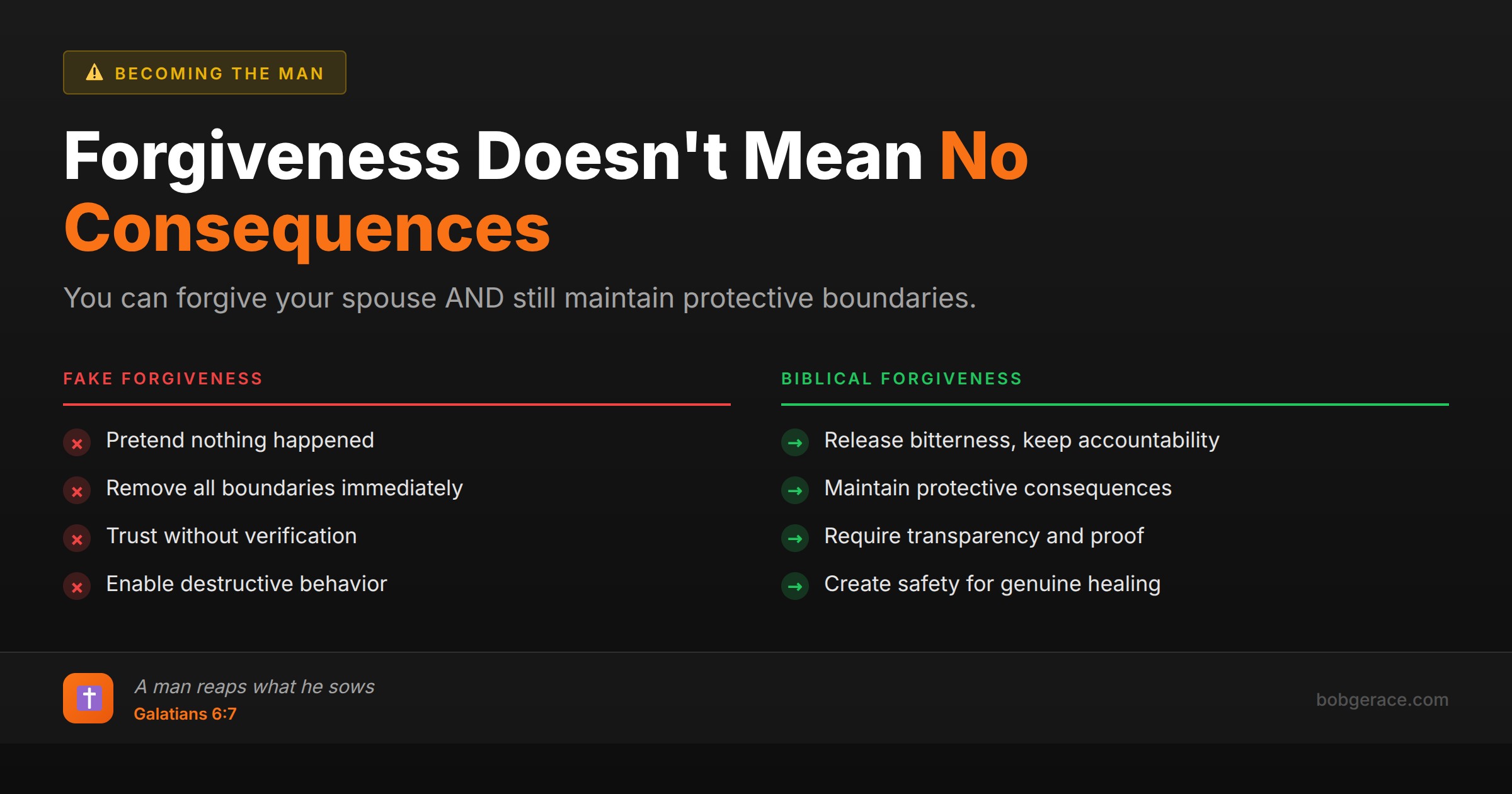
Forgiveness does not require the removal of natural or necessary consequences. While God calls us to forgive unconditionally, He never asks us to ignore the reality of sin's impact or to remove protective boundaries. Biblical forgiveness releases our right to revenge and bitterness, but it doesn't eliminate accountability. In marriage, this means you can forgive your spouse while still maintaining appropriate consequences for harmful behavior. For example, you might forgive infidelity while still requiring counseling, transparency, or even temporary separation for healing. Consequences serve protection, restoration, and sometimes prevention of future harm. True forgiveness actually works alongside healthy consequences to create an environment where genuine repentance and healing can occur.
The Full Picture
One of the most damaging myths about forgiveness is that it requires us to immediately remove all consequences and return to business as usual. This misunderstanding has caused countless people to remain in harmful situations, believing that "true forgiveness" means pretending nothing happened.
Biblical forgiveness is far more sophisticated than this. It addresses both the heart condition of the forgiver and the practical realities of living with the effects of sin. When God forgives us, He releases us from eternal condemnation, but He doesn't always remove earthly consequences. David was forgiven for his adultery with Bathsheba and murder of Uriah, yet he still faced significant consequences for his actions.
In marriage, consequences serve multiple purposes: They protect the innocent spouse from further harm, they demonstrate the seriousness of the offense, they provide motivation for genuine change, and they create space for true healing to occur. Removing consequences too quickly often prevents real repentance and sets the stage for repeated harm.
The key is understanding that forgiveness and consequences operate in different spheres. Forgiveness deals with your heart's response to the offense - releasing bitterness, hatred, and the desire for revenge. Consequences deal with the practical reality of moving forward safely and wisely. You can completely forgive someone while still maintaining firm boundaries about what behaviors you will and won't accept going forward.
This isn't about punishment or revenge - it's about wisdom, protection, and creating the best environment for genuine restoration. When consequences are applied with love rather than spite, they actually serve the forgiveness process rather than contradicting it.
What's Really Happening
From a therapeutic perspective, the confusion between forgiveness and consequences often stems from trauma bonding and codependent patterns. When someone has been hurt repeatedly, they may develop a desperate need to believe that forgiveness alone will solve everything, because the alternative - acknowledging that serious changes are needed - feels overwhelming.
Neurologically, forgiveness and boundary-setting activate different brain systems. Forgiveness primarily involves the prefrontal cortex and anterior cingulate cortex - areas responsible for empathy and emotional regulation. Maintaining consequences, however, requires the executive functioning centers that handle decision-making and future planning. Both are necessary for healthy relationships.
I frequently see clients who believe that maintaining consequences means they haven't truly forgiven. This creates a painful internal conflict where they feel forced to choose between protecting themselves and being 'good Christians.' The truth is that healthy consequences often demonstrate the deepest kind of love - love that refuses to enable destructive behavior.
Premature removal of consequences typically indicates emotional fusion rather than genuine forgiveness. When we're emotionally fused with someone, their discomfort becomes unbearable to us, leading us to remove protective boundaries to reduce our own anxiety. True forgiveness, however, allows us to maintain necessary boundaries without hatred or bitterness.
Research consistently shows that accountability and consequences, when applied consistently and fairly, actually increase the likelihood of behavior change and relationship restoration. Forgiveness without accountability often enables continued harmful behavior and prevents the deep work necessary for genuine transformation.
What Scripture Says
Scripture consistently demonstrates that God's forgiveness coexists with consequences and accountability. Galatians 6:7-8 reminds us: *'Do not be deceived: God cannot be mocked. A man reaps what he sows. Whoever sows to please their flesh, from the flesh will reap destruction; whoever sows to please the Spirit, from the Spirit will reap eternal life.'* Even God's forgiven children experience the natural consequences of their choices.
Luke 17:3 provides the biblical model for forgiveness: *'If your brother or sister sins against you, rebuke them; and if they repent, forgive them.'* Notice that rebuke - which includes addressing the wrong and its consequences - comes before forgiveness, not after. This isn't about withholding forgiveness until someone earns it, but about addressing sin honestly as part of the restoration process.
Matthew 18:15-17 outlines Jesus' approach to dealing with sin, which includes escalating consequences: *'If your brother or sister sins, go and point out their fault, just between the two of you. If they listen to you, you have won them over. But if they will not listen, take one or two others along... If they still refuse to listen, tell it to the church; and if they refuse to listen even to the church, treat them as you would a pagan or a tax collector.'* Jesus advocates for progressive consequences alongside the call to forgiveness.
Proverbs 27:5-6 teaches us that loving confrontation serves relationships: *'Better is open rebuke than hidden love. Wounds from a friend can be trusted, but an enemy multiplies kisses.'* Sometimes the most loving thing we can do is maintain consequences that promote genuine repentance and change.
Even God's ultimate act of forgiveness - the cross - involved consequences. While our sins are forgiven, Christ still had to bear the full weight of justice. God's love doesn't eliminate consequences; it provides a way through them.
What To Do Right Now
-
1
Separate your heart response (forgiveness) from your practical response (consequences) - you can do both simultaneously with God's help
-
2
Identify what consequences are necessary for protection, accountability, and restoration - not punishment or revenge
-
3
Communicate clearly that consequences aren't about unforgiveness but about creating safety and promoting genuine change
-
4
Seek wise counsel from mature believers or professional counselors about appropriate boundaries and consequences for your specific situation
-
5
Pray for your spouse while maintaining firm boundaries - intercession demonstrates your heart of forgiveness while consequences demonstrate wisdom
-
6
Focus on your own healing and growth during this time rather than trying to control your spouse's response to the consequences
Related Questions
Need Help Navigating Forgiveness and Boundaries?
Balancing biblical forgiveness with necessary consequences requires wisdom and support. Let's work together to create a path forward that honors both God's call to forgiveness and His call to wisdom.
Get Support →