What does my body need right now?
6 min read
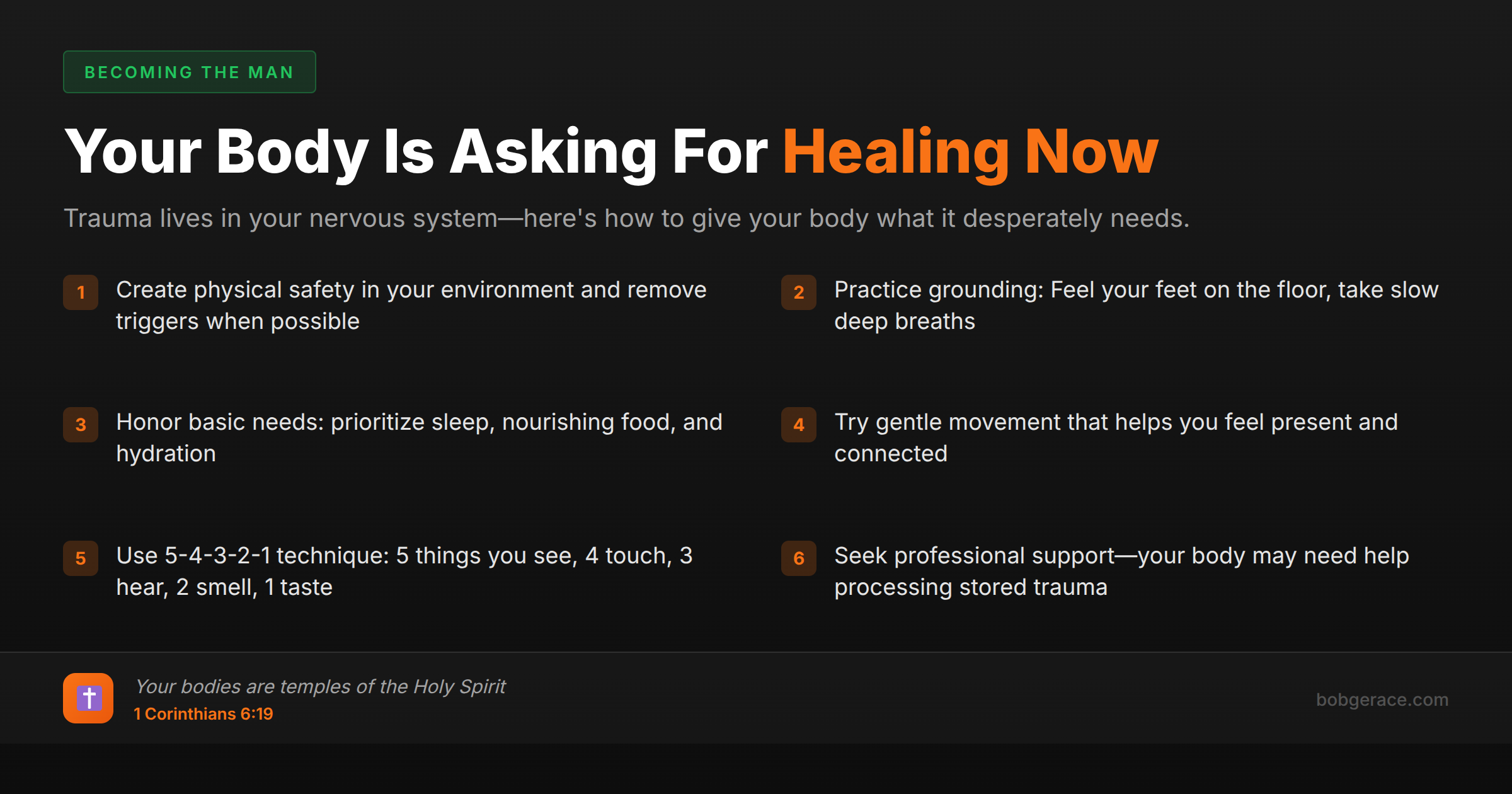
Your body after trauma is asking for safety, rest, and gentle reconnection. Trauma lives in our nervous system and shows up as tension, hypervigilance, exhaustion, or numbness. Right now, your body likely needs grounding—feeling your feet on the floor, taking slow deep breaths, or gentle movement that helps you feel present and safe. Start by creating physical safety in your environment, then focus on basic needs: adequate sleep, nourishing food, hydration, and movement that feels good. Your body may also need professional support to process trauma that's stored physically. This isn't weakness—it's wisdom. God designed our bodies to heal, but healing requires intentional care and often community support.
The Full Picture
Trauma doesn't just affect your mind—it fundamentally changes how your body operates. Your nervous system, designed by God to protect you, may be stuck in survival mode even when you're safe. This shows up as chronic tension, digestive issues, sleep problems, or feeling disconnected from your physical self.
Understanding Your Body's Trauma Response: Your body might be experiencing hypervigilance (constantly scanning for danger), hypoarousal (feeling numb or shut down), or swinging between both. These aren't character flaws—they're normal responses to abnormal experiences. Your body learned to survive, and now it needs to learn it's safe to heal.
Physical Manifestations You Might Notice: - Chronic muscle tension, especially in shoulders, jaw, or stomach - Sleep disturbances or nightmares - Digestive issues or changes in appetite - Feeling disconnected from your body or emotions - Startling easily or feeling constantly "on edge" - Fatigue that rest doesn't seem to fix
Your Body's Healing Capacity: God designed your body with remarkable healing capacity, but trauma healing isn't linear. Some days your body will need more rest, other days gentle movement. Learning to listen without judgment is crucial. Your body isn't broken—it's been working overtime to protect you and now needs support to find its natural rhythm again.
Healing happens when we create consistent safety and give our nervous system permission to relax. This takes time, patience, and often professional guidance.
What's Really Happening
From a clinical perspective, trauma creates dysregulation in your autonomic nervous system—the part that controls breathing, heart rate, and other automatic functions. When we experience trauma, our body's threat detection system becomes hypersensitive, interpreting safe situations as dangerous.
The Nervous System's Role: Your sympathetic nervous system (fight/flight) may be chronically activated, or your dorsal vagal system (freeze/shutdown) may be dominant. Both create physical symptoms that feel overwhelming but are actually your body's attempt to protect you. Understanding this helps reduce self-judgment and increases self-compassion.
Somatic Approaches to Healing: Trauma-informed therapy recognizes that healing must include the body, not just the mind. Techniques like grounding exercises, breathwork, gentle movement, and body awareness practices help your nervous system learn safety again. These approaches work with your body's natural healing mechanisms rather than against them.
The Window of Tolerance: Every person has a 'window of tolerance'—a zone where they can handle stress and emotions without becoming overwhelmed or shutting down. Trauma narrows this window. Healing involves gradually expanding it through safe, supported experiences that teach your body it can handle difficult emotions without going into survival mode.
Professional Support: Consider working with trauma-informed therapists trained in somatic approaches like EMDR, somatic experiencing, or trauma-sensitive yoga. These professionals understand how trauma lives in the body and can guide you through healing that honors both your physical and emotional experience.
What Scripture Says
Scripture consistently affirms that God cares about our physical bodies and desires our complete healing—spirit, soul, and body.
Your Body is Sacred: *"Do you not know that your bodies are temples of the Holy Spirit, who is in you, whom you have received from God?"* (1 Corinthians 6:19). Your body isn't separate from your spiritual life—it's the dwelling place of God's Spirit. Caring for your physical healing is an act of honoring God.
God's Heart for Your Healing: *"He sent out his word and healed them; he rescued them from the grave"* (Psalm 107:20). God actively desires your healing and provides means for restoration. This includes physical healing from trauma's effects on your body.
Rest as God's Design: *"Come to me, all you who are weary and burdened, and I will give you rest"* (Matthew 11:28). Jesus specifically invites those carrying heavy burdens to find rest in Him. This isn't just spiritual rest—it's the deep rest your nervous system needs to heal.
God's Comfort in Suffering: *"Praise be to the God and Father of our Lord Jesus Christ, the Father of compassion and the God of all comfort, who comforts us in all our troubles"* (2 Corinthians 1:3-4). God doesn't minimize your physical suffering but offers His presence and comfort as you heal.
Your Body's Resurrection Hope: *"But our citizenship is in heaven. And we eagerly await a Savior from there, the Lord Jesus Christ, who, by the power that enables him to bring everything under his control, will transform our lowly bodies so that they will be like his glorious body"* (Philippians 3:20-21). While we await complete restoration, God works healing in our bodies now as a foretaste of eternal wholeness.
Gentle Self-Care as Worship: *"Above all else, guard your heart, for everything you do flows from it"* (Proverbs 4:23). Guarding your heart includes protecting your body from further harm and providing what it needs to heal.
What To Do Right Now
-
1
Create immediate safety: Ensure your physical environment feels secure. Remove triggers when possible, establish routines that feel grounding, and surround yourself with supportive people.
-
2
Practice grounding techniques: Try the 5-4-3-2-1 method (5 things you see, 4 you touch, 3 you hear, 2 you smell, 1 you taste) to reconnect with your body in the present moment.
-
3
Honor basic needs: Prioritize sleep, nutrition, and hydration. Your trauma-affected body needs extra support in these fundamental areas to have energy for healing.
-
4
Move gently: Engage in movement that feels good—walking, stretching, dancing, or yoga. Avoid forcing exercise; instead, ask your body what kind of movement it's craving.
-
5
Breathe intentionally: Practice slow, deep breathing for 5-10 minutes daily. This directly calms your nervous system and teaches your body that it's safe to relax.
-
6
Seek professional support: Consider trauma-informed therapy, particularly approaches that address how trauma affects the body. Don't try to heal alone—community and professional guidance accelerate healing.
Related Questions
- What is self-care in crisis?
- How do I regulate my own system?
- What does nervous system regulation look like?
- How do I manage my nervous system through legal proceedings?
- What does healing timeline look like?
- What numbing behaviors should I watch for?
- Why do I feel physically sick?
- How do I function when my body won't calm down?
- What's happening with my cortisol/adrenaline?
Also find Bob on
Subscribe for weekly videos on Christian marriage.
Your Body Knows What Your Marriage Needs
A coach who knows your story can help you read what your nervous system is telling you—and translate that into what to do next in your actual marriage.
Talk to Bob →