What does relapse tell us about change?
6 min read
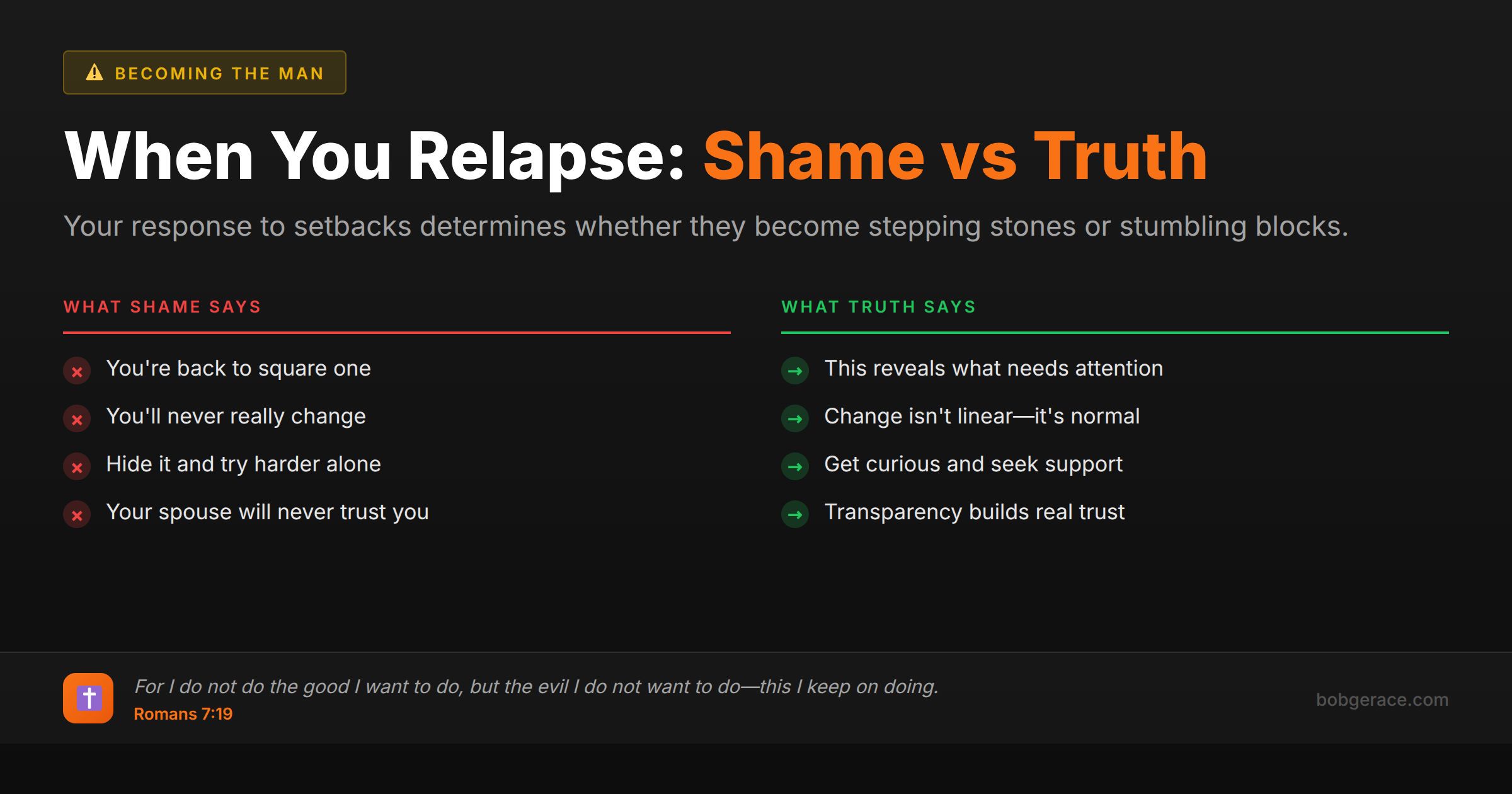
Relapse doesn't mean failure—it reveals crucial information about your change process. When setbacks happen in marriage recovery, they often highlight areas that need deeper attention, unresolved triggers, or gaps in your support systems. Rather than viewing relapse as starting over, it's feedback showing you what conditions, emotions, or circumstances still need strengthening. Relapse patterns tell us that change is rarely linear. They reveal the difference between surface-level compliance and deep heart transformation. Most importantly, they show us that lasting change requires sustained effort, accountability, and often professional support. Your response to setbacks—whether you retreat in shame or lean in with curiosity and commitment—determines whether relapse becomes a stepping stone or a stumbling block in your marriage recovery journey.
The Full Picture
Relapse is information, not condemnation. When we understand what setbacks really tell us, we can use them as powerful tools for deeper healing rather than evidence of hopelessness.
Change happens in stages, and relapse often occurs during the transition between stages. You might have the knowledge and even the motivation, but the neural pathways, emotional responses, and habitual patterns haven't caught up yet. This gap creates vulnerability.
Relapse reveals your unique change process. Some people need more structure. Others need more emotional support. Some need to address trauma first. Others need to build practical skills. Your particular pattern of setbacks shows you exactly what your change process requires.
Environmental factors matter enormously. Relapse often happens when we underestimate the power of our environment—the people, places, emotions, or circumstances that trigger old patterns. It shows us where we need stronger boundaries or different strategies.
The shame cycle versus the learning cycle makes all the difference. Shame-based responses to relapse create more secrecy, isolation, and vulnerability. Learning-based responses create curiosity, adjustment, and ultimately stronger recovery.
Relapse timing is significant. Early relapses often indicate the change wasn't internally motivated or the foundation wasn't solid. Later relapses might indicate that you've hit a deeper layer that needs attention, or that life stressors have overwhelmed your coping capacity.
Your spouse's response to your relapse reveals as much about the relationship dynamic as your relapse reveals about your change process. Both pieces of information are valuable for your marriage healing.
What's Really Happening
From a clinical perspective, relapse is a normal part of the change process, not a failure of it. Research consistently shows that lasting behavioral change typically involves multiple attempts, and each "setback" provides critical data about what needs to be adjusted.
Neurologically, relapse makes sense. Old neural pathways are like superhighways—fast, automatic, and well-traveled. New patterns are like dirt roads that require conscious effort to navigate. Under stress, fatigue, or emotional overwhelm, the brain defaults to the familiar pathway. This isn't weakness; it's neurobiology.
The stages of change model helps us understand that relapse often occurs during the "action" or "maintenance" phases, when the gap between intention and implementation becomes apparent. It reveals where additional skills, support, or motivation are needed.
Trauma responses complicate change. If underlying trauma hasn't been addressed, relapse often occurs when triggered states override conscious decision-making. This indicates the need for trauma-informed approaches rather than willpower-based strategies.
Attachment patterns influence relapse patterns. Those with insecure attachment may relapse when feeling disconnected or overwhelmed by intimacy. Understanding these patterns helps create more effective prevention strategies.
The therapeutic alliance becomes crucial during relapse discussions. Shame and self-judgment can derail progress, while compassionate curiosity about the relapse can accelerate insight and growth. How couples navigate relapse together often predicts long-term recovery success more than the relapse itself.
What Scripture Says
Scripture normalizes the struggle of change while calling us to perseverance and grace-based growth.
Romans 7:18-20 - "For I know that good itself does not dwell in me, that is, in my sinful nature. For I have the desire to do what is good, but I cannot carry it out. For I do not do the good I want to do, but the evil I do not want to do—this I keep on doing." Even Paul struggled with the gap between intention and action.
1 John 1:8-9 - "If we claim to be without sin, we deceive ourselves and the truth is not in us. If we confess our sins, he is faithful and just and will forgive us our sins and purify us from all unrighteousness." Setbacks become opportunities for confession and renewal rather than condemnation.
Galatians 6:1 - "Brothers and sisters, if someone is caught in a sin, you who live by the Spirit should restore that person gently. But watch yourselves, or you also may be tempted." This speaks to how spouses should respond to each other's relapses—with gentle restoration, not harsh judgment.
Philippians 1:6 - "Being confident of this, that he who began a good work in you will carry it on to completion until the day of Christ Jesus." God's commitment to your transformation doesn't waver because of setbacks.
2 Corinthians 12:9 - "But he said to me, 'My grace is sufficient for you, for my power is made perfect in weakness.'" Sometimes relapse reveals our need for God's strength rather than self-reliance.
Proverbs 24:16 - "For though the righteous fall seven times, they rise again, but the wicked stumble when calamity strikes." The difference isn't falling—it's getting back up.
What To Do Right Now
-
1
Analyze the relapse without judgment—what circumstances, emotions, or triggers preceded it?
-
2
Identify the specific gap in your change process that the relapse revealed
-
3
Adjust your strategy based on what you learned rather than just trying harder
-
4
Communicate openly with your spouse about what happened and what you're learning
-
5
Strengthen the specific area of vulnerability the relapse exposed
-
6
Create accountability and support systems that address your particular relapse pattern
Related Questions
Need Help Navigating Setbacks?
Relapse doesn't mean starting over—it means getting the right support to move forward. Let's turn your setbacks into stepping stones.
Get Support →