What if he's just scared I'll leave?
6 min read
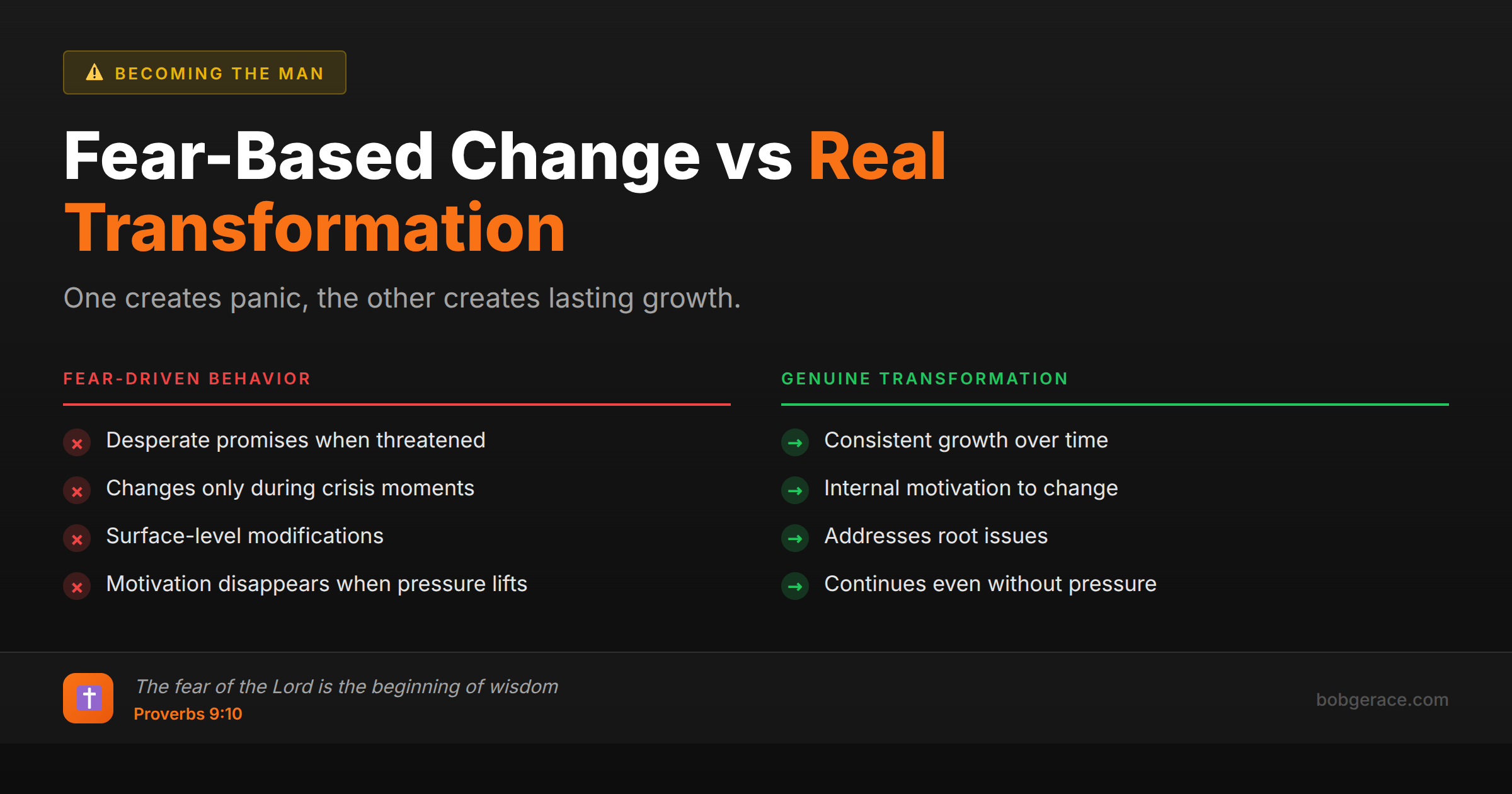
Fear can absolutely trigger change, but the question is whether that change will last once the fear subsides. If your husband is only changing because he's terrified you'll leave, you're dealing with panic-driven behavior rather than genuine transformation. This creates a precarious foundation for your marriage. While fear can be the initial catalyst for awakening, true change must evolve beyond fear into genuine conviction and commitment. Fear-based changes typically involve desperate promises, dramatic gestures, and surface-level modifications that don't address root issues. Look for consistency over time, willingness to do hard work even when you're not threatening to leave, and changes that come from internal motivation rather than external pressure.
The Full Picture
Fear-motivated change is like building a house on sand – it might look impressive initially, but it won't withstand the storms of real life. When a husband changes primarily because he's scared of losing his wife, several dynamics are at play that you need to understand.
The Panic Response Pattern Fear triggers our survival instincts, leading to what I call "panic compliance." He might suddenly become the perfect husband – doing dishes, being affectionate, attending counseling, even going to church. But this frantic activity often lacks the deep heart change necessary for lasting transformation.
Why Fear-Based Change Fails First, it's unsustainable. Living in constant fear is exhausting, and humans naturally seek to return to comfortable patterns once the immediate threat seems to pass. Second, it creates resentment. He may begin to feel like he's performing for your approval rather than growing as a person. Third, it doesn't address root issues – it just masks them with better behavior.
The Difference Between Catalyst and Foundation Here's what many women miss: fear can be a valid starting point, but it cannot be the ending point. Think of fear as the fire alarm that wakes someone from a burning building – necessary and lifesaving, but you don't want to live with fire alarms constantly blaring.
Red Flags to Watch For - Changes that only happen when you're upset or threatening consequences - Dramatic promises without consistent follow-through - Surface-level modifications without heart examination - Dependency on your emotional state to maintain his motivation - Resistance to accountability or outside help - Quick fixes rather than process-oriented growth
Genuine change, while it might be sparked by fear, evolves into something deeper – a man who changes because he sees the need for growth, wants to become better, and commits to the process regardless of external pressure.
What's Really Happening
From a psychological perspective, fear-motivated change activates the sympathetic nervous system, creating a state of hypervigilance that's simply not sustainable long-term. When someone changes primarily from fear of abandonment, we're seeing what's called "anxious attachment" in action.
The Neuroscience of Fear-Based Change Fear floods the brain with stress hormones like cortisol and adrenaline. While this can create intense motivation initially, chronic fear actually impairs the prefrontal cortex – the part of the brain responsible for long-term planning, impulse control, and genuine empathy. This is why fear-driven changes often feel hollow or performative.
Attachment Patterns at Play When fear of abandonment drives behavior, we're often seeing unresolved attachment wounds from childhood. The person isn't actually connecting with their spouse's needs or their own growth – they're trying to prevent the pain of rejection they've experienced before. This creates what I call "performative intimacy" rather than genuine connection.
Distinguishing Authentic Motivation Authentic change engages the parasympathetic nervous system – the "rest and digest" mode where real learning and growth occur. You'll notice this in someone who can discuss problems calmly, takes responsibility without defensiveness, and continues growth efforts even when relationships feel stable.
The Sustainability Factor Research shows that changes motivated primarily by fear typically last 3-6 months before regression begins. However, when fear serves as an initial wake-up call but transitions into intrinsic motivation – personal values, spiritual conviction, or genuine desire for growth – changes have a much higher success rate.
The key is helping fear evolve into something deeper: curiosity about oneself, commitment to growth, and genuine care for the relationship's health rather than just its survival.
What Scripture Says
Scripture gives us profound insight into the role of fear in transformation and the importance of heart-level change over surface compliance.
Fear as a Starting Point, Not the End Goal "The fear of the Lord is the beginning of wisdom, and knowledge of the Holy One is understanding." (Proverbs 9:10) Notice that fear is the *beginning* – it's meant to lead somewhere deeper. Healthy fear of consequences can wake us up, but mature faith and love must sustain the journey.
The Limitation of Fear-Only Motivation "There is no fear in love. But perfect love drives out fear, because fear has to do with punishment. The one who fears is not made perfect in love." (1 John 4:18) While fear can initiate change, relationships thrive on love, not terror. A marriage built primarily on one spouse's fear of abandonment lacks the security God designed for covenant relationships.
Heart Change vs. Behavior Modification "Above all else, guard your heart, for everything you do flows from it." (Proverbs 4:23) God is always concerned with heart transformation, not just behavior modification. External changes without internal transformation are like "whitewashed tombs" – they look good on the outside but lack life within.
True Repentance Goes Deeper "Godly sorrow brings repentance that leads to salvation and leaves no regret, but worldly sorrow brings death." (2 Corinthians 7:10) There's a difference between being sorry you got caught (worldly sorrow) and being grieved over the harm you've caused (godly sorrow). True repentance involves a change of mind and heart, not just fear of consequences.
The Process of Sanctification "Being confident of this, that he who began a good work in you will carry it on to completion until the day of Christ Jesus." (Philippians 1:6) Genuine transformation is a process that God sustains, not a performance we maintain through willpower or fear.
Love as the Ultimate Motivator "We love because he first loved us." (1 John 4:19) The most sustainable changes come from being loved and learning to love in return, not from fear of punishment or abandonment.
What To Do Right Now
-
1
Observe the pattern - Track whether his changes only happen during crisis moments or continue during calm periods
-
2
Look for internal motivation - Ask him why he wants to change and listen for answers beyond "because you'll leave me"
-
3
Test sustainability - Give him space to choose growth without pressure and see what happens to his motivation
-
4
Examine the root issues - Determine if he's addressing underlying problems or just managing surface behaviors
-
5
Seek professional input - Get counseling to help distinguish between fear-driven compliance and genuine transformation
-
6
Set realistic expectations - Allow fear to be a starting point while requiring evidence of deeper heart change over time
Related Questions
- How do I know if he's really changing?
- Is he manipulating me or actually different?
- How do I tell performance from genuine change?
- He's said he'll change before — why believe him now?
- What are the markers of genuine behavior change?
- What distinguishes remorse from guilt?
- What is limerence?
- What does real forgiveness look like?
- Can I forgive without trusting?
- How long does recovery take?
Also find Bob on
Subscribe for weekly videos on Christian marriage.
Not Sure If It's Real?
A coach who knows your marriage can help you see what fear looks like versus what actual change looks like in your specific situation.
Talk to Bob →