What is 'anger as control' vs. 'anger as pain'?
6 min read
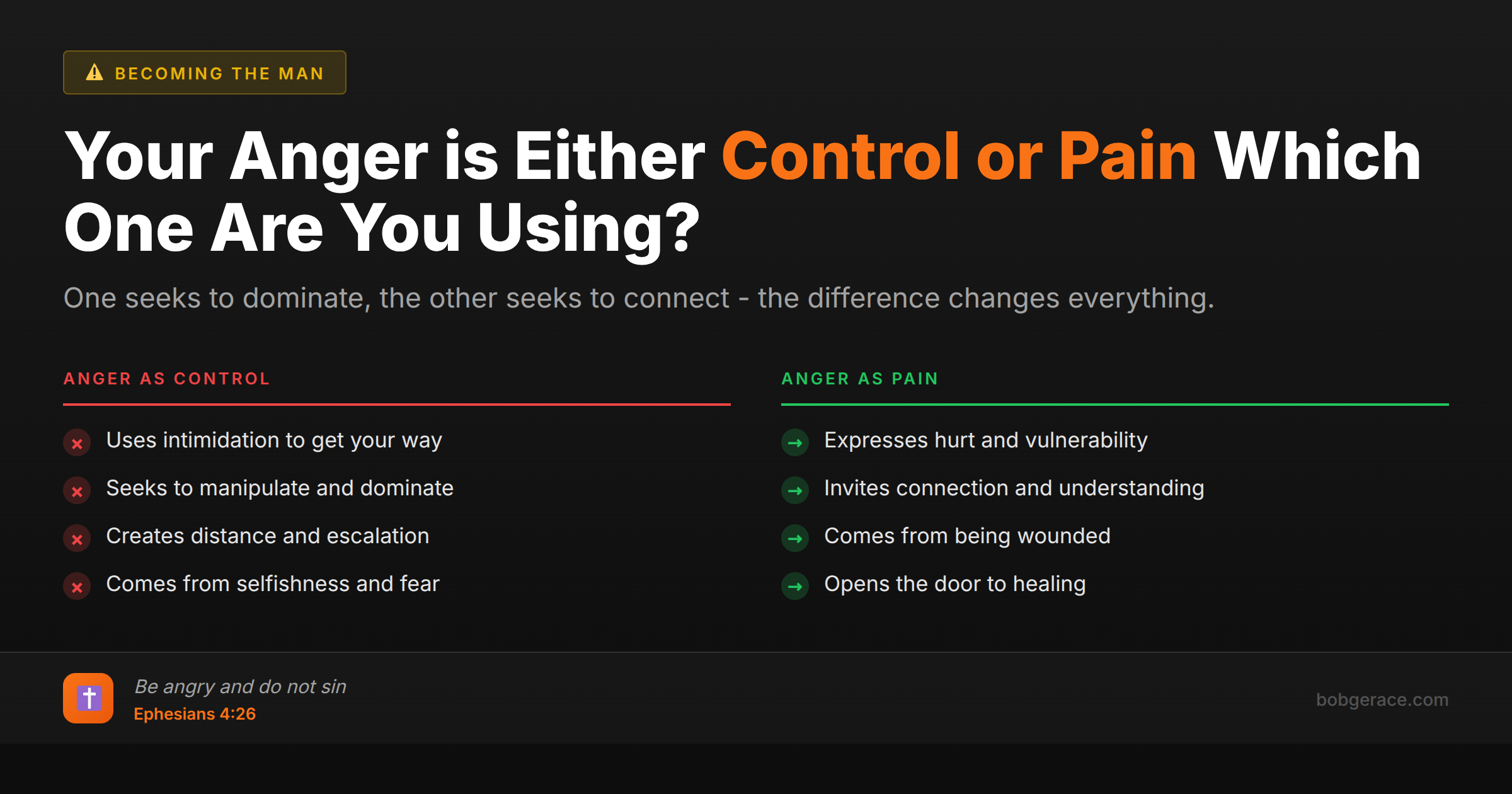
Anger as control is when we use our anger to manipulate, intimidate, or force our spouse to comply with our demands. It's anger with an agenda - to get our way. This type of anger seeks to dominate and often escalates conflicts because it's fundamentally selfish. Anger as pain, however, is the natural emotional response when we feel hurt, rejected, or misunderstood. It's not trying to control anyone - it's simply expressing that we're wounded. This anger comes from vulnerability and often invites connection rather than creating distance. Understanding this distinction is crucial because it changes how we both express and receive anger in our marriages.
The Full Picture
Most couples never learn to distinguish between these two types of anger, and it's destroying their marriages. Here's the truth: all anger is either about control or about pain. There's no third option.
Anger as control shows up when you're trying to get your spouse to do something, stop doing something, or be someone different. It's anger with an agenda. You might raise your voice to get compliance, give the silent treatment to punish, or use harsh words to intimidate. This anger says "You need to change so I can feel better."
The telltale signs of controlling anger include: demanding immediate responses, using threats or ultimatums, bringing up past failures to win current arguments, and escalating when your spouse doesn't comply. It's focused outward on changing your spouse's behavior.
Anger as pain is completely different. It's your heart's cry when you feel hurt, rejected, dismissed, or misunderstood. This anger isn't trying to force change - it's expressing wound. It says "I'm hurting and I need you to see me."
Painful anger shows up as tears mixed with frustration, withdrawal to protect yourself, or raw honesty about feeling unloved. It's focused inward on your own emotional experience, not on controlling your spouse's response.
Here's what most people miss: your spouse can usually tell the difference, even if you can't. Controlling anger triggers their defenses and creates distance. Painful anger, when expressed safely, often triggers their compassion and creates connection.
The game-changer is learning to pause and ask yourself: "Am I angry because I'm trying to control something, or because I'm genuinely hurt?" This single question can transform your marriage.
What's Really Happening
From an attachment perspective, these two types of anger stem from different nervous system responses and serve completely different functions in relationships.
Anger as control typically emerges from an anxious attachment response. When we feel threatened by potential abandonment or rejection, our nervous system activates fight-or-flight. Instead of fleeing, we fight - but we fight to control our partner's behavior to reduce our anxiety. It's essentially using anger as a tool to force security.
This controlling anger often masks deeper fears: "If I can make them do what I want, then I'll feel safe." But it backfires because it pushes our partner away, creating the very abandonment we feared. The nervous system interprets their withdrawal as validation that we need to control even more, creating a destructive cycle.
Anger as pain, however, comes from a different place entirely. It's often our attachment system's way of signaling distress - like a smoke alarm going off. When we feel disconnected from our partner, our nervous system sounds the alarm through emotional pain that can manifest as anger.
This type of anger is actually seeking connection, not control. It's saying "I need you" rather than "You must comply." When expressed vulnerably, it can actually strengthen attachment bonds because it invites our partner into our inner world rather than pushing them away.
The key difference neurologically is that controlling anger activates our partner's threat detection system, while painful anger can activate their caregiving system - if we express it without attacking their character or making demands. Understanding this distinction helps couples move from adversarial interactions to attachment-building conversations.
What Scripture Says
Scripture gives us clear guidance about anger and its proper expression in relationships. The Bible doesn't condemn all anger - after all, "Be angry and do not sin" (Ephesians 4:26) - but it does distinguish between righteous and unrighteous expressions.
Anger as control violates biblical principles of love and service. "Let each of you look not only to his own interests, but also to the interests of others" (Philippians 2:4). When we use anger to manipulate or dominate our spouse, we're serving ourselves, not them. "Love does not insist on its own way, it is not irritable or resentful" (1 Corinthians 13:5).
Jesus himself showed us what righteous anger looks like. When He cleansed the temple, His anger came from pain over God's house being dishonored - not from trying to control people for His own benefit. His anger served a higher purpose than His personal comfort.
The Bible calls us to express pain honestly while maintaining love. "Speaking the truth in love, we are to grow up in every way" (Ephesians 4:15). This means we can share our hurt without attacking our spouse's character or making demands.
"A soft answer turns away wrath, but a harsh word stirs up anger" (Proverbs 15:1). Notice the focus on how we speak, not on suppressing all emotion. We can express pain softly while still being honest about our hurt.
God models expressing pain without controlling behavior. Throughout Scripture, God expresses His hurt over Israel's unfaithfulness, but He doesn't force compliance. "How can I give you up, O Ephraim?... My heart recoils within me; my compassion grows warm and tender" (Hosea 11:8). Even God chooses vulnerability over control in relationships.
What To Do Right Now
-
1
Pause and identify: Before expressing anger, ask "Am I trying to control or am I in pain?" This single question changes everything.
-
2
If it's control: Take a timeout. Pray and ask God to show you what you're afraid of underneath the need to control.
-
3
If it's pain: Express it vulnerably without character attacks. Say "I felt hurt when..." instead of "You always..."
-
4
Look for the fear: Controlling anger usually masks fear of abandonment, rejection, or loss. Name the real fear to your spouse.
-
5
Practice 'soft startup': Begin difficult conversations with "I'm feeling..." rather than "You did..." to avoid triggering defenses.
-
6
Get curious about your spouse's anger: When they're angry, ask "Are you trying to control me or are you in pain?" It transforms conversations.
Related Questions
- What's underneath the anger — fear, shame, hurt?
- What is 'secondary emotion' and is anger covering something?
- What does 'protest behavior' look like as rage?
- Is my anger an attachment cry gone wrong?
- Why do I hurt the person I'm trying to keep?
- What does my rage communicate to her attachment system?
- What is anxious attachment and am I doing it right now?
- What does 'protest behavior' look like and am I doing it?
- What is 'primal panic' and is that what she's been feeling?
- Why does my pursuing make her pull away more?
Also find Bob on
Subscribe for weekly videos on Christian marriage.
You Can't Workshop This Alone
Knowing the difference between control and pain doesn't mean you'll catch it in your actual marriage when you're flooded. A coach who knows your story can call it when you can't.
Talk to Bob →